
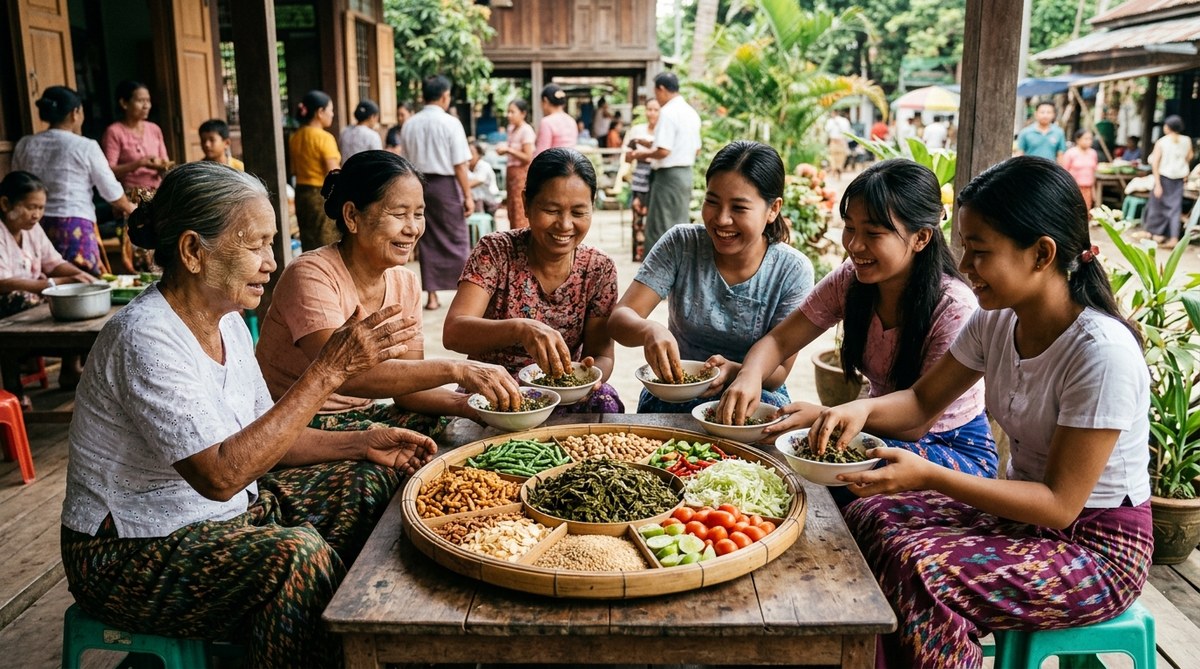
Most people think of tea as something you sip from a cup. In Myanmar, they eat it. Laphet Thoke, or Burmese tea leaf salad, is a vibrant dish made from fermented tea leaves, crunchy beans, garlic, and a tangy dressing. It appears at every kind of gathering: family dinners, religious ceremonies, street side stalls, and even high-end restaurants. More than just a plate of greens, this salad tells a story of hospitality, resilience, and community. It connects generations and keeps a culinary tradition alive.
Burmese tea leaf salad (Laphet Thoke) is far more than a snack. It represents Myanmar’s deep culture of sharing and welcome. The fermentation process, passed down for centuries, creates a unique umami flavor. Eating Laphet together builds social bonds and preserves tradition. Making it at home, with respect for the process, can help you connect with Myanmar’s rich heritage.
What Exactly Is Burmese Tea Leaf Salad
Laphet Thoke (pronounced la-pay toe) is a salad centered on fermented tea leaves. Unlike the sweet or herbal teas most Americans know, Burmese laphet undergoes a controlled fermentation that gives it a savory, slightly bitter, and deeply earthy taste. The leaves are mixed with a dressing of peanut oil, garlic, and sometimes lime juice. Then come the toppings: roasted peanuts, fried yellow split peas, sesame seeds, shredded dried shrimp, sliced tomatoes, and fresh chili.
The result is a textural symphony. Crunchy, soft, salty, sour, and a little spicy all hit your palate at once. It is traditionally served on a lacquer tray, often alongside a small bowl of soup and rice. The salad is meant to be shared.
The Role of Laphet in Myanmar’s Social Fabric
Laphet has been woven into Burmese culture for hundreds of years. Historical records from the Konbaung dynasty show that fermented tea leaves were offered to royalty and used as diplomatic gifts. The dish was also a symbol of peace: opposing sides would share Laphet Thoke to signal the end of a conflict.
Today, hospitality in Myanmar almost always involves serving Laphet. When you visit a home, the host will bring out a tray of tea leaf salad along with other traditional snacks. Refusing is seen as impolite. Sharing the salad creates an immediate bond. It is a way of saying, “You are welcome here.”
The tradition extends to ceremonies. Laphet is a key part of the Shinbyu initiation ceremony for boys becoming novice monks. It also appears at weddings, housewarming parties, and festivals. For diaspora Myanmar communities, preparing and eating Laphet Thoke becomes a powerful way to maintain ties to home. As many second-generation Myanmar Americans reclaim their heritage through food, Laphet is often the first dish they learn from their grandparents.
How Fermentation Preserves Tradition and Flavor
Fermenting tea leaves is an art. The process transforms raw tea leaves into a complex ingredient that keeps for months without refrigeration. This technique predates modern preservation methods and reflects a deep understanding of food science passed through generations.
Here is the basic process at a glance:
- Harvesting: Young tea leaves are picked by hand, usually in the highlands of Shan State.
- Steaming: The leaves are briefly steamed to stop oxidation.
- Packing: The steamed leaves are packed tightly into bamboo tubes, clay pots, or plastic containers.
- Fermenting: The containers are buried underground or stored in a cool, dark place for three to six months. Natural microbes break down the leaves, creating lactic acid and developing that signature umami.
- Seasoning: After fermentation, the leaves are mixed with salt, peanut oil, and sometimes garlic or ginger to create the final laphet paste.
The slow fermentation is crucial. It not only preserves the leaves but also unlocks flavors that can’t be achieved any other way. Using a shortcut method with steamed leaves and vinegar will not produce the same depth.
Building Community Around the Bowl
Eating Laphet Thoke is rarely a solo act. The dish comes on a shared platter. Everyone reaches in with their fingers or a small spoon, grabbing a bit of the leaf mixture and a topping. This communal style encourages conversation and connection.
In Myanmar, Laphet Thoke is often served during thadingyut, the festival of lights, and at pwe (theatrical performances). It is also a staple at wedding banquets, where each table receives a large bowl. The person who mixes the salad for the table is considered generous and thoughtful.
The topping choices vary by region and family. Some families add dried shrimp, others skip it. Some use fried garlic chips, others use roasted garlic. This flexibility means every bowl of Laphet Thoke reflects the unique taste of the cook and their community.
How to Make Authentic Laphet Thoke at Home
You can find pre-fermented laphet paste online or at Asian grocery stores. Once you have that, the assembly is straightforward. Follow these numbered steps for a traditional result.
-
Prepare the tea leaf dressing. Take about half a cup of fermented laphet paste. Rinse it briefly if it is very salty, then squeeze out excess liquid. Mash the leaves with a fork. Add two tablespoons of peanut oil, one tablespoon of lime juice, and a pinch of salt. Mix well.
-
Prepare the toppings. Chop some cherry tomatoes (about half a cup). Crush a handful of roasted peanuts. Fry a few tablespoons of yellow split peas until golden. Slice two cloves of garlic thinly and fry them until crisp. Toast a tablespoon of sesame seeds. If desired, add a tablespoon of shredded dried shrimp.
-
Assemble the salad. Spread the dressed tea leaves on a plate. Arrange the tomatoes, peanuts, split peas, garlic chips, and shrimp in small piles on top. Do not toss everything together yet. In Myanmar, each person mixes their own portion at the table.
-
Serve immediately. Offer a bowl of steamed rice on the side. Enjoy the salad with your fingers or a fork.
Common Mistakes and How to Avoid Them
| Mistake | Why It Happens | How to Fix |
|---|---|---|
| Using non-fermented tea leaves | Confusion with green tea | Always buy fermented laphet paste. It looks dark and wet. |
| Overdressing the leaves | Too much oil or lime | Start with less dressing. Add gradually. |
| Mixing all toppings in advance | Toppings lose crunch | Keep toppings separate until serving. |
| Skipping the garlic oil | Missing depth of flavor | Fry garlic in extra oil to infuse. Use that oil in the dressing. |
| Rinsing the paste too much | Removes all salt and character | Rinse only if extremely salty; otherwise just drain. |
Expert Tips from Myanmar Home Cooks
I asked a few cooks from Yangon and Mandalay for their secrets. Here is what they shared.
“Never use bottled lime juice. Squeeze it fresh. The acidity changes the whole taste.” Daw Khin, Yangon street vendor
“Toast the sesame seeds until they just start to pop. That is when they smell like heaven.” U Aung, home cook in Mandalay
“If you cannot find laphet paste, you can order it online. But check the color. It should be dark brown, not green. Green means it has not fermented long enough.” Moe, chef at a Shan restaurant in San Francisco
Many diaspora cooks also recommend adding a little bit of fish sauce to the dressing if the paste is not salty enough. Just be careful not to overpower the tea flavor.
Preserving Tradition in a Changing World
Myanmar has faced many challenges in recent decades: political shifts, economic hardship, and conflict. Through it all, Laphet Thoke remains a constant. It is a dish that transcends divisions. When people sit down to share it, they connect over something deeply rooted in the land.
However, traditional fermentation methods are at risk. Younger generations in urban areas may not have the time or knowledge to prepare laphet from scratch. Climate change is affecting tea harvests in Shan State. Organizations and community leaders are working to preserve this heritage. They document recipes, train young farmers, and promote sustainable tea farming.
For travelers who want to experience this tradition firsthand, knowing proper etiquette helps. When visiting Myanmar, always accept an offer of Laphet Thoke. Compliment the host on the balance of flavors. If you are invited to a family meal, offer to bring a topping like fried peanuts. These small gestures build cross-cultural understanding.
Bringing the Spirit of Laphet to Your Table
You do not need a plane ticket to Myanmar to enjoy the communal magic of Laphet Thoke. With a jar of fermented tea leaves and a few simple ingredients, you can recreate the experience at home. Invite friends over. Set out the toppings in separate bowls. Let everyone mix their own salad. Share stories about where the ingredients come from. The act of making and sharing this dish is itself a form of cultural preservation.
As you eat, remember that every bite connects you to generations of Burmese families who have done the same. It is a small but meaningful way to appreciate a rich culture and support transparency efforts that help preserve such traditions. For more insights on Myanmar’s food culture and travel tips, check out our guide on eating your way through Myanmar and learn about how second-generation Myanmar Americans reclaim their heritage through food.