
Traveling to Myanmar means stepping into a country where golden pagodas rise from misty plains, monks walk barefoot at dawn, and traditions stretch back thousands of years. But before you book that flight, you need honest answers about what’s happening on the ground right now.
Myanmar remains a complex travel destination in 2024. While certain tourist areas like Yangon, Bagan, and Inle Lake continue to welcome visitors, the country faces ongoing political instability that affects safety conditions. Travelers need up-to-date information about visa requirements, regional safety advisories, cultural protocols, and practical logistics before making final travel decisions. This guide provides the essential framework for informed planning.
Understanding the current situation
Myanmar’s political landscape shifted dramatically in February 2021. That event continues to shape daily life across the country.
Some regions remain relatively stable and accessible to tourists. Others face active conflict and are completely off limits.
The situation is not uniform. Yangon operates differently than border areas. Bagan sees tourists while certain northern states do not.
Major international governments maintain travel advisories for Myanmar. The U.S. State Department issues warnings about specific regions. Other countries follow similar patterns.
Check official government travel advisories before booking anything. These updates change based on ground conditions.
Tourist infrastructure still functions in established destinations. Hotels remain open. Guides still lead tours. Restaurants serve meals.
But you need realistic expectations. This is not business as usual.
Getting your visa sorted
Myanmar requires most foreign visitors to obtain a visa before arrival.
The e-visa system remains operational for tourist visits. You apply online through the official government portal.
Processing typically takes three business days. Sometimes longer during peak seasons or holidays.
Steps to apply for your e-visa
- Visit the official Myanmar e-visa website
- Complete the online application form with passport details
- Upload a recent passport photo and your passport information page
- Pay the visa fee using a credit or debit card
- Receive your approval letter via email
- Print the approval letter to present at immigration
The tourist e-visa allows a 28-day stay. You must enter Myanmar within 90 days of approval.
Your passport needs at least six months validity from your entry date.
Some nationalities cannot use the e-visa system. Check eligibility before applying.
Visa on arrival is not available for most travelers anymore. Do not arrive without proper documentation.
Safety considerations you cannot ignore
Personal safety depends heavily on where you plan to go.
Yangon, Mandalay, Bagan, and Inle Lake have maintained relative stability for tourism. These areas see regular visitor traffic.
Border regions, particularly along Thailand, China, and India, experience active conflict. Avoid these areas completely.
Rakhine State remains highly restricted. Chin State faces similar limitations.
Urban areas can experience sudden protests or demonstrations. These situations can escalate without warning.
“The security situation in Myanmar remains fluid. What feels safe today might change tomorrow. Always have a backup plan and stay connected to your embassy.” (Security consultant working in Southeast Asia)
Internet shutdowns happen periodically. Mobile data gets restricted in certain areas.
Your embassy has limited reach in some regions. Consular assistance may not arrive promptly if problems occur.
Register with your embassy before traveling. Provide your itinerary and contact information.
Money matters and practical finances
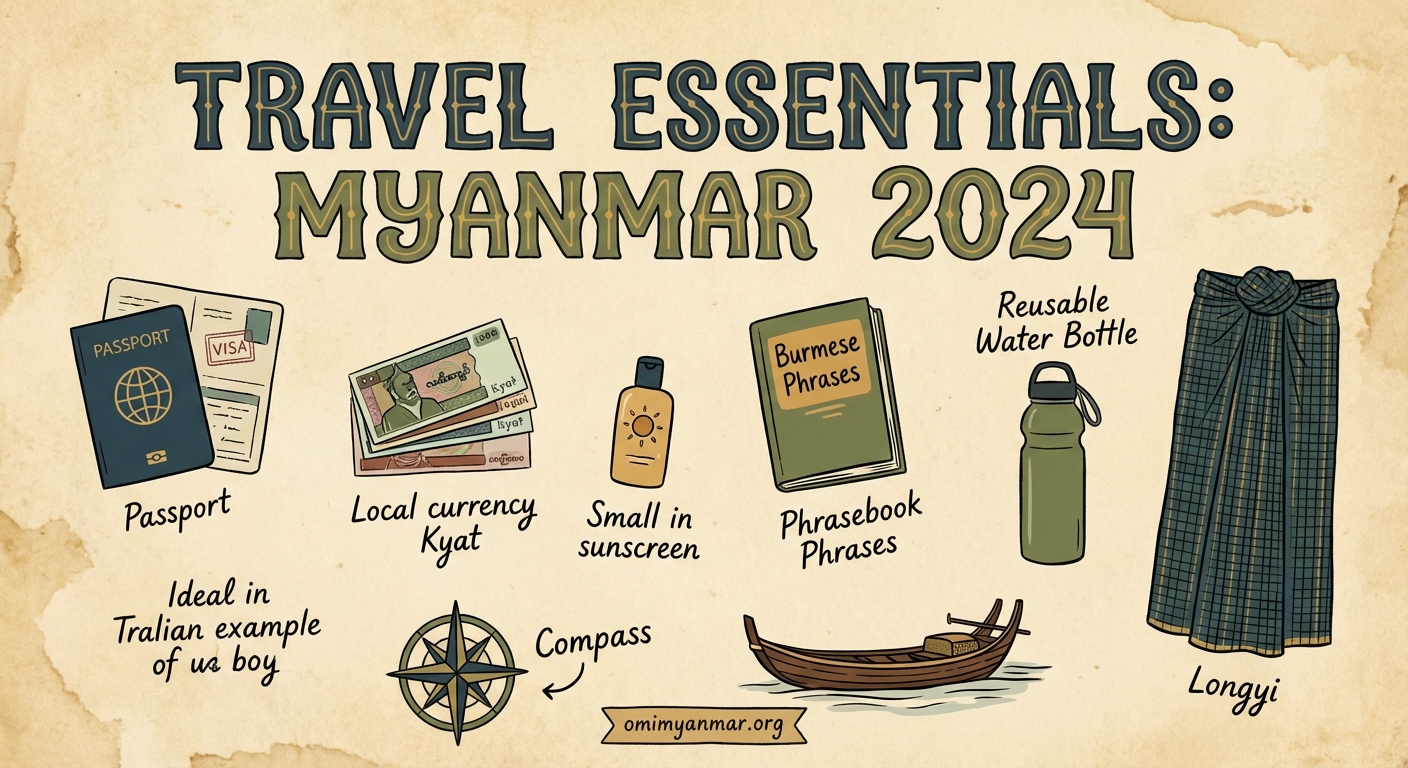
Myanmar’s currency is the kyat (MMK). Exchange rates fluctuate significantly.
ATMs exist in major cities. They dispense kyat and accept international cards. But machines run out of cash frequently.
Bring U.S. dollars as backup. Euros work too, but dollars get better rates.
Your bills must be pristine. Banks and exchange counters reject torn, marked, or worn notes.
Credit cards work in upscale hotels and some restaurants. Most transactions require cash.
Mobile payment apps like KBZ Pay and Wave Money dominate local transactions. Tourists typically cannot access these without local bank accounts.
Exchange money at licensed counters or banks. Street exchanges offer poor rates and potential scams.
Keep small denominations handy. Many vendors cannot break large bills.
| Payment Method | Availability | Best Use Case |
|---|---|---|
| Cash (Kyat) | Universal | Daily expenses, markets, taxis |
| Cash (USD) | Hotels, tours | Large payments, emergencies |
| Credit Card | Limited urban areas | Hotels, upscale restaurants |
| ATM Withdrawal | Major cities only | Replenishing cash supplies |
Cultural protocols that matter
Myanmar is deeply Buddhist. Religious respect is not optional.
Remove shoes and socks before entering any pagoda or temple. Even the surrounding grounds require bare feet.
Dress modestly at religious sites. Cover shoulders and knees. Avoid tight or revealing clothing.
Never point your feet at Buddha images. Sit with legs folded to the side.
Do not touch anyone’s head. This includes children. The head is considered sacred.
Women should not touch monks or hand items directly to them. Place objects on a cloth or table instead.
Photography is usually allowed at temples. But ask before photographing monks or religious ceremonies.
The traditional greeting is a slight bow with hands pressed together. Handshakes work for business contexts.
Shoes come off when entering homes. Wait for your host’s invitation before sitting.
Public displays of affection are frowned upon. Keep interactions modest.
Why thanaka paste remains Myanmar’s most beloved beauty secret after 2,000 years explains one cultural practice you’ll notice immediately on faces throughout the country.
Getting around the country
Domestic flights connect major tourist destinations. Airlines include Myanmar Airways International and several regional carriers.
Flight schedules change frequently. Book through reliable agents who can rebook if needed.
Buses run between cities. Overnight buses save hotel costs but comfort varies wildly.
Book bus tickets through your hotel or established tour companies. Avoid random street vendors.
Trains exist but move slowly. The Yangon to Mandalay route takes 16 hours for a distance you could drive in 8.
Taxis in cities use meters rarely. Negotiate fares before getting in.
Ride-hailing apps like Grab operate in Yangon and Mandalay. They provide transparent pricing.
Renting cars with drivers makes sense for custom itineraries. Self-driving is not practical for tourists.
Boats connect riverside towns. The Mandalay to Bagan ferry offers scenic travel.
Connecting to Myanmar through SIM cards and internet access becomes essential for booking transportation and staying in touch.
Where to stay and what to expect
Hotels range from budget guesthouses to international chains.
Yangon offers the widest selection. The Strand Hotel represents colonial luxury. Budget options cluster around downtown.
Bagan has hotels near Old Bagan and New Bagan. Location affects sunrise temple access.
Inle Lake accommodations sit on stilts over the water or along the shore.
Booking platforms work for major hotels. Smaller guesthouses may require direct contact.
Electricity is 220V. Outlets use various plug types. Bring a universal adapter.
Power outages happen regularly. Hotels run generators but expect interruptions.
Hot water is not guaranteed in budget places. Check amenities before booking.
WiFi exists but speeds are slow. Do not expect streaming or large downloads.
Food and water safety
Burmese cuisine combines Indian, Chinese, and Thai influences. Curries dominate menus.
Street food is everywhere. Tea shops serve as social hubs.
Eat at busy stalls where food turns over frequently. Avoid empty places where food sits.
Drink only bottled water. Check seals before purchasing.
Ice in tourist restaurants is usually safe. Street vendor ice is riskier.
Wash fruits and vegetables or peel them yourself.
Mohinga (fish noodle soup) is the national breakfast. Tea leaf salad appears on every menu.
Vegetarians find options easily. Buddhist culture supports meat-free eating.
Food allergies are harder to communicate. Learn key phrases or carry translation cards.
Health preparations before you go
No vaccines are mandatory for entry. But several are recommended.
Hepatitis A and typhoid vaccines protect against food and waterborne illness. Get these before traveling.
Routine vaccines should be current. This includes measles, mumps, rubella.
Malaria risk exists in rural and border areas. Urban centers like Yangon have minimal risk.
Antimalarial medication makes sense if visiting rural regions. Consult a travel medicine doctor.
Dengue fever occurs throughout Myanmar. No vaccine exists. Insect repellent is your defense.
Japanese encephalitis vaccine matters for extended rural stays.
Travel insurance is not optional. Medical evacuation from Myanmar is expensive.
Pharmacies in cities stock basic medications. Bring prescription drugs in original containers with documentation.
Communication and staying connected
English is spoken in tourist areas. Outside major cities, communication becomes challenging.
Learning basic Burmese phrases helps tremendously. “Mingalaba” (hello) and “jezu tin ba de” (thank you) go far.
Local SIM cards are cheap and easy to get. Telenor, Ooredoo, and MPT are main providers.
You need your passport to register a SIM card. Bring a passport photocopy.
Data packages cost a few dollars for several gigabytes. Purchase at phone shops or convenience stores.
Internet censorship exists. Some websites and services are blocked.
VPNs work but connections are unreliable. Download VPN software before arriving.
International roaming is expensive. Local SIMs are better value.
What to pack for Myanmar travel
- Lightweight, modest clothing for temple visits
- Comfortable walking shoes that slip on and off easily
- Sunscreen with high SPF
- Insect repellent containing DEET
- Basic first aid kit with anti-diarrheal medication
- Power bank for phone charging
- Flashlight for power outages
- Photocopies of passport and visa
- Small denominations of U.S. dollars
- Universal power adapter
Pack light. Laundry services are cheap and fast.
Bring any specialized items you cannot live without. Replacement shopping is limited.
Common mistakes travelers make
Arriving without cash backup. ATMs fail. Cards get declined. Always have dollars.
Underestimating distances. Myanmar is larger than you think. Transit takes time.
Skipping travel insurance. Medical issues happen. Evacuation costs are prohibitive.
Ignoring dress codes at temples. Guards will turn you away. Respect the rules.
Drinking tap water. Even locals avoid it. Stick to bottles.
Not checking current advisories. Situations change. Yesterday’s information becomes outdated.
Overpacking the itinerary. Transportation delays are common. Build buffer time.
Assuming English works everywhere. Learn basic phrases. Download translation apps.
Touching cultural sensitivities. Religion matters deeply here. Show respect.
Understanding local governance and transparency
Myanmar’s governance structures affect daily life in ways travelers might not immediately see.
How international watchdogs are monitoring Myanmar’s governance reforms in 2024 provides context for understanding the broader institutional landscape.
Bureaucracy moves slowly. Permits and permissions take time. Plan accordingly.
Local regulations vary by region. What works in Yangon might not apply in Mandalay.
Respecting sacred sites beyond the famous temples
Beyond the Bagan temples and lesser-known sacred sites reveals the depth of Myanmar’s spiritual geography.
Many temples welcome visitors but are not tourist attractions. They are active worship sites.
Behave as a guest, not a tourist. Observe quietly. Follow local cues.
Photography is a privilege, not a right. Watch for signs prohibiting cameras.
Donations support temple maintenance. Small contributions are appreciated.
Traditional crafts you will encounter
Myanmar’s endangered crafts and master artisans showcases the handiwork you’ll see in markets and workshops.
Lacquerware from Bagan makes beautiful souvenirs. Watch artisans apply layers by hand.
Silk weaving continues around Inle Lake. Lotus fiber textiles are uniquely Burmese.
Puppetry workshops in Mandalay demonstrate intricate string manipulation.
Buying directly from artisans supports traditional skills. Bargain gently but fairly.
Making informed decisions about your trip
Traveling to Myanmar in 2024 requires more research than visiting Thailand or Vietnam.
The rewards are significant. You will see places that feel untouched by mass tourism.
But the risks are real. Political instability is not theoretical. It affects real people and real places.
Weigh your comfort level honestly. Some travelers thrive in uncertain environments. Others do not.
If you decide to go, stay flexible. Plans will change. Accept this reality upfront.
Connect with current travelers through forums and social media. Recent experiences matter more than guidebooks.
Consider working with a reputable local tour operator. They navigate changing conditions professionally.
Support local businesses when possible. Your tourism dollars matter to ordinary people.
Document your journey responsibly. Share honest experiences without sensationalizing difficult situations.
Planning your journey with eyes open
Myanmar is not an easy destination right now. It never really was, even in better times.
The country’s complexity is part of its character. Layers of history, culture, and current events create a place unlike anywhere else.
You will encounter kindness from strangers. Monks will smile. Children will wave. Tea shop owners will insist you try their snacks.
You will also see poverty, struggle, and the weight of difficult circumstances.
Come with realistic expectations. Bring patience, flexibility, and genuine respect.
The decision to visit Myanmar is personal. Only you can weigh the factors that matter to your situation.
If you choose to go, go informed. Go prepared. Go with awareness of what your presence means in this moment of Myanmar’s long history.
The temples will still take your breath away. The food will surprise your palate. The people will challenge your assumptions about resilience.
Just make sure you understand what you’re walking into before you step off that plane.