
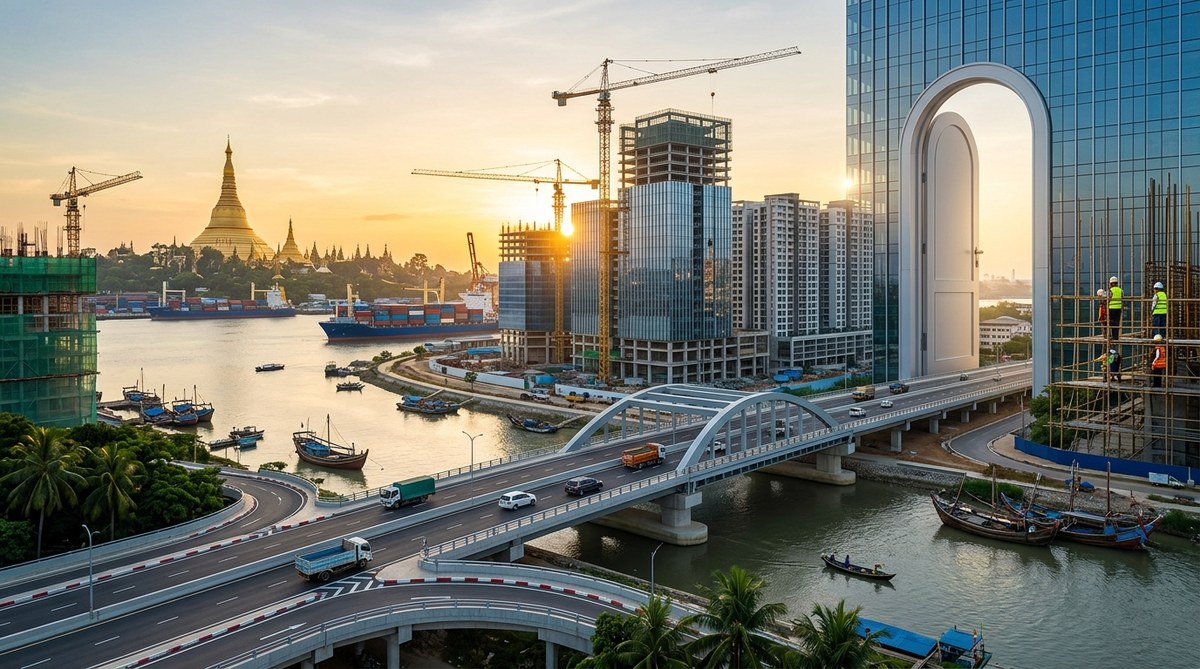
Myanmar is no longer the isolated frontier economy many investors once imagined. Drive through Yangon today and you will see new overpasses cutting across the city. Travel to Mandalay and you will find industrial zones buzzing with activity. Down in the Dawei Special Economic Zone, port construction is reshaping trade routes. This is not a future possibility. It is happening right now. For foreign investors watching Southeast Asia, Myanmar foreign investment has become a topic worth serious attention. The country is building its way toward greater connectivity, and that construction is opening doors for businesses ready to move in.
Myanmar’s infrastructure boom is reshaping the investment landscape by improving transport, energy, and logistics networks across the country. For foreign investors, this means lower operating costs, better market access, and clearer regulatory pathways. Success requires understanding local conditions, choosing the right sector, and working with experienced partners who know the terrain.
Why the infrastructure push matters for your portfolio
Infrastructure is the backbone of any economy. Without reliable roads, ports, and power, even the most promising market stays out of reach. Myanmar has spent the last several years closing that gap. The government, working with international development banks and private partners, has prioritized projects that directly support commerce.
Think about what this means for a foreign investor. Better roads mean goods move faster from factory to port. Upgraded power grids mean fewer production stoppages. Modernized customs procedures mean less time waiting at borders. Each improvement reduces the friction of doing business. Together, they create a business environment that can actually support growth.
The numbers back this up. Foreign direct investment into Myanmar has shifted from extractive industries toward manufacturing, logistics, and technology. That shift would not be possible without the infrastructure improvements already in place. For more detail on the regulatory side, you can read our guide on foreign investment regulations in Myanmar.
Sectors where infrastructure is creating the most opportunity
Not all industries benefit equally from an infrastructure boom. Some are positioned to gain more than others. Here are the sectors where Myanmar foreign investment is flowing most actively right now.
| Sector | Key Opportunity | Considerations |
|---|---|---|
| Logistics and transport | Port upgrades and new highway corridors connect production to export markets | Requires capital for equipment and understanding of customs procedures |
| Renewable energy | Hydropower, solar, and wind projects are attracting international financing | Regulatory approvals can take time; partnerships with local firms help |
| Manufacturing | Special economic zones offer ready infrastructure and tax incentives | Labor laws and skill availability vary by region |
| Agri-processing | Better roads allow perishable goods to reach markets and ports | Supply chains remain fragmented; investment in cold storage is needed |
| Real estate and construction | Demand for commercial space, housing, and hotels is rising | Land ownership rules restrict foreign buyers; lease structures are common |
Each sector has its own rhythms. Manufacturing investors often start by scouting the special economic zones where infrastructure is already built out. Energy investors look at the regulatory framework and the country’s growing power demand. Agri-processors focus on supply chain bottlenecks that better roads are beginning to solve.
How to approach Myanmar foreign investment in 2026
Entering any new market requires a process. Myanmar is no different. The steps below reflect what experienced investors have learned over the past few years.
-
Start with sector research. Understand which industries align with the country’s development priorities. The Myanmar Investment Commission publishes updated lists of promoted sectors each year. Align your project with those priorities for faster approvals.
-
Find a local partner. This is not optional. A joint venture with a Myanmar company or a partnership with a local law firm will save you months of confusion. Local partners understand the bureaucracy, the cultural norms, and the unspoken rules that no handbook covers.
-
Secure the right visa and permits. Business visas, work permits, and project approvals each have their own process. Start early and keep copies of every document. You can check our complete visa application guide for the full breakdown.
-
Set up banking and currency arrangements. Myanmar’s financial system is modernizing but still has quirks. International transfers, currency exchange, and local payroll all need careful planning. Read our banking and currency guide for practical tips.
-
Build relationships before you build anything else. Business in Myanmar runs on trust. Spend time meeting people, sharing meals, and learning about the culture before you push for signatures. That investment in relationships will pay back many times over.
Common mistakes that slow down foreign investors
Knowing what to avoid is just as important as knowing what to do. Here are the pitfalls that trip up many newcomers.
- Rushing the due diligence process on potential partners
- Underestimating how long permits and approvals actually take
- Assuming that what works in Thailand or Vietnam will work in Myanmar
- Ignoring the need for a strong local legal and accounting team
- Failing to plan for currency fluctuations and transfer delays
- Overlooking the importance of community relationships in rural project areas
Each of these mistakes has cost real investors time and money. The good news is that they are all avoidable with the right preparation. If you are evaluating specific industries, our piece on 5 profitable industries for international businesses entering Myanmar can help you narrow your focus.
Advice from investors who have been on the ground
“The biggest lesson I learned was to stop treating Myanmar like a secondary market. When we finally committed to building a real local team and giving them decision making authority, everything changed. You cannot manage Myanmar from a desk in Singapore. You need people on the ground who understand the culture, the language, and the way things actually get done.”
Senior partner at a Southeast Asian logistics firm, active in Myanmar since 2018
That sentiment comes up again and again in conversations with investors who have succeeded here. Myanmar rewards patience and presence. It penalizes shortcuts and absentee management.
Another investor in the renewable energy space put it this way: “The infrastructure is getting better, but you still need to plan for power outages, road conditions, and internet reliability. Build those assumptions into your financial model from day one. If you plan for the challenges, you will be pleasantly surprised when things go smoothly.”
The human side of investing in Myanmar
Infrastructure projects are about more than concrete and steel. They affect real people. A new highway changes how a farmer gets crops to market. A new power plant means a clinic can keep vaccines cold. A new factory brings jobs to a town that previously had none.
Foreign investors who take the time to understand this human dimension tend to build stronger, more sustainable businesses. They invest in local training programs. They source materials from nearby suppliers. They engage with community leaders before breaking ground.
This approach is not just ethical. It is practical. Projects with strong community support face fewer delays. They attract better local talent. They build goodwill that protects the investment during difficult times.
For more on how civic and community dynamics shape business conditions, you can read about grassroots transparency initiatives and how they are changing local governance.
Making the most of Myanmar’s new economic corridors
One of the most exciting developments in 2026 is the maturation of several key trade corridors. The East-West Economic Corridor now connects Myanmar to Thailand, Laos, and Vietnam. The Southern Corridor links Dawei to Bangkok and beyond. These routes reduce shipping times and open new markets for goods manufactured in Myanmar.
For foreign investors, these corridors create options. A factory in Myawaddy can serve both the domestic market and export to Thailand. A processing plant near Mawlamyine can access port facilities that did not exist five years ago. The infrastructure is creating a more flexible business landscape.
Understanding how goods move in and out of the country is essential. Our guide on trade corridors and logistics provides a detailed look at the routes, ports, and customs procedures you need to know.
What success looks like in this market
The investors who thrive in Myanmar share certain traits. They are patient without being passive. They build deep local networks. They adapt their business models to local conditions instead of trying to force a foreign template onto the market.
They also pay attention to governance and transparency. Myanmar is still developing its regulatory frameworks, and investors who engage constructively with that process tend to fare better. They participate in industry associations. They maintain open communication with regulators. They invest in compliance systems that go beyond the minimum requirements.
If you are considering Myanmar foreign investment, start by visiting. Walk the streets of Yangon. Talk to business owners. Taste the food. Feel the energy of a country that is building its future. Then make your decision with both your head and your gut.
Your next steps toward investing in Myanmar
The infrastructure boom is real. The opportunities are growing. But the window for early movers will not stay open forever. As more international companies discover Myanmar’s potential, competition for the best projects will increase.
Begin with the research phase. Read through the resources on this site, especially the pieces on understanding Myanmar’s labor market and navigating the tax system. Then plan a scouting trip with a clear agenda and a list of people to meet.
Myanmar is not the easiest market you will ever enter. But for those who do the work, build the relationships, and stay committed, it could be one of the most rewarding. The roads are being built. The power is coming online. The doors are opening. The question is whether you will walk through them.