
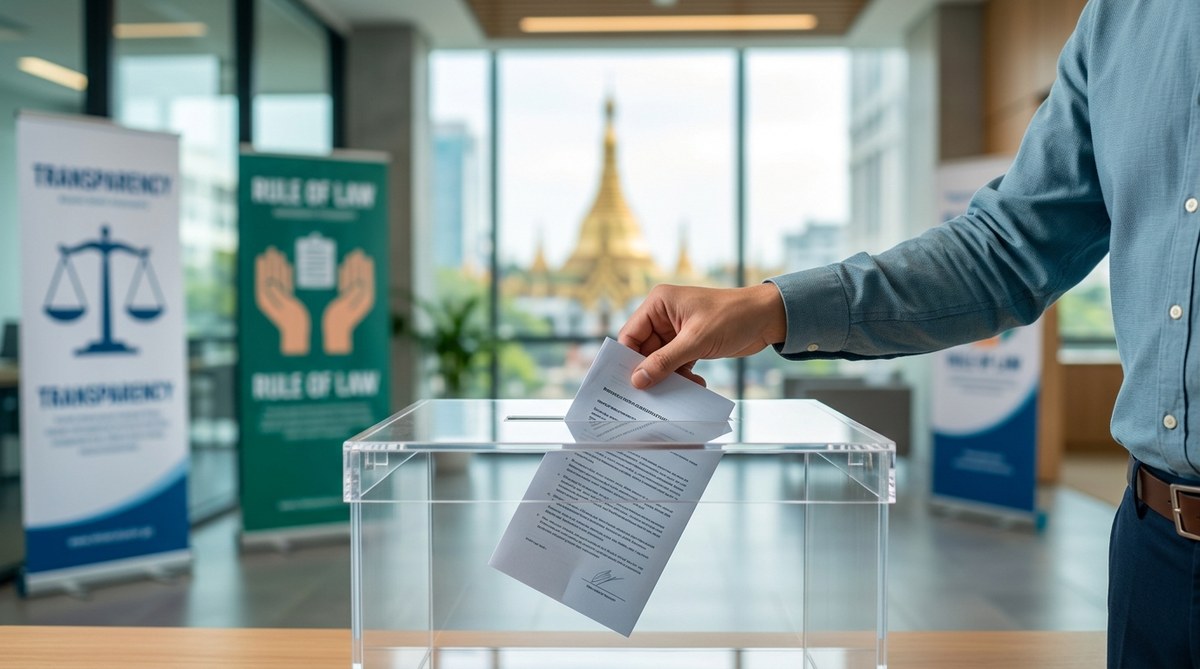
In a country where speaking truth to power can carry grave risks, a quiet revolution is unfolding. Ordinary citizens, civil servants, and even former officials are choosing to step forward. They are exposing corruption, mismanagement, and abuses that have plagued Myanmar’s governance for decades. These whistleblowers are not just informants. They are catalysts for change, forcing institutions to answer for their actions. Their work is dangerous, often lonely, but increasingly effective. And in 2026, their role has become more critical than ever.
Whistleblowers are vital to Myanmar’s accountability movement, despite facing severe legal and personal risks. Their disclosures have triggered investigations, policy shifts, and international scrutiny. Support from civil society, secure digital tools, and emerging legal protections are making a difference. Understanding their methods and challenges helps advocates strengthen transparency efforts in Myanmar’s complex governance landscape.
The Landscape of Governance and Corruption in Myanmar
Myanmar’s governance system has long struggled with opacity. Military influence over economic assets, weak rule of law, and limited press freedom create an environment where corruption flourishes. According to Transparency International’s 2025 Corruption Perceptions Index, Myanmar ranked near the bottom in Southeast Asia. Public procurement, natural resource extraction, and licensing remain particularly vulnerable. These conditions produce a demand for whistleblowers who can illuminate wrongdoing from inside the system.
But speaking out is not simple. Myanmar’s Penal Code still contains provisions that criminalize defamation and sedition. Authorities have used these laws to silence critics. A whistleblower who leaks information about a corrupt land deal or a misappropriated budget may face arrest, intimidation, or worse. Despite these risks, a growing number of individuals are coming forward. Why? Because they see no other way to hold power accountable.
Who Are Myanmar’s Whistleblowers?
Whistleblowers in Myanmar come from many walks of life. Some are mid-level civil servants in ministries like Mining or Planning and Finance. Others are employees of state owned enterprises, such as Myanmar Oil and Gas Enterprise. A few are journalists who receive confidential documents. Many are activists embedded in ethnic regions where local authorities operate with near impunity.
Their motivations vary. Some are driven by personal ethics after witnessing theft of public funds meant for schools or hospitals. Others have been pushed by family members affected by corruption. A surprising number are former military personnel who grew disillusioned with the system. What unites them is a willingness to risk their safety for the public good.
How Whistleblowers Drive Accountability
Whistleblowers contribute to accountability in several concrete ways. First, they provide evidence that triggers official investigations. For example, in 2024, a leaked document from the Ministry of Electric Power showed inflated contracts for a dam project. The leak led to a parliamentary inquiry and the suspension of several officials. Second, they supply data to journalists and civil society organizations who then amplify the story. This creates public pressure that authorities cannot easily ignore.
Third, whistleblowers help international watchdogs monitor compliance with sanctions and anti-corruption commitments. The United Nations and human rights groups rely on insider accounts to verify reports of abuse. Without these sources, many violations would remain hidden behind closed doors.
A Practical Guide for Whistleblowers in Myanmar
If you are considering reporting wrongdoing, the following steps can help protect you and maximize impact. These are based on advice from experienced advocates in Myanmar and comparable contexts.
-
Assess the risks honestly. Understand the legal environment. Consult a trusted lawyer or a human rights organization before you act. Consider your family’s safety as well as your own.
-
Document everything securely. Use encrypted apps like Signal for communication. Store sensitive files on encrypted USB drives or cloud services with strong privacy policies. Avoid using work computers or networks.
-
Find a safe channel to report. You can approach a trusted journalist with a proven track record of protecting sources. Alternatively, some local NGOs offer anonymous reporting platforms. The Myanmar Accountability Project, for instance, runs a secure hotline.
-
Limit what you share initially. Start with a small piece of evidence to test the recipient’s trustworthiness. Never reveal your identity until you are certain of the protections in place.
-
Build a support network. Connect with other whistleblowers, advocacy groups, or diaspora communities. Isolation increases vulnerability. Groups like the https://omimyanmar.org/the-role-of-civil-society-in-promoting-transparency-and-accountability-in-myanmar/ can offer guidance and solidarity.
Common Traits of Effective Whistleblowing
- Patience: Reform takes years. Do not expect immediate results.
- Selective disclosure: Share only what is necessary to prove the case.
- Legal consciousness: Know your rights, even if they are limited.
- Emotional resilience: Prepare for backlash and psychological stress.
- Collaboration: Work with others who share your goals.
Comparing Traditional and Digital Whistleblowing Methods
| Aspect | Traditional Methods | Digital Methods |
|---|---|---|
| Security | Paper documents, face to face meetings | Encrypted messaging, anonymous uploads |
| Reach | Limited to local contacts | Global audiences via social media |
| Anonymity | Hard to maintain | Possible with VPNs and Tor |
| Verification | Recipient must know source well | Metadata can confirm authenticity |
| Risk | Physical surveillance | Digital surveillance and hacking |
Each approach has trade offs. Many whistleblowers now combine both. They use digital tools to transmit evidence while relying on personal networks for verification and support.
“In Myanmar, the person who speaks out is often the only one who knows the full picture. The system depends on silence. Breaking that silence is the first act of justice.” — former civil servant who disclosed procurement fraud in 2025 (name withheld for safety)
Legal and Personal Risks in 2026
Despite incremental progress, Myanmar’s legal framework still offers weak protections for whistleblowers. A 2023 Whistleblower Protection Law exists on paper, but implementation is patchy. Many whistleblowers report that police or military intelligence target them regardless of the law. The Cyber Security Law also gives authorities broad powers to monitor digital communications. This makes secure communication tools essential but not foolproof.
Social stigma is another barrier. Whistleblowers are sometimes branded as traitors within their communities. Families may face harassment. Relocation is often necessary. Diaspora networks have stepped in to help, but the emotional toll is immense. Researchers must understand these dynamics when studying whistleblower impact.
How Civil Society and International Partners Help
Local and international organizations play a crucial role in supporting whistleblowers. They provide legal aid, media training, and emergency funds. Some offer relocation assistance. The https://omimyanmar.org/how-international-watchdogs-are-monitoring-myanmar-s-governance-reforms-in-2026/ keep pressure on authorities by publishing reports based on whistleblower evidence. They also advocate for stronger legal protections.
Grassroots initiatives are equally important. Community based monitoring projects train citizens to document corruption at the township level. These projects create a pipeline for whistleblowers to share information safely. The combination of top down international pressure and bottom up community action is producing results.
The Road Ahead for Whistleblowers in Myanmar
Looking at 2026 and beyond, several trends are emerging. First, technology is lowering the barrier to whistleblowing. Encrypted platforms and secure drop systems are becoming more accessible. Second, younger generations of civil servants are more willing to speak out, influenced by global transparency movements. Third, international sanctions tied to governance benchmarks give whistleblowers leverage. Their disclosures can trigger tangible consequences for corrupt officials.
However, risks remain high. The military’s continued political influence means that reprisals are still likely. Whistleblowers need sustained protection and solidarity. Researchers and advocates must continue to document these cases to build a case for reform.
Strengthening Transparency Through Courage
The journey toward accountable governance in Myanmar is long and uneven. Whistleblowers are not the only actors driving change. But they are often the spark that ignites broader movements. Their willingness to risk everything for truth deserves recognition and support. For researchers, journalists, and human rights advocates, understanding how whistleblowers operate is essential to building effective accountability strategies.
Whether you are a journalist seeking sources, an NGO staffer building a reporting hotline, or a policymaker evaluating reforms, remember that behind every leak is a person who made a difficult choice. Their courage can inspire us all to demand better from the systems that govern us. And their stories remind us that even in the most closed environments, truth has a way of breaking through.
If you want to learn more about how Myanmar’s diaspora communities are also pushing for accountability from abroad, read our article on For a deeper look at the legal framework, see