
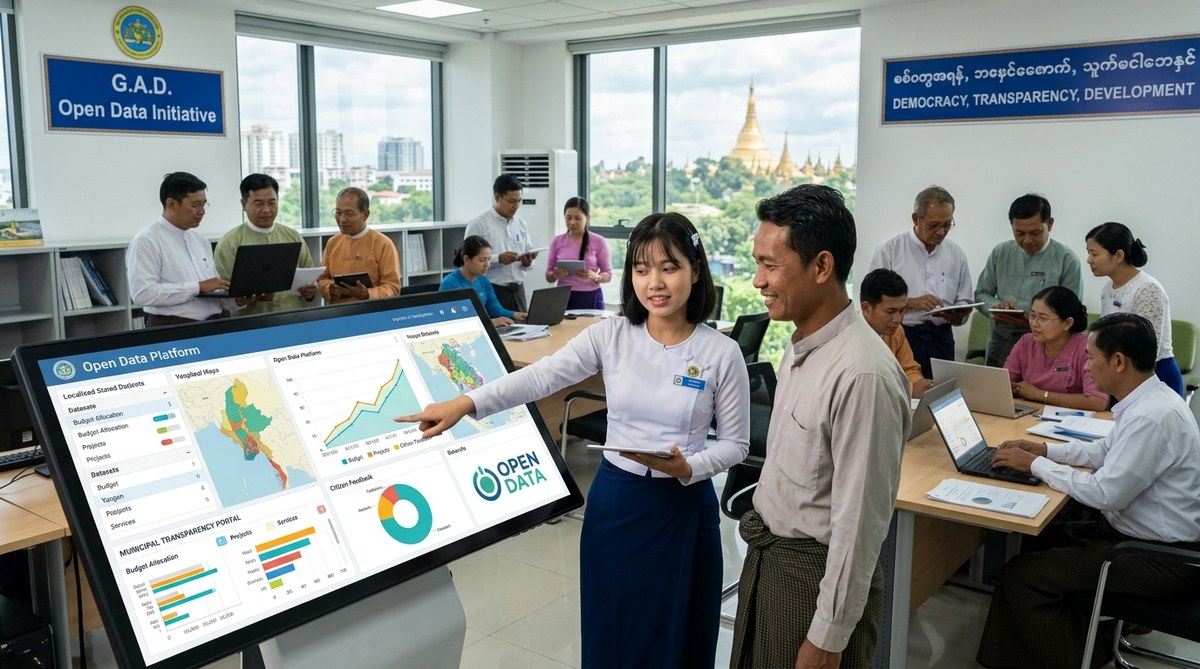
The shift from dusty ledgers locked in township offices to live digital dashboards accessible on a smartphone might sound like a story from a futuristic novel. But this transformation is happening right now in Myanmar. For decades, information about local budgets, public works projects, and school funding was hard to find. Citizens who wanted answers often faced closed doors. Today, that old reality is changing. A growing movement centered on Myanmar open government data is rewriting the rules of local governance and giving communities a much clearer picture of how decisions get made.
Open data platforms are giving Myanmar citizens real access to government budgets, project timelines, and procurement details at the township level. For policy analysts, this shift provides new transparency, better oversight tools, and a chance to measure the impact of information sharing on public trust and service delivery across local governments in 2026.
Why Open Data Matters for Township Governance
Myanmar has over 300 townships, each acting as a crucial administrative hub for millions of people. These townships manage everything from road repairs to hospital supplies. For a long time, the financial records of these townships were considered internal documents. If you wanted to know how much money was spent on a new school building, you often needed a personal connection inside the office.
Open government data flips this model. When a township publishes its budget online in a machine readable format, anyone can look at it. Journalists, civil society groups, and even local business owners can check if the numbers add up. This openness acts as a natural check on corruption. It also helps local officials who want to do a good job, because they can point to the data and show exactly where the money went. For researchers focused on governance, this creates a rich field of study where claims can be tested against real numbers.
The Core Parts of a Working Open Data System
Building a platform that actually delivers results takes more than just a website. From what I have seen in fieldwork and conversations with local partners, successful systems share a few common features.
- Standardized data formats. If every township publishes its budget in a different spreadsheet template, comparing them becomes nearly impossible. Common fields and labels let analysts run statewide reports.
- Regular updates. A budget from two years ago has limited value. Citizens and watchdogs need current data. The best platforms update information monthly or even weekly.
- Offline access options. Myanmar still struggles with internet connectivity. Many people in rural areas rely on mobile data that can be expensive or slow. Platforms that offer downloadable PDFs or simple text files reach a broader audience.
- Feedback channels. A one way broadcast is not enough. Systems that allow users to ask questions or flag errors build trust and improve data quality over time.
How to Launch a Local Open Data Initiative
If you are a policy analyst or a researcher working with local governments in Myanmar, the idea of starting an open data program can feel overwhelming. But the process does not need to be complicated. Here is a practical sequence that several township administrations have used successfully.
- Start with one dataset. Pick a single area that matters to the community, like the annual road maintenance budget. Keep the scope small to avoid getting stuck.
- Clean the data. Remove duplicate entries, fix obvious errors, and make sure column names are clear. This step takes time but prevents confusion later.
- Pick a simple platform. A basic website or a shared cloud folder works fine in the beginning. The goal is to get the data out there, not to build a perfect portal.
- Announce the release. Hold a small community meeting or send a notice through local social media groups. Let people know the data exists and how to find it.
- Collect feedback. Ask users if they could find what they needed. Use their comments to improve the next release.
- Expand gradually. Once the first dataset is working well, add another. Township budgets, school supplies, and health clinic inventory are good next steps.
Common Missteps and How to Avoid Them
Open data sounds simple in theory, but practice reveals some important pitfalls. I have watched well intentioned projects stumble because of a few recurring problems. The table below outlines the most frequent mistakes and how to steer clear of them.
| Common Mistake | Why It Happens | Better Approach |
|---|---|---|
| Publishing PDFs only | Staff are used to creating printed reports | Convert PDF data into spreadsheets or CSV files first |
| Skipping translation | Officials speak Burmese, but local languages vary | Provide key summaries in major ethnic languages |
| No update schedule | Data is posted once and forgotten | Set a recurring calendar reminder for data refreshes |
| Ignoring user training | Citizens do not know how to read raw data | Offer short workshops or simple video tutorials |
| Overloading the site | Too many datasets released at once | Start with three to five high value datasets |
Real Stories of Data in Action
In one township in central Myanmar, a local civic group used published open data to compare the budgeted amount for a bridge repair with the actual work completed. They noticed that the repair had been budgeted at twice the usual cost for similar projects. After raising the question at a public meeting, the township administrator reviewed the contract and found an error in the supplier bid. The correction saved enough money to fund a small clinic renovation.
Stories like this are not rare. They are becoming more common as trust in the data grows. In another example, a group of farmers used published agricultural subsidy data to confirm they were receiving the correct amounts. When they found discrepancies, they had clear evidence to present to district officials. The ability to show cold hard numbers changed the conversation from a personal complaint to a structural problem that needed fixing.
“Data does not solve every governance problem,” says a governance researcher who has worked in Myanmar since 2018. “But it gives people a shared set of facts. When everyone looks at the same numbers, the debate shifts from ‘you are lying’ to ‘how do we fix this problem together.’ That is a huge step forward.”
Evaluating the Impact of Transparency
Measuring whether open data actually changes outcomes is tricky. It is not enough to count how many datasets were published. Real impact shows up in different ways. A few metrics that policy analysts find useful include:
- User engagement. How many people download or view the data each month? Are those numbers growing?
- Media mentions. Are local newspapers or news sites citing the data in their stories? This indicates that the information is reaching a wider audience.
- Citizen complaints. Has the number of formal complaints about budget mismanagement gone up or down? A rise can actually be a positive sign, because it means people feel empowered to speak up.
- Project completion rates. Are public works projects finishing on time and on budget more often now that the data is public?
For a deeper look at how international organizations track these shifts, check out our piece on how international watchdogs are monitoring Myanmar’s governance reforms in 2026. It covers the specific indicators used by groups like the Open Government Partnership and local think tanks.
Challenges That Still Need Attention
No honest article about transparency in Myanmar can pretend everything is smooth. There are real obstacles. Internet censorship and restrictions on digital platforms remain concerns. Some local officials resist sharing data because they fear it will be used to criticize them. Others simply lack the technical skills to format and upload information correctly.
There is also the question of sustainability. Many open data projects started with funding from international donors. When that funding ends, who pays for the server maintenance, the staff training, and the data cleaning? Long term planning around budget ownership is something every township partner needs to think about.
Another layer is the legal environment. While there have been some advances, the framework for freedom of information is still developing. You can read more about this in our detailed analysis of understanding Myanmar’s freedom of information laws. Knowing the legal boundaries helps advocates push for stronger protections without crossing lines that could endanger their work.
Where the Movement Is Headed in 2026
Looking at the current landscape, I see several encouraging trends. More townships are joining regional data sharing networks. Young technologists in Yangon and Mandalay are building tools that make it easier to visualize local budget data. Civil society groups are training community volunteers to act as data monitors. These local champions check the published numbers against what actually happens on the ground.
Some of the most interesting work is happening in ethnic minority areas where local administrations are using open data to document their own governance. This creates a powerful record of autonomy and accountability. The rise of grassroots efforts is also worth noting. Our article on 5 grassroots transparency initiatives reshaping local governance in Myanmar offers a closer look at these community driven projects.
Technology is evolving too. Mobile apps that work with low bandwidth are making data access easier in remote villages. Machine learning tools are being tested to flag unusual spending patterns automatically. But the human element remains the most important part. Data is only as good as the people who use it and the leaders who commit to sharing it honestly.
A Shared Responsibility for Transparent Governance
Open government data is not a magic wand. It will not instantly fix every problem in Myanmar’s local governance. What it does is create a foundation. When citizens have access to reliable information, they can ask smarter questions. When officials know their decisions are visible, they tend to make more careful choices. Over time, this builds a culture where transparency becomes the norm rather than the exception.
For policy analysts and researchers, this moment offers a rare chance to study a transparency movement while it is still young. The data being generated today will be the historical record of tomorrow. By paying attention to what works and what does not, you can help shape the next phase of this journey. If you want to see how civic tech fits into this bigger picture, take a look at our resource on civic tech initiatives enhancing government transparency. The path forward is not easy, but with open data, it is at least visible. And that alone is a revolution worth supporting.