
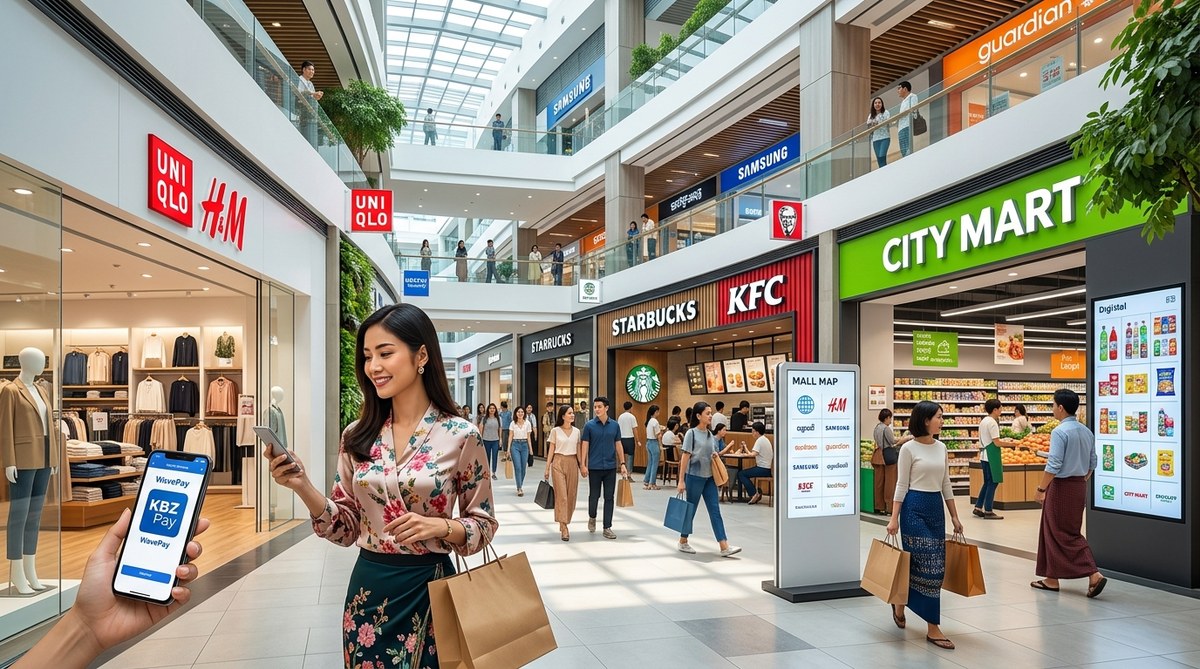
Yangon’s streets tell a story that spreadsheets cannot fully capture. A new shopping complex in Hlaingthaya sits next to a century old tea shop where families still gather for morning mohinga. Inside the complex, international brands share floor space with local entrepreneurs selling traditional longyi alongside imported cosmetics. This mix of old and new defines Myanmar’s retail landscape in 2026. For business development managers and market entry strategists, the question is no longer whether to enter Myanmar, but how to adapt to a market that has changed dramatically in just a few years.
International brands entering Myanmar’s retail market in 2026 face a complex environment shaped by regulatory changes, shifting consumer habits, and supply chain challenges. Success depends on forming deep local partnerships, adapting to digital first payment systems, and understanding regional differences beyond Yangon. Brands that treat Myanmar as a long term commitment rather than a frontier market will build the most durable presence.
What Makes Myanmar’s Retail Market Different in 2026
Myanmar is not a market you can enter with a one size fits all strategy. The country has a young population, with over half of its citizens under 30 years old. These consumers are increasingly connected. Smartphone penetration has grown steadily, and social commerce on platforms like Facebook and Viber drives a large share of retail transactions. Yet cash remains king in many parts of the country.
International brands must also navigate a regulatory environment that has evolved since 2021. New foreign investment rules, changes in import licensing, and shifting tax structures all affect how goods enter the country and reach consumers. The old approach of setting up a single distributor in Yangon and hoping for the best no longer works.
Here are the key factors shaping the market right now:
- Regulatory complexity: Import permits and customs clearance can take weeks longer than in neighboring markets. Working with a local customs broker is not optional.
- Digital payment growth: Mobile wallets like Wave Money and KBZ Pay are now common in cities, but rural areas still prefer cash on delivery.
- Supply chain fragmentation: Roads outside major cities remain inconsistent. Many brands use a hub and spoke model with warehouses in Yangon and Mandalay.
- Consumer trust in local brands: Myanmar shoppers often prefer products recommended by friends or social media influencers over international advertising.
- Currency volatility: The kyat has fluctuated significantly. Brands need a solid hedging strategy or local currency pricing to protect margins.
5 Steps for Entering Myanmar’s Retail Market
Every market entry is different, but successful international brands in Myanmar tend to follow a similar path. Here is a practical sequence that has worked for consumer goods companies, fashion retailers, and food and beverage brands entering the country in 2025 and 2026.
-
Conduct a regulatory audit with local legal counsel. Do not rely on generic Southeast Asia advice. Myanmar’s company registration, tax, and import laws have specific quirks. For example, foreign retailers in certain sectors must partner with a local entity. A good lawyer will also help you understand the nuances of the Myanmar Companies Law and the Myanmar Investment Law. You can read more about the specific changes in our guide on foreign investment regulations in Myanmar.
-
Identify a local distribution partner or joint venture. The partnership model is the most common entry strategy. Look for a partner with existing relationships with modern trade retailers like City Mart, Ocean, and Aeon Orange. But also ask about their reach into traditional trade, which still accounts for the majority of retail sales in Myanmar. Traditional trade includes small neighborhood shops, wet markets, and street vendors. A partner who only works with modern trade will limit your market access.
-
Test demand through a soft launch in Yangon. Yangon is the commercial capital and the natural starting point. Open a single storefront or partner with an existing retailer for a pop up experience. Use this phase to learn about consumer preferences, pricing sensitivity, and local supply chain challenges. Pay attention to packaging. Myanmar consumers care about product presentation and often prefer smaller, more affordable pack sizes.
-
Adapt your product or service to local tastes. This sounds obvious, but many brands get it wrong. A global snack company might need to adjust spice levels. A clothing retailer should consider lighter fabrics suited for the tropical climate. Even international fast food chains have introduced menu items with local ingredients like fermented tea leaf salads or coconut noodles. Do not assume your global product will work without changes.
-
Build a digital first marketing strategy. Myanmar is a mobile first country. Most consumers discover new products through Facebook, TikTok, and local influencer pages. Invest in high quality video content in Burmese. Hire a local social media manager who understands cultural nuances. Avoid direct translations of your global campaigns. What works in Bangkok or Jakarta may fall flat in Yangon.
Common Mistakes International Brands Make
Even experienced companies stumble when entering Myanmar. The table below outlines frequent missteps and how to avoid them.
| Mistake | Why It Happens | Better Approach |
|---|---|---|
| Overlooking traditional trade | Brands focus only on modern shopping malls. | Partner with distributors who serve neighborhood shops. |
| Ignoring currency risk | Setting prices in foreign currency. | Price in kyat and review every 90 days. |
| Using a regional distributor | Hiring a Singapore or Thailand based distributor. | Find a partner with boots on the ground in Myanmar. |
| Rushing the import process | Underestimating customs delays. | Build 4 to 6 weeks of buffer stock. |
| Neglecting local language | Marketing materials in English only. | Invest in professional Burmese translation and voiceover. |
“The brands that succeed in Myanmar are the ones that treat it as a distinct market, not an extension of Thailand or Vietnam. You need patience, local staff, and a willingness to learn from mistakes.” — A regional director for a major European consumer goods company who has worked in Myanmar since 2019.
Understanding the New Consumer in 2026
Myanmar’s consumer base is not static. Younger shoppers in Yangon and Mandalay are increasingly brand conscious, but they also value authenticity. They want to know where products come from and whether a brand aligns with their values. This is especially true for food and beauty products, where trust is paramount.
At the same time, economic pressures mean that price sensitivity remains high. The middle class is growing, but many families still have limited disposable income. Brands that offer quality at accessible price points tend to perform better than luxury focused entrants.
Another trend worth noting is the rise of health and wellness. Since the pandemic, more Myanmar consumers have started looking for hygiene products, vitamins, and natural personal care items. International brands in these categories have seen strong growth, especially when they partner with local health influencers.
For a deeper look at how the middle class is evolving, read our analysis on why Myanmar’s middle class is growing despite economic uncertainty.
How to Build a Sustainable Retail Operation
Entering Myanmar is one thing. Staying and growing is another. Sustainable operations require attention to three areas: talent, compliance, and logistics.
Talent. Hire local managers and invest in their training. Myanmar has a young, educated workforce, but many professionals lack experience with international retail standards. A few months of on the job training can make a huge difference. Also consider hiring Myanmar diaspora professionals who have returned to the country. They often bring international experience along with deep local knowledge.
Compliance. Myanmar’s regulatory environment can change with little warning. Stay in close contact with your legal team and industry associations. The Union of Myanmar Federation of Chambers of Commerce and Industry (UMFCCI) is a good resource for updates on trade policies. Our article on navigating Myanmar’s tax system as a foreign business owner offers more specific guidance.
Logistics. The road network is improving but still challenging. Many brands use Yangon as their primary warehouse hub, with secondary hubs in Mandalay for the north and Mawlamyine for the southeast. Partner with a logistics company that has experience with Myanmar’s customs procedures and last mile delivery challenges. For a broader view of moving goods, see our guide on trade corridors and logistics in Myanmar.
What the Next Few Years Look Like
The retail landscape in Myanmar will continue to evolve. Urbanization is drawing more people to Yangon, Mandalay, and Nay Pyi Taw. As cities grow, so does demand for modern retail spaces and international products. At the same time, digital commerce will keep expanding. By 2028, analysts predict that online retail could account for 15 to 20 percent of total retail sales in urban areas.
Brands that establish a presence now will be well positioned for that growth. But the window is not infinite. Competitors from China, Thailand, and South Korea are already moving in. The key is to act deliberately, with a clear strategy and local partners you trust.
Your Next Move in Myanmar’s Retail Market
If you are serious about entering Myanmar, start with a small, testable commitment. Visit Yangon. Meet potential partners. Walk through a traditional market and a modern mall on the same day. Talk to consumers. Read the local business news. Build relationships before you build stores.
Myanmar rewards patience and local knowledge. It punishes shortcuts. If you approach this market with respect for its unique character and a willingness to adapt, you will find opportunities that many competitors overlook. The brands that do that are the ones reshaping Myanmar’s retail landscape for the better.
For additional context on which sectors are most promising, check out our report on 5 profitable industries for international businesses entering Myanmar. And if you need practical advice on working conditions in the commercial capital, our guide on what international professionals need to know about working in Yangon will help you prepare.
The market is ready for brands that show up ready to learn. Be one of them.