
You are standing at the airport, passport in hand, and your mind is running through the checklist: visa, itinerary, travel insurance. But there is one question that often gets pushed to the bottom of the list: what happens if you get sick in Myanmar? The country’s healthcare system is different from what most Americans are used to, and access to care can vary wildly between Yangon and a remote village in Shan State. The good news is that with the right preparation, you can dramatically reduce your chances of getting sick. And if something does happen, you will know exactly where to turn.
Staying healthy in Myanmar comes down to three things: preparation before you leave, smart habits during your trip, and knowing your medical options on the ground. Most common illnesses are preventable with basic precautions like safe drinking water, mosquito protection, and food hygiene. For emergencies, keep a list of international hospitals in Yangon and Mandalay, and always carry travel insurance that covers medical evacuation.
Why Travelers Get Sick in Myanmar (And How to Avoid It)
Myanmar is a tropical country with a climate that supports bacteria and mosquitoes. Add in long travel days, unfamiliar food, and changes in water quality, and your body has to work harder to stay healthy. The most common issues travelers face are traveler’s diarrhea, respiratory infections, and mosquito-borne diseases like dengue fever.
The key is not to panic. Instead, think of it as managing risk. You cannot control everything, but you can control your water source, your food choices, and your mosquito protection. Let’s break down the practical steps.
Water Safety: The Number One Rule
Tap water in Myanmar is not safe to drink. This is the single most important health tip for traveling in Myanmar. Even locals boil their water before drinking it. Here is how to stay hydrated without getting sick:
- Drink only sealed bottled water. Check that the seal is intact before you open it. Some smaller shops have been known to refill bottles with tap water.
- Use a portable water filter or purifier. If you are traveling to rural areas where bottled water is hard to find, bring a SteriPen or a high-quality filtration bottle like a Grayl Geopress.
- Avoid ice unless you are sure. In reputable hotels and restaurants in Yangon and Mandalay, ice is usually made from purified water. At street stalls, skip the ice.
- Brush your teeth with bottled water. It is an easy habit to forget, but it matters.
- Be careful with fresh juices. They are often mixed with tap water or ice. Stick to fruits you can peel yourself.
“The most common mistake I see travelers make is assuming that a fancy hotel uses safe water for everything. Always confirm. When in doubt, drink from a bottle you opened yourself.” – Dr. Mya Thandar, Yangon International Medical Clinic
Food Safety: Eating Well Without Worry
Myanmar’s food is one of the best reasons to visit. From the national dish, Mohinga (rice noodle soup), to the fermented tea leaf salad called Laphet Thoke, the flavors are unforgettable. You do not need to avoid local food. You just need to be smart about it.
Here is a list of food safety habits that work:
- Eat at places that are busy with locals. High turnover means fresh ingredients.
- Choose food that is cooked in front of you. Heat kills most pathogens.
- Avoid raw vegetables and salads unless you washed them yourself with purified water.
- Be cautious with street meat. If it has been sitting out under a heat lamp, skip it.
- Wash your hands or use hand sanitizer before every meal. This is non-negotiable.
Foods That Are Generally Safe
| Food Type | Why It Is Safer | Example |
|---|---|---|
| Hot soups | Boiling temperature kills bacteria | Mohinga, Khao Swe |
| Grilled meats | High heat on the surface | Satay, grilled fish |
| Fruits with peels | You control the contamination | Banana, orange, mango |
| Steamed rice | Cooked fresh, served hot | Htamin (plain rice) |
| Packaged snacks | Sealed and shelf-stable | Biscuits, chips |
Foods to Be Cautious With
| Food Type | Risk Factor | Example |
|---|---|---|
| Raw salads | Washed in tap water | Garden salads |
| Cut fruit | Knife and water contamination | Watermelon slices |
| Street ice cream | Often made with tap water | Local popsicles |
| Seafood from inland | Spoils quickly in heat | Prawns at non-specialty stalls |
Mosquito Protection: Your Best Defense Against Dengue
Dengue fever is a real concern in Myanmar, especially during and just after the rainy season (May to October). There is no vaccine for dengue, and it can knock you out for a week or more. Prevention is everything.
- Use DEET-based repellent. The CDC recommends 20% to 30% DEET for tropical climates.
- Cover up at dawn and dusk. Mosquitoes that carry dengue are most active during these hours. Wear long pants and long sleeves.
- Sleep under a mosquito net. Many hotels in rural areas provide them. If you are staying in budget accommodation, bring a travel net.
- Use permethrin spray on your clothes. It lasts through several washes and adds an extra layer of protection.
- Stay in rooms with screens or air conditioning. Mosquitoes struggle to get past window screens and AC units.
If you develop a high fever, severe headache, or joint pain during your trip, see a doctor immediately. Early treatment for dengue is supportive care (hydration and rest), but it needs to be diagnosed.
Finding Medical Care: Where to Go and What to Expect
Myanmar’s healthcare system is a mix of public hospitals, private clinics, and international-standard facilities. Public hospitals are very basic and often understocked. For anything serious, you want a private or international clinic.
Your Medical Care Plan
- Before you leave, get travel insurance. This is the most important step. Make sure your policy covers medical evacuation. If you have a serious accident or illness, you will need to be flown to Bangkok or Singapore for treatment. Evacuation can cost $20,000 or more without insurance.
- Save these numbers in your phone. The international hospitals in Yangon include Pun Hlaing International Hospital and Yangon International Medical Clinic. In Mandalay, the best option is Mandalay International Hospital.
- Carry a printed list of your medications. Include generic names, not just brand names. Local pharmacies may not stock your exact brand, but they can often find the generic equivalent.
- Know your embassy’s location. The U.S. Embassy in Yangon can provide a list of recommended doctors and hospitals. They cannot provide medical care, but they can help you navigate the system.
For minor issues like a cold or a mild stomach bug, visit a private pharmacy. Pharmacists in Myanmar are well-trained and can dispense antibiotics and other medications without a prescription. Just make sure the medication is sealed and not expired.
Your Health Kit: What to Pack
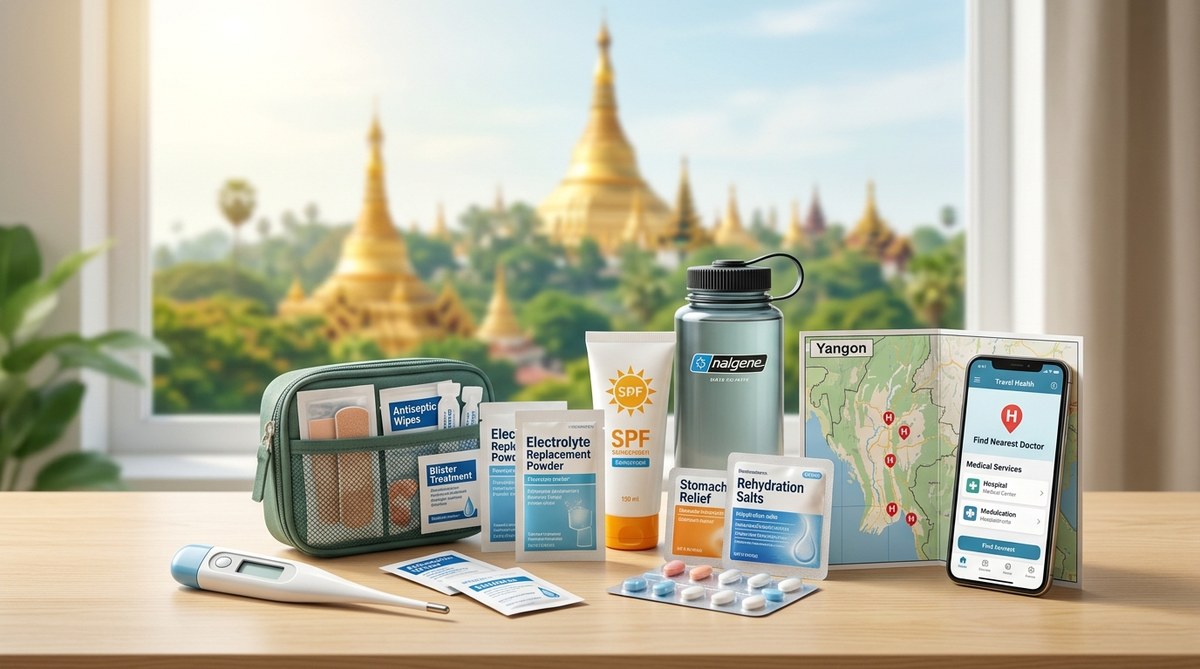
Putting together a small health kit before you travel can save you a lot of hassle. Here is what to include:
- Oral rehydration salts (ORS). These are lightweight and can save you if you get diarrhea.
- Antidiarrheal medication (like loperamide).
- Antibiotics for traveler’s diarrhea (like azithromycin, which you can get with a prescription from your doctor before you go).
- Antihistamines for allergic reactions.
- Pain reliever (ibuprofen or acetaminophen).
- Thermometer (digital).
- Bandages, antiseptic wipes, and blister plasters.
- Motion sickness medication (for the winding roads and boat trips).
- A spare pair of glasses or contacts. Losing a contact lens in a rural area is a real headache.
For a deeper dive on what to bring, check out our essential Myanmar packing list.
Vaccinations: What You Need Before You Go
You should visit a travel clinic or your primary care doctor at least 4 to 6 weeks before your trip. Here are the standard recommendations for Myanmar:
- Routine vaccines: Make sure you are up to date on MMR, polio, tetanus, and chickenpox.
- Hepatitis A: Recommended for all travelers. Spread through contaminated food and water.
- Typhoid: Also recommended, especially if you plan to eat street food or visit rural areas.
- Hepatitis B: Recommended if you might need medical care (injections) or have close contact with locals.
- Japanese Encephalitis: Recommended if you are traveling to rural farming areas for a month or longer.
- Rabies: Recommended for travelers who will be around animals, especially if you are going to remote areas.
- Yellow Fever: Not required for Myanmar, but you may need proof of vaccination if you are coming from a country with yellow fever.
- Malaria: There is no vaccine, but you should discuss malaria prophylaxis with your doctor. Doxycycline is a common option, but it can make you sensitive to the sun.
Mental Health and Travel Fatigue
Traveling in Myanmar can be intense. The heat, the noise of the cities, and the constant decision-making can wear you down. Add in the emotional weight of seeing poverty or learning about the country’s political challenges, and it is normal to feel overwhelmed.
- Schedule rest days. Do not try to see Bagan, Inle Lake, and Yangon in five days. You will burn out.
- Stay connected. Buy a local SIM card at the airport so you can call home. Apps like WhatsApp are widely used in Myanmar.
- Find quiet spaces. Many pagodas and monasteries are peaceful places to sit and decompress.
- Talk to someone. If you are feeling anxious or sad, reach out to your travel companion or call a friend back home. Your mental health matters just as much as your physical health.
When to Seek Emergency Care
Know the signs that require immediate medical attention:
- High fever (over 102 degrees Fahrenheit) that does not come down with acetaminophen.
- Severe vomiting or diarrhea that prevents you from keeping fluids down for more than 12 hours.
- Difficulty breathing or signs of an allergic reaction (swelling, hives after a bee sting or medication).
- Deep cuts or wounds that may become infected.
- Any injury that involves the head, neck, or spine.
In an emergency, call your travel insurance provider first. They can direct you to the nearest appropriate facility. If you cannot reach them, go to the nearest international hospital. Do not wait.
For more context on the broader healthcare landscape, read our guide on understanding Myanmar’s healthcare system.
Your Health Is in Your Hands
Myanmar is an incredible country with warm, generous people and landscapes that will leave you speechless. The health risks are real, but they are manageable. Drink bottled water, use mosquito repellent, eat hot food, and wash your hands. Carry insurance and know where the good hospitals are. Do these things, and you free yourself up to focus on what matters: the experience.
Before you leave, take ten minutes to write down your emergency contacts, your insurance policy number, and the address of your embassy. Put it in your phone and in your bag. Then go enjoy your trip. You have done the work. Now you can relax.
If you want a broader overview of travel logistics, our guide on what you really need to know before traveling to Myanmar in 2026 covers visas, safety, and more.