
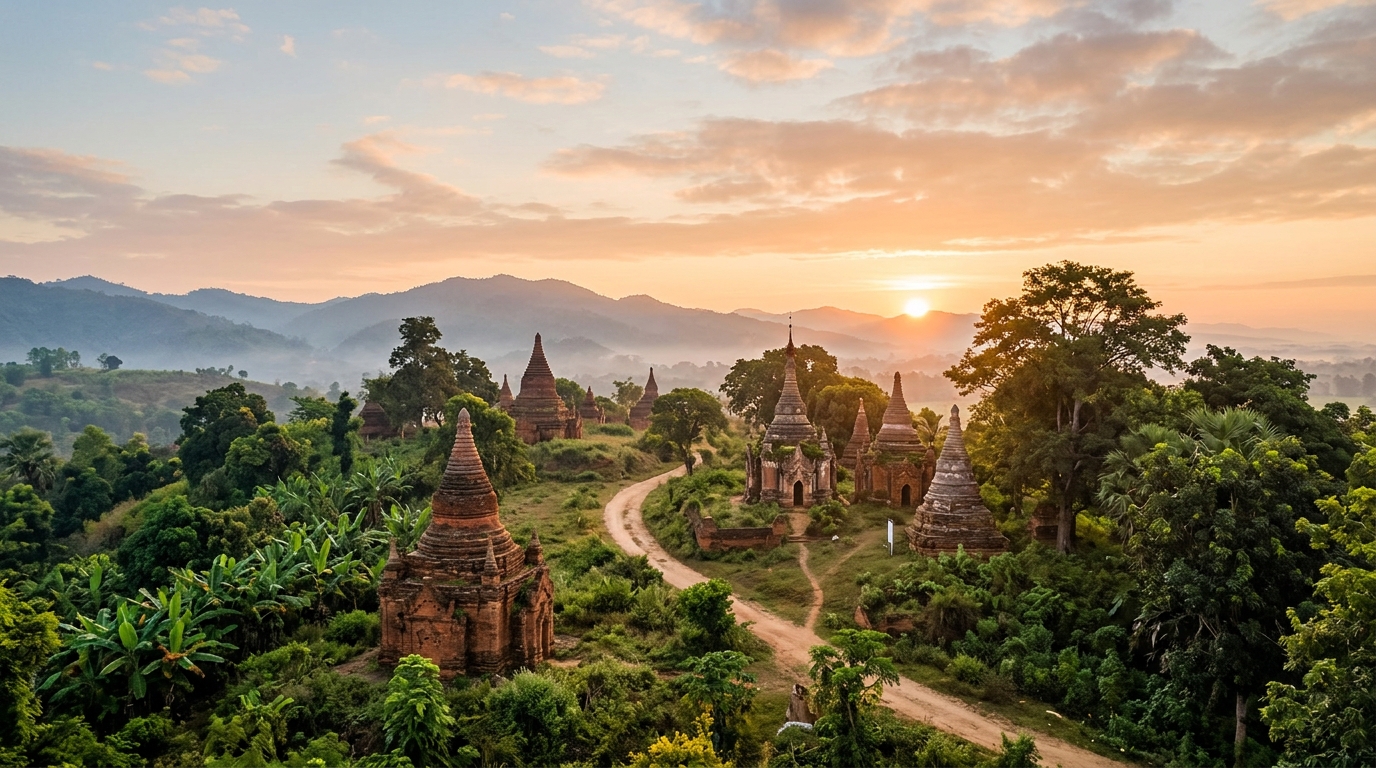
You’ve seen the sunrise over Bagan’s temple plains. You’ve climbed Shwedagon’s golden steps. Now you’re ready for something different. Myanmar holds hundreds of sacred sites that rarely appear in guidebooks, places where the incense smoke rises undisturbed and local pilgrims outnumber foreign visitors by hundreds to one. These lesser known temples in Myanmar offer something the famous sites cannot: solitude, authenticity, and the feeling that you’ve stumbled onto something precious.
Myanmar’s spiritual landscape extends far beyond Bagan’s tourist circuit. This guide reveals twelve lesser known temples across the country, from Chin State’s mountaintop shrines to Mon State’s ancient meditation caves. Each site offers unique architectural features, cultural significance, and opportunities for meaningful engagement with local Buddhist practice. Travel preparation, cultural sensitivity, and flexible timing remain essential for visiting these remote sacred spaces.
Why the famous temples only tell half the story
Bagan attracts nearly every visitor to Myanmar. The numbers make sense. Over 2,200 temples concentrated in one archaeological zone create an irresistible draw.
But this concentration creates a blind spot. Most travelers assume they’ve experienced Myanmar’s sacred architecture after a few days in Bagan. They haven’t.
The country’s spiritual geography spans multiple kingdoms, ethnic groups, and architectural traditions. A Shan temple in the eastern hills shares almost nothing with a Rakhine pagoda on the western coast. The materials differ. The decorative motifs differ. Even the Buddha images hold different mudras and expressions.
Understanding this diversity requires leaving the main tourist routes. It means accepting that some temples take three hours of bumpy road to reach. It means visiting sites where no English signs explain the history, where you’ll need to piece together the story from architectural clues and conversations with resident monks.
The reward? You’ll understand Myanmar’s religious landscape as a living, evolving tradition rather than a historical monument.
Twelve sacred sites that redefine Myanmar’s spiritual map
1. Tilawkaguru Cave Temple, Monywa
This cave temple northwest of Mandalay houses over 400,000 Buddha images. Not a typo. The walls, ceiling, and alcoves hold shelf after shelf of small Buddha statues, creating an overwhelming visual density.
Local artisans have been adding images since the 14th century. The practice continues today. You’ll see fresh gold leaf on recent additions next to centuries old figures with worn features.
The cave extends 100 meters into the hillside. Bring a flashlight. The deeper chambers receive no natural light.
2. Kyauk Kalap Pagoda, Hpa An
A golden stupa balances on a limestone pinnacle rising from an artificial lake. The rock formation stands 15 meters tall, with the pagoda adding another 7 meters.
Morning visits offer the best photography. The sun hits the gold from the east, and the lake reflects both the pagoda and the surrounding karst mountains.
A monastery sits beside the lake. Monks welcome respectful visitors during non meditation hours, typically 7 AM to 10 AM and 2 PM to 5 PM.
3. Mahamuni Temple, Sittwe
Not to be confused with Mandalay’s famous Mahamuni, this Rakhine version predates it by several centuries. The bronze Buddha image shows distinct Rakhine artistic features: a pointed crown, elongated earlobes, and a serene expression different from the rounder Bamar style.
Sittwe’s isolation on Myanmar’s western coast has kept visitor numbers low. What you really need to know before traveling to Myanmar in 2024 includes current access information for Rakhine State, which requires special permits.
The temple courtyard hosts a daily market where local Rakhine women sell traditional textiles and betel preparations.
4. Thanboddhay Pagoda, Monywa
Architectural chaos in the best possible way. This 20th century temple features over 500,000 Buddha images covering every available surface. The central stupa rises in tiers, each level studded with smaller stupas, niches, and decorative elements.
The design draws from Bodhgaya’s Mahabodhi Temple but amplifies every element to extreme levels. Some architectural historians call it excessive. Local devotees call it magnificent.
The color scheme alone sets it apart: cream, gold, and bright primary colors that would feel garish anywhere else but somehow work here.
5. Hsinbyume Pagoda, Mingun
This all white pagoda represents Mount Meru, the center of the Buddhist universe. Seven terraces symbolize the seven mountain ranges surrounding Meru. The design creates a wedding cake effect that photographs beautifully against blue skies.
Built in 1816, it sits just across the Irrawaddy River from Mandalay. Most visitors combine it with Mingun’s unfinished pagoda and massive bell.
The white surface shows every scuff mark. Authorities require visitors to remove shoes 50 meters before reaching the structure to minimize damage.
6. Kyauk Taw Gyi Temple, Amarapura
A massive Buddha carved from a single block of marble sits inside this temple near Mandalay. The image took 13 years to carve and required 10,000 workers to transport from the quarry.
The marble came from Sagyin, 30 kilometers north. Moving it involved building a special road and using hundreds of elephants. The logistics rivaled any modern engineering project.
Natural light enters through carved marble screens, creating soft illumination that changes throughout the day. Late afternoon visits offer the most dramatic lighting.
7. Shwe Yan Pyay Monastery, Nyaungshwe
This teak monastery near Inle Lake features intricate woodcarving on every structural element. The oval windows alone justify the visit. Each one displays a different geometric pattern carved from single pieces of teak.
Built in the 1900s, it represents Shan architectural traditions distinct from Bamar styles. The raised floor, wide eaves, and open design suit the lake region’s climate.
Young monks study here. Respectful visitors can observe morning lessons and chanting sessions.
8. Lawkananda Pagoda, Bagan
Yes, this sits within the Bagan archaeological zone. But 99% of visitors skip it in favor of more famous temples.
That’s their loss. Lawkananda offers the best sunset views in Bagan without the crowds that pack Shwesandaw and Pyathada. The riverfront location provides cooling breezes and unobstructed western views.
The pagoda houses a replica of the Buddha’s tooth relic. The original sits in Kandy, Sri Lanka, but the replica holds equal spiritual significance for local devotees.
9. Hpo Win Daung Caves, Monywa
Over 900 caves carved into sandstone cliffs contain Buddha images, murals, and meditation cells. Some caves date to the 14th century. Others show evidence of use going back to the Bagan period.
The murals deserve particular attention. They depict Jataka tales, daily life scenes, and cosmological diagrams using pigments that have survived centuries in the dry climate.
Climbing between cave levels requires reasonable fitness. Steep stairs and uneven surfaces make this unsuitable for visitors with mobility limitations.
10. Kyaiktiyo Pagoda, Mon State
The Golden Rock. A boulder covered in gold leaf balances on the edge of a cliff, with a small stupa on top. Physics suggests it should have fallen centuries ago. Legend says a strand of the Buddha’s hair keeps it in place.
The pilgrimage site requires a 5 kilometer uphill walk or a ride in an open truck. Male pilgrims can approach close enough to apply gold leaf. Women must maintain a distance of several meters.
Overnight stays at the mountaintop guesthouses let you witness dawn prayers when hundreds of pilgrims chant together.
11. Shwezigon Pagoda, Nyaung U
Another Bagan area temple that tourists often skip despite its historical importance. King Anawrahta built it in the 11th century to house Buddha relics. The design established the prototype for later Burmese stupas.
Four shrines at the cardinal points contain standing Buddha images. Each shrine shows subtle differences in mudra and expression worth studying.
Local vendors around the temple sell traditional offerings: flowers, incense, gold leaf, and candles. Participating in the offering ritual provides insight into active Buddhist practice.
12. Shwemawdaw Pagoda, Bago
At 114 meters, this pagoda stands taller than Shwedagon. Earthquakes have destroyed it multiple times. The current version dates to 1954, rebuilt after the 1930 earthquake.
The museum houses artifacts recovered from earlier versions, including Buddha images, inscribed stones, and architectural fragments spanning a thousand years.
Bago sits 80 kilometers from Yangon, making this an easy day trip. The town itself preserves several other significant temples and a reclining Buddha image worth visiting.
Planning your temple visits strategically
Visiting lesser known temples in Myanmar requires different preparation than hitting Bagan’s highlights. Here’s a systematic approach:
- Research current access conditions for each region, as some areas require special permits or face temporary restrictions.
- Contact local guides through Myanmar’s endangered crafts master artisans networks, who often know temple access better than tourism offices.
- Build buffer days into your schedule, since rural roads and weather can delay travel unexpectedly.
- Arrange accommodations in advance for remote areas where guesthouses fill quickly during festival periods.
- Download offline maps covering temple locations, as mobile coverage remains spotty outside major towns.
- Pack appropriate clothing including items that cover shoulders and knees, plus a light scarf for head covering when required.
Cultural protocols that matter at sacred sites
These temples function as active religious sites, not museums. Your behavior affects how communities view foreign visitors.
Essential practices include:
- Remove shoes and socks before entering any temple building or climbing stupa stairs
- Walk clockwise around stupas and Buddha images
- Never point your feet toward Buddha images while sitting
- Ask permission before photographing monks or religious ceremonies
- Dress modestly regardless of temperature
- Speak quietly within temple compounds
- Avoid visiting during meditation hours, typically mid morning and late afternoon
- Offer small donations when monks provide explanations or access to restricted areas
Women face additional restrictions at some sites. Certain areas prohibit female entry entirely. Others require maintaining specific distances from sacred objects. Local signs and guides will indicate these boundaries.
Common mistakes and how to avoid them
| Mistake | Why it happens | Better approach |
|---|---|---|
| Arriving during midday heat | Following standard tourist schedules | Visit 6 AM to 9 AM or 3 PM to 6 PM |
| Wearing inappropriate shoes | Not realizing how often you’ll remove them | Bring slip on sandals, not lace up boots |
| Skipping smaller shrines | Focusing only on main structures | Explore compound edges where older elements survive |
| Photographing without context | Treating temples as photo backdrops | Spend time observing rituals before shooting |
| Ignoring local festivals | Not checking lunar calendars | Time visits to coincide with full moon celebrations |
| Rushing between sites | Trying to see everything in limited time | Select three to four temples per region and visit thoroughly |
What to bring beyond the standard packing list
Remote temples lack the infrastructure surrounding Bagan’s tourist circuit. Prepare accordingly:
- Flashlight or headlamp for cave temples and dark interior chambers
- Sarong or lightweight pants for covering up when shorts prove insufficient
- Small bills in kyat for donations and offerings
- Reusable water bottle, as shops may be scarce
- Basic first aid supplies including blister treatment
- Portable phone charger, since electricity remains unreliable
- Notebook for recording details, as English information is minimal
- Plastic bags for storing shoes during temple visits
The connecting to Myanmar sim cards and internet access guide covers communication essentials for areas with limited connectivity.
Reading the architecture to understand the history
Lesser known temples often lack explanatory signs. Learning to interpret architectural elements reveals their stories.
Stupa shapes indicate construction periods. Cylindrical stupas with simple harmika tops suggest Pyu influence from the 1st to 9th centuries. Bell shaped stupas with ornate htis point to the Bagan period. Elongated stupas with multiple terraces indicate later Konbaung era construction.
Buddha image styles signal regional origins. Mandalay style images show round faces, heavy bodies, and elaborate crowns. Shan images feature more delicate proportions and simpler ornamentation. Mon images often display the bhumisparsha mudra with the right hand touching the earth.
Decorative motifs carry meaning. Naga serpents represent water and fertility. Chinthe lions guard against evil spirits. Garuda birds symbolize power and protection. The wheel represents Buddhist teachings.
Understanding these visual languages transforms temple visits from sightseeing into historical investigation.
“The temples tourists skip often preserve the most authentic religious practices. When you’re the only visitor, you see how communities actually use these spaces rather than how they perform for cameras.” — U Kyaw Min, temple restoration specialist, Monywa
Best seasons for visiting each region
Temple accessibility varies dramatically with Myanmar’s monsoon cycle. Strategic timing prevents wasted journeys.
November through February suits most locations. Temperatures stay moderate. Roads remain passable. Clear skies enhance photography. This peak season means higher accommodation costs and advance booking requirements.
March through May brings extreme heat. Temperatures exceed 40°C in central plains. Early morning visits become essential. Mountainous regions like Chin State and eastern Shan State remain more comfortable.
June through October monsoon season limits access to some sites. River crossings flood. Dirt roads turn to mud. However, the landscape turns green, crowds disappear, and accommodation prices drop. Hardy travelers who accept uncertainty find this period rewarding.
Specific regions have unique considerations. Rakhine State’s coastal location means monsoon rains arrive earlier and last longer. Chin State’s high elevation brings cold temperatures December through February. Inle Lake area experiences short but intense afternoon storms during monsoon months.
Engaging with resident monastic communities
Many lesser known temples house active monastic communities. Respectful interaction enriches visits immeasurably.
Monks often welcome conversations during free periods. Appropriate topics include Buddhist philosophy, temple history, daily monastic routines, and cultural practices. Avoid political discussions, personal questions about monks’ backgrounds, or anything that could be construed as romantic interest.
Offering alms food provides meaningful participation. Purchase offerings from nearby markets: fruit, packaged snacks, or traditional Burmese sweets. Present items with both hands, slight bow, and without touching the monk’s hands. Women should place offerings on a receiving cloth rather than handing directly to monks.
Some monasteries welcome volunteers for English conversation practice or basic teaching. These arrangements require advance contact through local networks rather than spontaneous requests.
Photography etiquette matters enormously. Always ask permission before photographing monks. Accept refusals graciously. Never photograph monks eating, sleeping, or in obviously private moments. Consider whether sharing images on social media serves any purpose beyond personal vanity.
Combining temple visits with local craft traditions
Many temple towns preserve traditional crafts that support religious practices. Visiting workshops adds depth to temple experiences.
Monywa’s lacquerware artisans create offering vessels used in ceremonies. Workshops welcome visitors who watch the multi week process of building up lacquer layers on bamboo frames. Myanmar’s endangered crafts documents these techniques in detail.
Bago’s wood carvers produce Buddha images and decorative panels for temple restoration. Small family workshops operate in residential neighborhoods near Shwemawdaw Pagoda. Artisans appreciate genuine interest but discourage aggressive souvenir shopping.
Nyaungshwe’s silver workers craft offering bowls, incense holders, and decorative elements. The techniques trace back centuries to when Shan sawbwas commissioned religious items.
Supporting these crafts directly benefits temple maintenance. Many artisans donate portions of their income to local pagodas. Purchasing quality pieces creates sustainable income that keeps traditional skills alive.
Where sacred sites and civic engagement intersect
Temple communities often serve as centers for local governance and social services. Understanding these connections reveals how Buddhism shapes Myanmar’s civic life.
Monastery schools provide education in areas where government schools remain inadequate. Monks teach not just religious subjects but also basic literacy, mathematics, and increasingly, English. Some monasteries have become informal community centers where villagers discuss local issues and organize collective action.
This intersection of religious and civic space has historical roots stretching back centuries. During the colonial period and later military rule, monasteries often provided the only space for community organizing outside state control. When Ava Kingdom fell silent explores how religious institutions maintained social cohesion during political fragmentation.
Visiting these temples means witnessing this ongoing role. You might see monks mediating disputes, organizing community clean up projects, or coordinating support for families facing hardship. These activities reflect Buddhism’s social engagement rather than purely individual spiritual practice.
Why these temples matter now more than ever
Myanmar’s recent political upheaval has affected tourism dramatically. Visitor numbers have plummeted. International attention has shifted to crisis coverage.
Yet the temples remain. Communities continue maintaining them. Monks still chant morning prayers. Pilgrims still climb mountain paths to make offerings.
For travelers who can visit responsibly, these lesser known temples in Myanmar offer something increasingly rare: authentic cultural experiences largely unchanged by tourism infrastructure. No ticket booths. No souvenir stalls. No crowds blocking photo angles.
The temples also provide economic support to communities that depend on pilgrimage tourism. Your respectful visit, modest donations, and purchases from local vendors contribute to temple maintenance and community welfare.
This isn’t poverty tourism or disaster voyeurism. It’s recognizing that cultural heritage continues regardless of political circumstances. The temples existed before the current crisis. They’ll exist after it resolves. Visiting them honors that continuity.
Making these journeys count
Lesser known temples in Myanmar reward travelers who approach them with patience, cultural sensitivity, and genuine curiosity. You won’t find the infrastructure that makes Bagan easy. You’ll encounter language barriers, uncertain logistics, and moments of confusion.
You’ll also experience Myanmar’s spiritual landscape as local people know it: not as a tourist attraction but as a living tradition woven into daily life. The elderly woman carefully placing fresh flowers before a Buddha image. The young monks debating scripture in a monastery courtyard. The farmer who walks an hour after harvest to make evening offerings.
These moments don’t happen at famous sites where tourism has created a performance layer between visitors and authentic practice. They happen at the temples this guide describes, where your presence as a respectful observer changes nothing about how communities engage with their sacred spaces.
Plan carefully. Travel humbly. Listen more than you speak. The temples will reveal themselves in ways no guidebook can fully capture.