
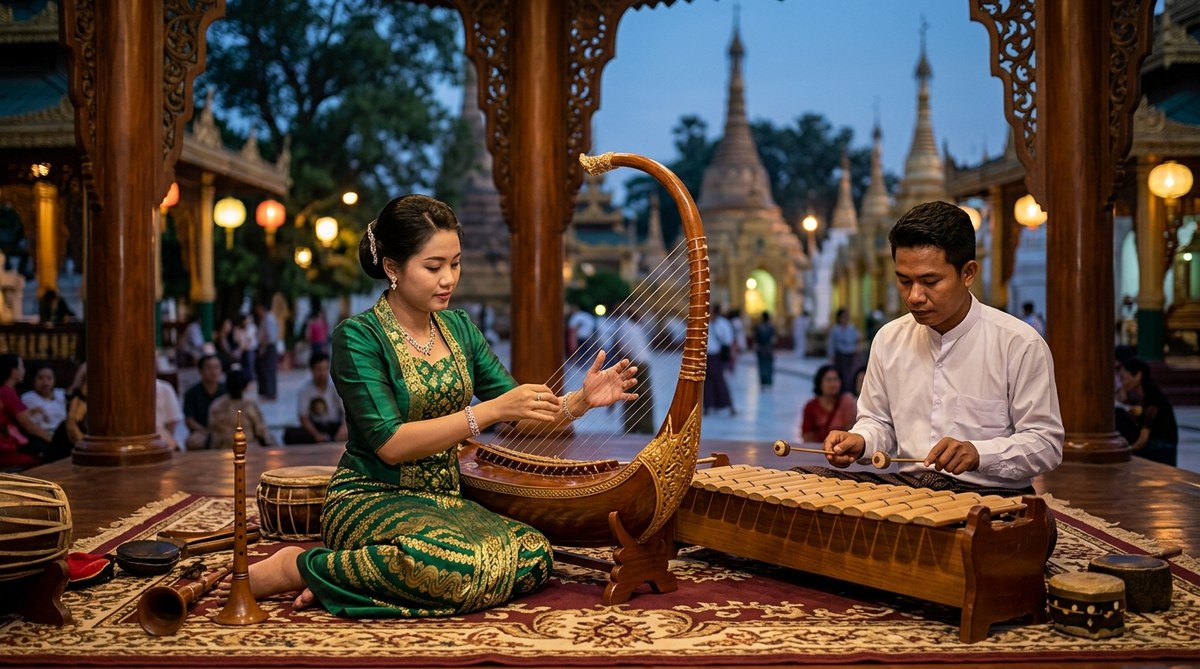
Myanmar’s traditional music and instruments form the heartbeat of Myanmar’s cultural identity. They are more than just sounds or tools—they are living symbols of history, spirituality, and community. For centuries, these musical traditions have woven themselves into daily life, religious ceremonies, festivals, and social gatherings. Understanding Myanmar’s musical heritage offers a window into its history and diverse ethnic cultures. Whether you are a music enthusiast, a researcher, or a traveler eager to experience authentic Myanmar, exploring these traditions reveals the soul of this fascinating country.
Myanmar traditional music and instruments reflect the country’s rich history and ethnic diversity. They serve as cultural symbols, religious expressions, and community bonds, vital for preserving Myanmar’s unique identity across generations.
The Roots of Myanmar’s Musical Heritage
Myanmar’s musical traditions date back thousands of years. They have evolved alongside the country’s history, deeply intertwined with religious practices like Buddhism and local customs. The earliest forms of Myanmar music were performed during royal courts, religious ceremonies, and village celebrations. Over time, they absorbed influences from neighboring regions and ethnic minorities, creating a vibrant tapestry of sounds.
Ancient inscriptions and archaeological findings reveal that music played a crucial role in court rituals and community events. These early traditions laid the foundation for today’s practices, which continue to thrive. The continuity of these musical forms highlights their importance in maintaining cultural identity amidst changing political landscapes.
Traditional Musical Instruments of Myanmar
Myanmar is renowned for its distinctive instruments, each carrying a unique story and cultural significance. These instruments are meticulously crafted, often using locally sourced materials such as bamboo, wood, and animal hides.
Key Instruments and Their Roles
- Pat Waing: A set of drums arranged in a circle, played with sticks or hands. It is essential in classical and folk music, especially during royal performances.
- Hne: A traditional oboe-like instrument made from bamboo, producing a haunting, expressive sound. It is frequently used in religious and festive settings.
- Saung Gauk: The iconic Myanmar harp, symbolizing royal court music. Its melodious tunes evoke feelings of longing and spirituality.
- Si and Wa: Small cymbals that create rhythmic accents in ensemble performances.
How Instruments Shape Myanmar Music
The instruments are often played in ensembles called saing waing or pat waing. These groups perform during festivals, religious events, and cultural shows. The music they produce is characterized by intricate rhythms, melodic ornamentation, and improvisation, reflecting the emotional depth of Myanmar’s cultural stories.
The Significance of Myanmar Traditional Music
Music in Myanmar is more than entertainment. It functions as a medium for spiritual connection and storytelling. In Buddhist rituals, music facilitates meditation and devotion. During festivals like Thingyan (Water Festival) or Thadingyut (Festival of Lights), music unites communities in celebration.
The traditional arts also serve as a form of social cohesion. Ethnic minorities such as the Shan, Karen, and Rakhine have their unique musical styles and instruments, enriching Myanmar’s overall cultural landscape.
“Myanmar’s music is a living archive of its history and ethnic diversity,” notes Dr. Aye Thant, a cultural researcher specializing in Southeast Asian arts. “Each instrument and song carries stories of resilience, faith, and community.”
Preserving and Promoting Myanmar’s Musical Heritage
Despite modernization and urbanization, efforts are underway to preserve traditional music. Cultural organizations and local communities organize festivals, workshops, and performances to keep these arts alive. Schools in Myanmar also include traditional music education as part of their curriculum.
However, challenges remain. Young generations are increasingly attracted to contemporary music genres. To address this, some artists blend traditional sounds with modern styles, creating innovative fusions that appeal to broader audiences. This approach helps sustain the relevance of Myanmar’s musical heritage in the 21st century.
Practical Steps to Experience Myanmar Traditional Music
If you plan to visit Myanmar or engage with its cultural scene, here are steps to immerse yourself in local musical traditions:
- Attend local festivals and performances. Festivals like Thingyan often feature live traditional music.
- Visit cultural centers and museums. These venues showcase instruments and provide context for their history.
- Participate in workshops or classes. Learning basic rhythms or melodies can deepen your appreciation.
- Support local artisans and musicians. Purchasing handcrafted instruments or attending small performances helps sustain these arts.
- Explore ethnic minority communities. Many groups have their own musical styles that offer authentic cultural experiences.
Common Techniques and Mistakes in Myanmar Music
| Technique | Mistake to Avoid |
|---|---|
| Using traditional instruments with respect | Playing instruments without understanding their cultural significance |
| Following rhythmic patterns precisely | Ignoring the improvisational nature of folk music |
| Participating in community performances | Overstepping local customs or etiquette in religious settings |
Tips for Respectful Engagement
- Always approach performances with humility and curiosity.
- Ask permission before recording or photographing.
- Learn a few basic greetings in Burmese or local dialects.
- Dress modestly, especially during religious events.
- Support local artists by purchasing recordings or instruments.
How Music Connects Myanmar’s Past and Present
Music acts as a bridge linking generations. Young musicians are reviving ancient melodies, often combining them with contemporary beats. This blending nurtures a dynamic cultural scene that honors tradition while embracing innovation.
In recent years, digital platforms have enabled Myanmar artists to share their music globally. This exposure helps preserve the heritage and fosters cross-cultural understanding.
“Traditional music is the soul of Myanmar,” says U Min Thu, a renowned musician. “By passing down our songs and instruments, we keep our identity alive in a changing world.”
Embracing Myanmar’s Artistic Echoes
Celebrating Myanmar traditional music and instruments means recognizing their role in shaping the country’s cultural fabric. Whether through a lively festival, a quiet village gathering, or a modern fusion performance, these arts continue to inspire pride and resilience.
Travelers can enrich their experience by actively engaging with local communities, respecting customs, and supporting preservation efforts. Such interactions foster deeper understanding and appreciation of Myanmar’s vibrant heritage.
Keep the Rhythm Going
Learning about Myanmar’s musical traditions invites us to listen more intently and participate more consciously. Even a simple appreciation of instruments like the saung gauk or hne can connect us to centuries of stories, faith, and community spirit.
By supporting initiatives that promote these arts, you help ensure that Myanmar’s rich musical legacy continues to thrive. Whether you attend a live performance or share its melodies online, every small act contributes to safeguarding this cultural treasure.
Let the melodies of Myanmar inspire your journey
Every visit or engagement with Myanmar’s traditional music and instruments offers a chance to deepen your understanding of its diverse cultures. Embrace the sounds, learn from local artisans, and cherish the stories woven into each note. Your appreciation can help preserve these timeless arts for generations to come.