
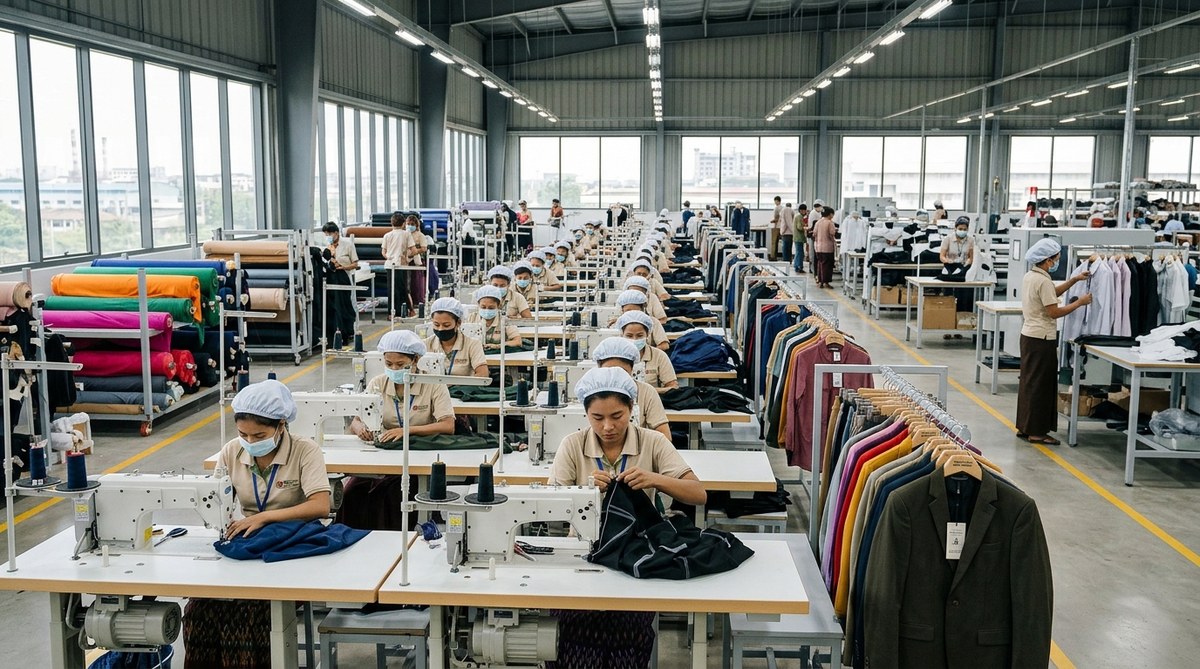
For supply chain analysts and sourcing managers, the search for the next reliable manufacturing hub is a constant balancing act. You need competitive pricing, but not at the cost of quality or ethical standards. You want capacity, but also room to grow. For years, the conversation has centered on a handful of dominant players. But in 2026, a new contender is drawing serious attention from fashion executives and procurement teams. Myanmar’s garment sector is quietly emerging as a compelling sourcing alternative, offering a unique mix of low labor costs, improving infrastructure, and a young, eager workforce. It is not without its complexities, but for those willing to look closely, the potential is significant.
Myanmar is positioning itself as a serious sourcing alternative for global fashion brands in 2026. Driven by competitive labor costs, preferential trade access, and a growing manufacturing base, the country offers a viable option for diversifying supply chains. However, success requires navigating political instability, infrastructure gaps, and critical ethical due diligence. This guide provides a balanced look at the risks and rewards.
Why Global Brands Are Looking at Myanmar in 2026
The global apparel industry has been through a lot. From pandemic disruptions to shifting trade policies, the pressure to diversify away from single-country dependence has never been higher. This is where the Myanmar garment industry sourcing alternative comes into focus. The country offers a value proposition that is hard to ignore.
Labor costs remain a primary driver. In 2026, the minimum wage for garment workers in Myanmar is still significantly lower than in China, Vietnam, or even Bangladesh. For high-volume, basic apparel items, this cost advantage directly impacts the bottom line. But price is only part of the story.
Myanmar also benefits from preferential trade agreements. The European Union’s Everything But Arms (EBA) scheme, while under review, has historically provided duty-free access for Myanmar-made goods. This is a major draw for European buyers. Similarly, the country’s proximity to major Asian shipping lanes and its status as a member of ASEAN provide logistical and tariff benefits that are hard to match.
“Myanmar offers a genuine opportunity for brands to build a secondary sourcing base. The workforce is motivated, the costs are right, and the government is actively seeking foreign investment in this sector. The key is doing the homework on the ground.” A regional supply chain consultant based in Bangkok.
The Realities of the Myanmar Garment Sector
It is important to be clear eyed. Myanmar is not a simple market. The political situation remains fragile, and the business environment can be challenging. But for sourcing managers used to operating in complex markets, these are hurdles that can be managed with the right approach.
What the Numbers Say
The garment industry is one of Myanmar’s largest employers, providing jobs for over 700,000 people, the majority of whom are young women from rural areas. The sector has grown rapidly over the past decade, with factories concentrated in Yangon and the surrounding industrial zones. In 2026, the industry is showing signs of resilience, adapting to new trade realities and investing in capacity.
Here is a snapshot of how Myanmar compares to other key sourcing destinations:
| Factor | Myanmar | Bangladesh | Vietnam | China |
|---|---|---|---|---|
| Average Labor Cost (per month) | Very Low | Low | Medium | High |
| Trade Access (EU) | Preferential (EBA) | Preferential | Free Trade Agreement | Standard Tariffs |
| Infrastructure | Developing | Improving | Strong | World Class |
| Workforce Size (Garment) | 700k+ | 4 Million+ | 2.5 Million+ | N/A (Diverse) |
| Political Risk | High | Medium | Low | Low |
This table shows the trade-offs clearly. The cost advantage is real, but it comes with higher political risk and less mature infrastructure than Vietnam or China.
A Practical Step-by-Step for Entering the Market
If you are considering adding a Myanmar supplier to your roster, here is a practical process to follow:
- Conduct a Pre-Screening Audit. Do not rely on online listings alone. Work with a reputable third-party audit firm to verify factory conditions, labor practices, and environmental compliance. This is non-negotiable.
- Visit the Factory in Person. See the production line with your own eyes. Talk to the management. Ask about their compliance with local labor laws and international standards. A video call is not enough.
- Run a Trial Order. Start small. Place an order for a limited product line to test quality, lead times, and communication. This will reveal operational strengths and weaknesses without major risk.
- Establish Clear Contracts. Work with a local legal partner to ensure your contracts cover payment terms, delivery schedules, quality standards, and dispute resolution. The legal system can be slow, so clarity upfront is essential.
- Build a Local Team. Having a representative or agent on the ground in Yangon is invaluable. They can handle quality control, logistics, and relationship management in ways that remote managers cannot.
Navigating the Ethical Landscape
For fashion executives, sourcing from Myanmar comes with serious ethical responsibilities. The country’s labor rights record has faced international scrutiny. Issues around freedom of association, working hours, and wages are real concerns.
Key Ethical Considerations
- Worker Representation: Independent trade unions face restrictions. Brands must actively support alternative worker voice mechanisms, such as worker committees or grievance hotlines.
- Forced Labor Risks: While not widespread in the formal garment sector, risks exist in supply chains linked to conflict-affected areas. Robust due diligence is required to ensure no forced labor is present.
- Wage and Hour Compliance: Minimum wage is low, and overtime is often mandatory. Brands need to audit not just base pay, but total hours worked and voluntary overtime practices.
- Transparency in Supply Chains: The Myanmar garment industry sourcing alternative requires full traceability. You must know exactly which factories are producing your goods and their full subcontractor networks.
A responsible approach is not just about avoiding bad press. It is about building a sustainable sourcing model. Factories that treat workers well are more productive and reliable. Investing in ethical compliance is an investment in supply chain stability.
What Makes Myanmar a Strong Sourcing Alternative
Beyond the numbers, there are specific structural advantages that make Myanmar a strong fit for certain types of brands.
- Young Demographics: Over half of Myanmar’s population is under 30. This provides a large, trainable workforce that is eager for stable employment.
- English Proficiency: English is widely taught in schools, and many factory managers and office staff speak it well. This reduces communication barriers compared to other low-cost destinations.
- Growing Industrial Zones: The government is developing special economic zones (SEZs) like Thilawa, which offer better infrastructure, reliable power, and streamlined customs. These zones are ideal for new entrants.
- Product Focus: Myanmar excels at basic, high-volume garments: t-shirts, polo shirts, denim, and underwear. For brands with core basics, this is a perfect match.
For a deeper look at the specific opportunities available, read our guide on 5 profitable industries for international businesses entering Myanmar.
Common Mistakes and How to Avoid Them
Even experienced sourcing managers can stumble in a new market. Here are the most common pitfalls when evaluating the Myanmar garment industry sourcing alternative:
- Relying on a Single Supplier. The factory ecosystem is still maturing. Always have a backup option in case your primary partner faces production issues.
- Ignoring Logistics Bottlenecks. Yangon port can be congested. Plan your shipping schedules with buffer time and consider using the Thilawa SEZ for faster processing.
- Underestimating Cultural Differences. Business relationships in Myanmar are built on trust and personal connection. Rushing negotiations or being too transactional can damage a partnership.
- Skipping the Due Diligence on Labor. This is the biggest risk. A single report of labor abuse can damage a brand’s reputation globally. Invest in thorough, independent audits.
The Role of Transparency and Accountability
As Myanmar works to rebuild its governance structures, transparency is becoming a central theme. For international buyers, this is a positive sign. Civil society organizations and local watchdogs are increasingly active in monitoring factory conditions and advocating for worker rights. Brands that align with these efforts build stronger, more resilient supply chains.
To understand how these dynamics are evolving, you can read about how international watchdogs are monitoring Myanmar’s governance reforms in 2026. This context is crucial for any brand planning a long-term commitment.
How to Get Started with a Sourcing Strategy
If you are ready to explore this option, here is a simple checklist to guide your initial research:
- Review your product categories. Do you have high-volume basics that match Myanmar’s strengths?
- Identify your price target. Can Myanmar’s cost structure improve your margins?
- Assess your risk tolerance. Are you prepared for political and operational volatility?
- Build a network. Connect with industry associations, trade bodies, and local consultants.
- Plan a scoping trip. Visit Yangon and the Thilawa SEZ to see the landscape firsthand.
For more practical advice on operating in the country, especially on the financial side, check out our guide on banking and currency exchange for business travelers.
A Balanced View for the Modern Sourcing Manager
Myanmar is not a perfect solution. It is not a replacement for China or Vietnam. But as a secondary or complementary sourcing destination, it offers a real and valuable alternative. The key is to approach it with open eyes, a commitment to ethical practices, and a willingness to invest in relationships.
The brands that succeed in Myanmar will be the ones that treat their suppliers as partners, their workers as stakeholders, and their supply chain as a community. This is not just good ethics. It is good business.
The Future of Sourcing in Southeast Asia
As the global apparel industry continues to evolve, the search for balanced, responsible sourcing options will only intensify. Myanmar’s garment sector, despite its challenges, is proving that it can be a part of that future. For sourcing managers and fashion executives, the time to start learning about this market is now. The groundwork you lay today will determine the resilience of your supply chain tomorrow. Take the first step with a clear plan, a commitment to transparency, and a respect for the people who make the clothes. That is how you build a sourcing strategy that lasts.