
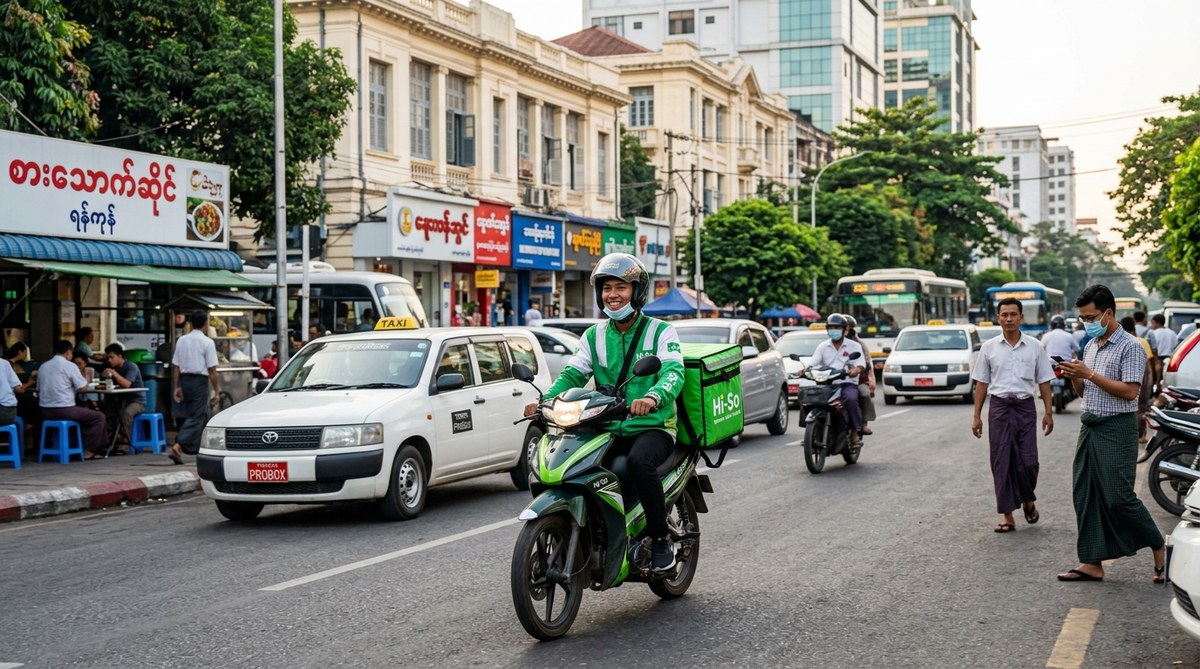
The first time I ordered mohinga through an app, I felt a small thrill. Not because the soup was any less delicious than the version I get from the lady on the corner. But because I could track its journey from kitchen to my front door. That little map dot crawling across Yangon felt like proof that the city was changing. For urban professionals and students in Myanmar, food delivery apps have moved from being a novelty to a daily necessity. They are rewriting the rules of how we eat, work, and connect with our neighborhoods.
Food delivery apps like Grab and Foodpanda are transforming daily life in Myanmar’s cities by offering convenience, expanding food choices, and creating new economic opportunities for riders and small vendors. However, this shift also challenges traditional food culture, raises questions about data privacy, and reshapes urban infrastructure. Understanding these changes helps residents and visitors adapt to a modernizing Myanmar.
The New Rhythm of the Urban Day
Think about your typical weekday. Mornings in Yangon are chaotic. Traffic thickens by 7 a.m. The heat climbs fast. Before apps, lunch meant either packing something from home, braving the sun for a tea shop, or settling for whatever the office canteen had. Now, a few taps on a phone change everything.
Students living in shared apartments near Hlaing Thayar or Insein order fried rice or shan noodles between classes. Office workers in downtown Yangon schedule a delivery of grilled pork skewers and pickled tea leaf salad for a midday meeting. The app becomes a personal assistant. It knows your favorite Shan tofu noodle spot. It remembers that you prefer extra lime.
This convenience has shifted the pace of the day. People reclaim time once spent walking or waiting. That extra 30 minutes can go toward finishing a report, studying for an exam, or just resting during the hottest part of the afternoon.
Who Is Delivering Your Dinner?
One of the most visible changes on the streets is the surge of delivery riders. They weave through traffic in green and orange jackets, carrying insulated bags strapped to motorbikes or bicycles. For many young people, this job offers something rare in Myanmar’s current economy: a flexible income.
Delivery work does not require a formal degree. It does not demand a long-term commitment. Riders can log in when they want and stop when they need to. This flexibility is especially valuable for students supporting themselves or for workers who lost jobs during recent economic disruptions.
However, the gig economy also brings challenges. Riders face long hours, exposure to heat and rain, and the constant pressure of delivery time windows. Insurance coverage is minimal. Earnings can be unpredictable. The same apps that bring convenience to customers create a precarious livelihood for thousands.
| Aspect | Positive Impact | Challenges |
|---|---|---|
| Income flexibility | Work when you want, no formal hiring process | No guaranteed minimum wage |
| Job access | Open to students and informal workers | Limited benefits or protections |
| Safety | Some apps offer accident insurance | High risk on congested streets |
| Career growth | Can lead to logistics or tech roles | Few promotion opportunities |
How Local Food Culture Is Adapting
Myanmar’s food scene has always been deeply local. Tea shops, street carts, and family-run eateries define the culinary landscape. When apps entered the picture, many worried they would crush these small vendors. The reality is more complex.
Apps have actually helped some small shops survive. A tiny mohinga stall in a quiet alley might not get foot traffic. But if it joins a delivery platform, it can reach customers across the whole township. This is a lifeline in a city where foot traffic can be unpredictable. The same technology that threatens tradition can also preserve it.
But there are trade-offs. Apps take a commission, often between 20 and 30 percent of each order. For a small family business, that margin cuts deep. Some vendors raise their menu prices on the app to compensate. Others choose to stay off the platforms entirely, relying on loyal customers who still visit in person.
“We joined Foodpanda during the pandemic because no one could come to the shop. It saved us. But now, even with more customers walking in, we stay on the app. The young people expect it. If you are not on the app, you do not exist to them.”
* U Kyaw Min, owner of a tea shop in Botahtaung Township.
The Tech Behind the Tap
Using a food delivery app in Myanmar feels familiar to anyone who has used Uber Eats or DoorDash. But the local experience has unique quirks. Payment methods are a big one. While credit cards are growing in use, many people still prefer cash on delivery. Apps have adapted by offering both options, along with mobile wallet integration through services like Wave Money and KBZ Pay.
Here is how a typical order flows:
- Open the app and allow location access. The app detects your neighborhood and shows nearby restaurants.
- Browse menus or search for a specific dish like kyay oh or paratha. Most listings include photos and prices.
- Add items to your cart. Check for minimum order amounts, which vary by restaurant.
- Choose payment method: cash, card, or mobile wallet. Some apps offer promo codes for first-time users.
- Confirm the order. The app estimates delivery time based on distance and traffic.
- Track your rider on a live map. You can message the rider if needed.
- Receive the food. Check the order before the rider leaves. Rate the experience.
This process seems simple, but it relies on a complex backend. Mapping data, real-time traffic updates, and rider allocation systems must all work together. In a city where street names are not always consistent and some alleys lack signage, the technology has to be smart. Apps invest heavily in local data to make sure riders can actually find the address.
What Food Delivery Means for Myanmar’s Economy
The impact of food delivery apps goes beyond convenience. They are creating a new layer in the economy. Restaurants that never considered delivery before now have a digital storefront. Small kitchen spaces, sometimes called cloud kitchens or ghost kitchens, have popped up in residential areas. These kitchens exist only to fulfill app orders. They have no dining room, no sign, no walk-in customers. This model lowers rent costs and allows entrepreneurs to test new cuisines with less risk.
For example, a young chef in Yangon might rent a small space in Hlaing Thayar, cook only burgers and fries, and list on GrabFood. If the concept works, great. If not, they can switch to pizza next month. This flexibility encourages culinary experimentation. It also means that food trends spread faster. A dish popular in Mandalay can appear on Yangon menus within weeks.
The broader economy benefits too. More delivery jobs mean more spending power in local communities. Riders buy fuel, phone data, and meals themselves. Restaurants that grow through delivery hire more kitchen staff. The app companies themselves employ local teams for marketing, support, and logistics.
On the other hand, the rise of apps puts pressure on traditional wet markets. If people can order pre-packaged ingredients through GrabMart, they might skip the trip to the market entirely. This shift affects farmers and vendors who rely on market foot traffic. It is not an overnight collapse, but a slow change in shopping habits.
Privacy and Trust in a Digital Age
Using an app means sharing data. Your location, your food preferences, your payment details. In Myanmar, where digital literacy is still growing, many users do not fully understand how their data is used. Apps collect this information to improve recommendations and target ads. But there are risks.
Some users worry about data being accessed by authorities. Others have experienced scams where fake delivery accounts trick customers into paying for orders that never arrive. The platforms have improved security features, but users must stay cautious.
A few practical tips:
- Always check that the rider’s name and photo match the app before handing over payment.
- Use mobile wallets when possible to avoid sharing card details.
- Do not click on links sent via SMS claiming to be from the delivery app. Go directly to the app instead.
- Report any suspicious behavior to the platform’s support team.
The Road Ahead for Myanmar’s Food Tech Scene
Food delivery apps are not going anywhere. They are becoming more embedded in daily life. In 2026, we are seeing new features like scheduled deliveries for weekly groceries and group ordering for office lunches. Some apps are testing subscription models where users pay a monthly fee for free delivery.
For international visitors, these apps are a gateway to Myanmar’s food culture without the language barrier. You can browse menus in English, see photos of dishes you have never heard of, and have food brought to your hotel. It makes exploring local cuisine less intimidating.
For locals, the apps are a mirror of changing priorities. Convenience matters more than ever. Time is a precious resource. The ability to order a meal while stuck in traffic or studying late at night is not a luxury. It is a necessity.
But the relationship between tradition and technology is delicate. Every app order that replaces a walk to the tea shop is a small loss of human connection. Every delivery rider on the road is a sign of economic adaptation. Myanmar is finding its own balance between the old and the new.
How Technology Is Shaping What’s Next
The same digital forces that power food delivery are also reshaping other parts of Myanmar life. From civic engagement to education, technology is creating new pathways for connection. If you are curious about how these tools are being applied in other areas, you might find value in reading about how technology is transforming civic engagement and transparency in Myanmar in 2026. The patterns are similar. A platform connects people. Information flows faster. New opportunities emerge alongside new challenges.
Food delivery is just one chapter in a larger story of digital transformation. Understanding this chapter helps us understand the whole book.
What This Means for Your Daily Choices
The next time you open a food delivery app, take a moment to think about what is happening behind the screen. A rider is navigating traffic. A small restaurant owner is hoping for a five-star rating. A data center somewhere is processing your order in milliseconds. You are part of a system that is reshaping Myanmar’s cities, one meal at a time.
Support local vendors who are on the app. Tip your rider if you can. And every now and then, walk to the tea shop. The app is a tool. It is not a replacement for the warmth of a real conversation over a shared plate of fried snacks. Use the tool wisely, and you will enjoy the best of both worlds.