
The first time you see a golden pagoda float glide across a lake at dusk, you will understand why Myanmar’s festivals are unlike anything else. These celebrations are not just tourist attractions. They are living traditions that connect families, honor spirits, and mark the rhythm of life in a country with more than 130 ethnic groups. For a traveler planning a trip in 2026, knowing when and where these festivals happen can turn a good vacation into an unforgettable cultural experience.
Myanmar festivals in 2026 follow the traditional lunar calendar, so dates shift each year. The biggest events are Thingyan Water Festival (April), Thadingyut Festival of Lights (October), and the Phaung Daw Oo Pagoda Festival (October/November). Plan your travel around these dates and book accommodations early, especially during Thingyan when the whole country celebrates for five days.
How the Lunar Calendar Shapes Myanmar Festivals 2026
Myanmar uses a traditional lunisolar calendar for most religious and cultural events. This means festival dates change every year when compared to the Gregorian calendar. If you are searching for “Myanmar festivals 2026,” you need to understand that the Burmese calendar year 1388 runs from mid-April 2026 to mid-April 2027. Most major festivals fall on full moon days (known as Tazaungmone or Thadingyut full moons) or new moon days.
The table below shows the key festivals for 2026, with approximate Gregorian dates. Always double-check with local sources closer to your travel date, as official announcements can shift by a day or two.
| Festival Name | Approximate 2026 Date | Location | Duration | What to Expect |
|---|---|---|---|---|
| Thingyan Water Festival | April 13 – 17 | Nationwide | 5 days | Water throwing, street parties, traditional food |
| Kasone Full Moon | May 29 | Nationwide (pagodas) | 1 day | Watering bodhi trees, merit-making |
| Waso Full Moon (Buddhist Lent begins) | July 20 | Nationwide | 1 day | Monastic robe offering ceremonies |
| Thadingyut Festival of Lights | October 23 – 25 | Nationwide | 3 days | Candlelit pagodas, family gatherings, gift-giving |
| Phaung Daw Oo Pagoda Festival | October 28 – November 5 | Inle Lake | 8 days | Golden Buddha images on a royal barge, leg-rowing boat races |
| Tazaungmone Full Moon | November 15 | Nationwide | 1 day | Robe-weaving competitions, hot air balloon festivals |
| Kayin New Year | December 15 (approx.) | Hpa-an and Kayin State | 3 days | Ethnic Kayin cultural performances, traditional sports |
Thingyan: The Biggest Celebration in Myanmar
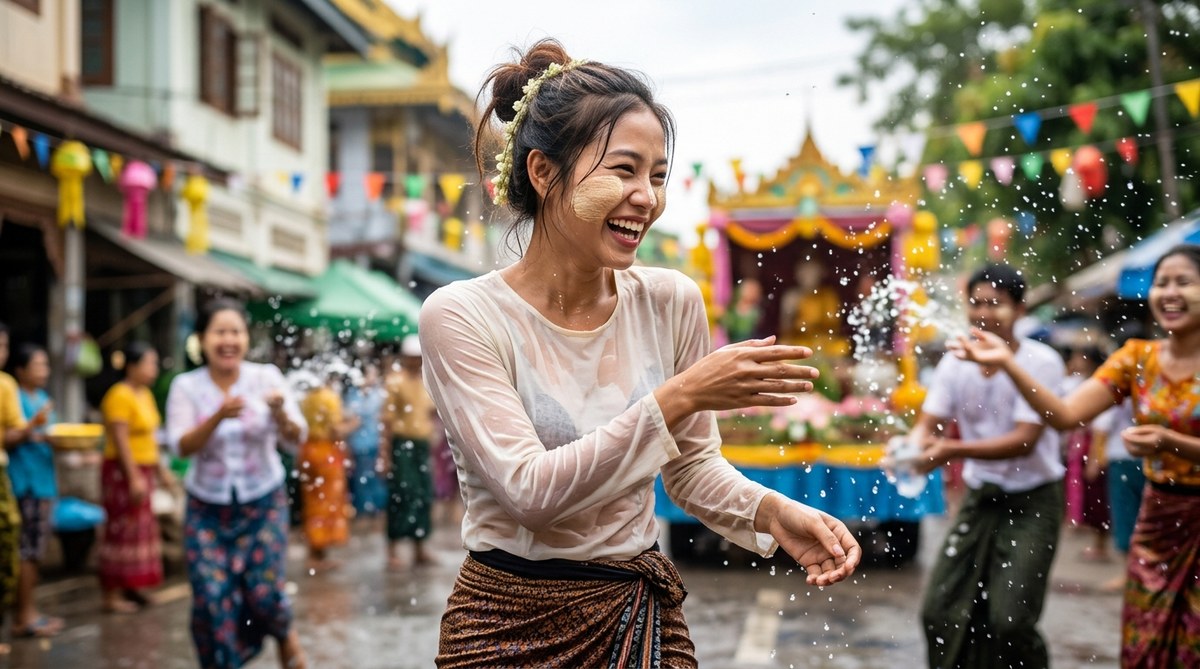
Thingyan is the Myanmar New Year water festival. It is the most anticipated event of the year. For five days in mid-April, the entire country shuts down for a massive water fight. People throw water at each other from buckets, hoses, and water guns. In cities like Yangon and Mandalay, elaborate stages called pandals line the streets with dancers and DJs.
What you need to know as a traveler:
- Most businesses close for at least three days. ATMs run out of cash. Plan ahead.
- Expect to get soaked. Wear quick-dry clothing. Protect your phone and camera with waterproof bags.
- Join respectfully. Do not throw ice water or use high-pressure hoses on people.
- Food stalls sell mohinga, mont lone yay paw (glutinous rice balls), and pickled tea leaves everywhere.
If you want to experience the most authentic version, head to a smaller town or village. The party in Yangon is huge, but the family-oriented celebrations in places like Bagan or Pyin Oo Lwin offer a more intimate look at the traditions behind the water throwing.
Thadingyut: The Festival of Lights
Thadingyut takes place in October, usually around the full moon. It is a three-day celebration where families light candles and oil lamps to welcome the Buddha’s descent from heaven. The atmosphere is completely different from Thingyan. It is calm, reflective, and deeply spiritual.
Highlights for travelers:
- Pagodas glow with thousands of tiny flames at night. Shwedagon Pagoda in Yangon is especially stunning.
- People give gifts to elders and children. You might see families dressed in their finest clothes visiting temples.
- Markets sell paper lanterns, candles, and traditional snacks.
This is a great time to visit if you prefer quieter cultural experiences. The weather in October is also much cooler than the hot season, making it ideal for exploring temples and rural areas.
Phaung Daw Oo Pagoda Festival: Inle Lake’s Grandest Event
This festival is one of the most visually spectacular in all of Myanmar. For eight days in late October and early November, four of the five Buddha images from the Phaung Daw Oo Pagoda are carried around Inle Lake on a golden royal barge. The barge is rowed by Intha men using their famous leg-rowing technique.
What makes it special:
- Villages around the lake take turns hosting the barge. Each stop includes dances, music, and food.
- The leg-rowing boat races are a major highlight. Teams of men in colorful costumes race long wooden boats.
- Local markets sell everything from Shan noodles to handwoven textiles.
The festival is crowded. Book your accommodation in Nyaungshwe or on the lake at least three months in advance. Consider hiring a local guide who can explain the spiritual significance of each stop along the route.
A Step-by-Step Guide to Planning Your Festival Trip
Here is a practical process to build your travel itinerary around Myanmar festivals 2026.
-
Choose your festival first. Decide whether you want the energy of Thingyan, the spirituality of Thadingyut, or the spectacle of Phaung Daw Oo. Your choice determines your travel dates and destination.
-
Book flights and accommodation 3 to 4 months ahead. Domestic flights within Myanmar fill up fast during festival periods. Hotels in Yangon, Mandalay, Nyaungshwe, and Bagan also book out. Use a trusted travel agent who knows the local market.
-
Apply for your visa early. The e-visa system is straightforward, but processing can take up to a week. Check the official Myanmar e-Visa website for the latest requirements. For a complete walkthrough, read our guide on how to get your Myanmar visa.
-
Pack for the season and the event. Thingyan requires waterproof gear. Thadingyut needs light layers for warm days and cool evenings. Always bring a sarong (longyi) for temple visits. Our essential Myanmar packing list covers everything you need.
-
Learn basic festival etiquette. Remove shoes before entering pagodas. Do not point your feet at Buddha images. Ask permission before taking photos of monks or locals. A friendly “mingalaba” (hello) goes a long way.
Practical Tips for Navigating Myanmar During Festivals
Festival travel comes with unique challenges. Here is a bulleted list of what to watch out for:
- Cash is king during festivals. ATMs often run dry, and card payments are rare outside major hotels. Withdraw enough kyats before the festival begins. Read money matters in Myanmar for detailed advice.
- Public transport gets crowded. Trains and buses sell out weeks in advance. Book your seats early or consider hiring a private car with a driver.
- Street food is safe and delicious, but stick to busy stalls with high turnover. Drink only bottled or boiled water. Our food safety and etiquette guide has more tips.
- Respect local customs around alcohol. During Buddhist festivals, drinking in public is frowned upon. Save your beer for private spaces or designated areas.
- Stay flexible. Festival schedules can change due to weather or local announcements. Build buffer days into your itinerary.
Lesser-Known Festivals Worth Your Time
Beyond the big three, several smaller festivals offer incredible cultural access without the crowds.
Kasone Full Moon (May 29) is a day when Buddhists water bodhi trees to honor the Buddha’s enlightenment. You can join monks at major pagodas in a simple, meditative ceremony. It is a quiet contrast to the noise of Thingyan.
Tazaungmone Full Moon (November 15) features hot air balloon festivals in Taunggyi and other Shan State towns. Giant paper lanterns shaped like animals and pagodas are released into the night sky. The sight is magical. This festival also includes robe-weaving competitions where nuns create a monk’s robe in a single night.
Kayin New Year (December 15) celebrates the culture of the Kayin (Karen) people. Hpa-an becomes a stage for traditional dances, bamboo pole jumping, and archery competitions. It is a fantastic opportunity to learn about one of Myanmar’s largest ethnic groups. For more on how different communities celebrate, see how Myanmar’s ethnic minorities celebrate the new year differently.
What to Pack for Each Festival Season
Your packing list changes depending on when you travel. Use this guide to prepare.
Thingyan (April)
– Waterproof phone pouch
– Quick-dry shirt and shorts
– Flip-flops that stay on your feet
– Sunscreen and sunglasses
– Small waterproof bag for valuables
Thadingyut (October)
– Light jacket for cool evenings
– Comfortable walking shoes
– Camera with low-light capability
– Small flashlight or headlamp (power outages are common)
Phaung Daw Oo (late October/early November)
– Insect repellent (mosquitoes are active near the lake)
– Hat and sunglasses for boat rides
– Light rain jacket (afternoon showers are possible)
– Binoculars for watching boat races
“The best advice I give travelers is to arrive with an open mind and a flexible schedule. Festivals here are living events, not staged performances. If you let yourself be swept up in the moment, you will leave with stories that no guidebook can capture.” — Local tour guide from Mandalay
How to Respect Local Traditions While Enjoying the Festivities
Myanmar is a deeply Buddhist country. Festivals are spiritual events first and tourist attractions second. Here are rules to follow.
Dos:
– Dress modestly. Cover your shoulders and knees when visiting pagodas or monastery grounds.
– Ask before taking photos, especially of monks, nuns, and elderly people.
– Sit with your feet tucked behind you when inside a pagoda.
– Offer donations at pagodas if you take a blessing or receive food.
Don’ts:
– Do not touch Buddha images or monks.
– Do not wear shoes or socks inside any pagoda.
– Do not point your finger at people or sacred objects. Use your whole hand instead.
– Do not drink alcohol in public during religious festivals.
For more detailed guidance, read our practical guide to Myanmar customs and local etiquette.
Understanding the Deeper Meaning Behind the Celebrations
Each festival has layers of meaning that go beyond the surface spectacle. Thingyan, for example, is rooted in the Buddhist story of Sakka, king of the gods, who descended to earth to ask humans to settle their disputes. The water throwing originally symbolized washing away sins from the previous year. Today, it also represents purification and renewal.
The Festival of Lights honors the Buddha’s return from Tavatimsa heaven, where he taught the Abhidhamma (higher teachings) to his mother. The candles and lamps light his way back to earth. For Burmese Buddhists, this is a time to make merit by offering light, which symbolizes wisdom overcoming ignorance.
The Phaung Daw Oo Festival connects to a local legend about five Buddha images that were brought to Inle Lake by a king. Locals believe the images have supernatural powers, including the ability to heal the sick. The festival is both a pilgrimage and a celebration of community identity.
Understanding these stories transforms your experience. You stop being a spectator and start being a participant in a tradition that has continued for centuries. For a broader view of these traditions, check out discover Myanmar’s unique festival traditions.
Planning Your Year Around Myanmar Festivals 2026
If you have the flexibility, consider building a longer trip that hits multiple festivals. Here is a sample itinerary.
April 10 – 20: Thingyan in Yangon, then recover in Bagan
May 25 – 30: Kasone Full Moon in Mandalay
October 20 – November 10: Thadingyut in Yangon, then Phaung Daw Oo on Inle Lake
Each season offers a different Myanmar. The hot season brings the wild energy of Thingyan. The cool season offers the beauty of the Festival of Lights and the lake festival. The rainy season (June to September) has fewer festivals but lower prices and fewer tourists.
Making Your Festival Travel Responsible and Sustainable
Tourism in Myanmar comes with responsibility. The political situation remains complex. Before you book, research current conditions and travel advisories. Support local businesses, hire local guides, and stay in locally owned accommodations. Avoid spending money at state-owned enterprises that do not benefit local communities.
Choose tour operators who practice responsible tourism. Ask them how they support local communities and protect cultural heritage. If you want to make a positive impact, read about 5 grassroots transparency initiatives reshaping local governance in Myanmar to understand how your visit can contribute to positive change.
Your Festival Journey Starts Now
Myanmar festivals 2026 offer a window into a culture that values community, spirituality, and celebration above all else. Whether you are splashing water in Yangon during Thingyan, watching candlelit pagodas glow during Thadingyut, or floating across Inle Lake during Phaung Daw Oo, you will experience moments that stay with you forever.
Start planning early. Book your visa, flights, and accommodation well ahead. Pack smart. Learn a few phrases in Burmese. And most importantly, arrive with respect and curiosity. The festivals of Myanmar will welcome you with open arms if you come with an open heart.
For more travel preparation advice, read what you really need to know before traveling to Myanmar in 2026 and is Myanmar safe to visit? a realistic assessment for travelers.