
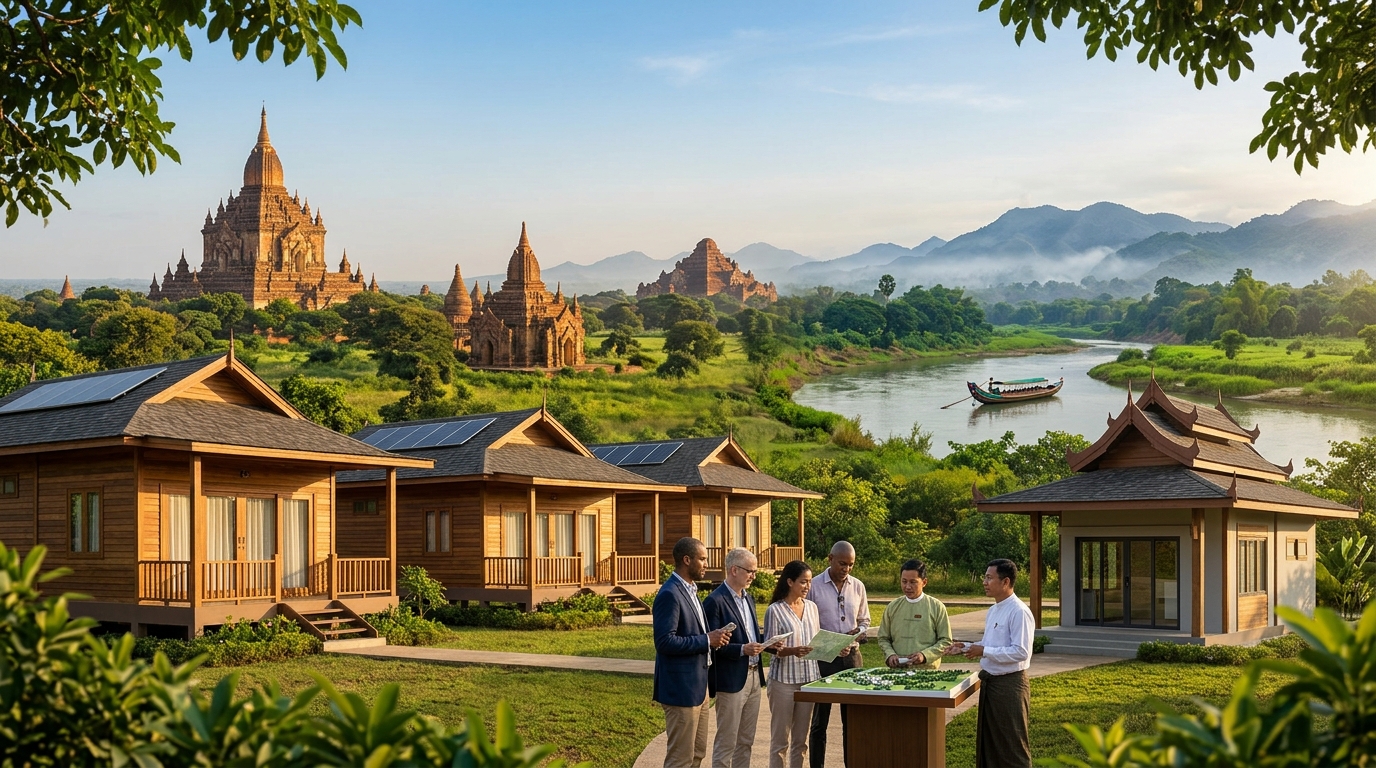
Myanmar’s tourism sector stands at a crossroads. The country holds extraordinary natural and cultural assets, yet investment readiness remains uneven across regions and regulatory frameworks. For international investors and sustainability consultants, understanding the current landscape means looking beyond promotional materials to examine infrastructure gaps, governance challenges, and community readiness.
Myanmar sustainable tourism investment requires careful assessment of infrastructure capacity, regulatory transparency, and community engagement frameworks. While the country offers significant cultural and natural assets, investors must navigate governance uncertainties, limited financing mechanisms, and uneven regional development. Success depends on long-term partnership strategies, rigorous due diligence, and alignment with local sustainability priorities rather than short-term profit extraction.
Assessing Myanmar’s current tourism infrastructure capacity
Myanmar’s infrastructure presents a mixed picture for potential investors. Major tourist centers like Yangon, Mandalay, and Bagan have moderate hotel capacity and transport links. Secondary destinations often lack basic utilities.
Power supply remains inconsistent outside major cities. Many rural tourism sites experience daily outages lasting several hours. Water treatment facilities are limited. Waste management systems are underdeveloped or nonexistent in most potential ecotourism zones.
Road networks connecting key attractions have improved over the past decade, yet seasonal flooding regularly cuts access to coastal and delta regions. Domestic flight routes serve major hubs but remain expensive relative to regional competitors. The rail network offers cultural appeal but limited practical utility for time-sensitive travelers.
Telecommunications infrastructure has expanded rapidly. Mobile coverage now reaches most tourist areas. Internet speeds lag behind neighboring countries but continue improving. Payment infrastructure remains cash-dependent in rural areas, complicating financial planning for sustainable tourism ventures.
Infrastructure gaps create both challenges and opportunities. Investors who can operate with limited grid power, manage waste responsibly, and create employment in underserved regions will find fewer competitors and stronger community support.
Regulatory frameworks and investment approval processes
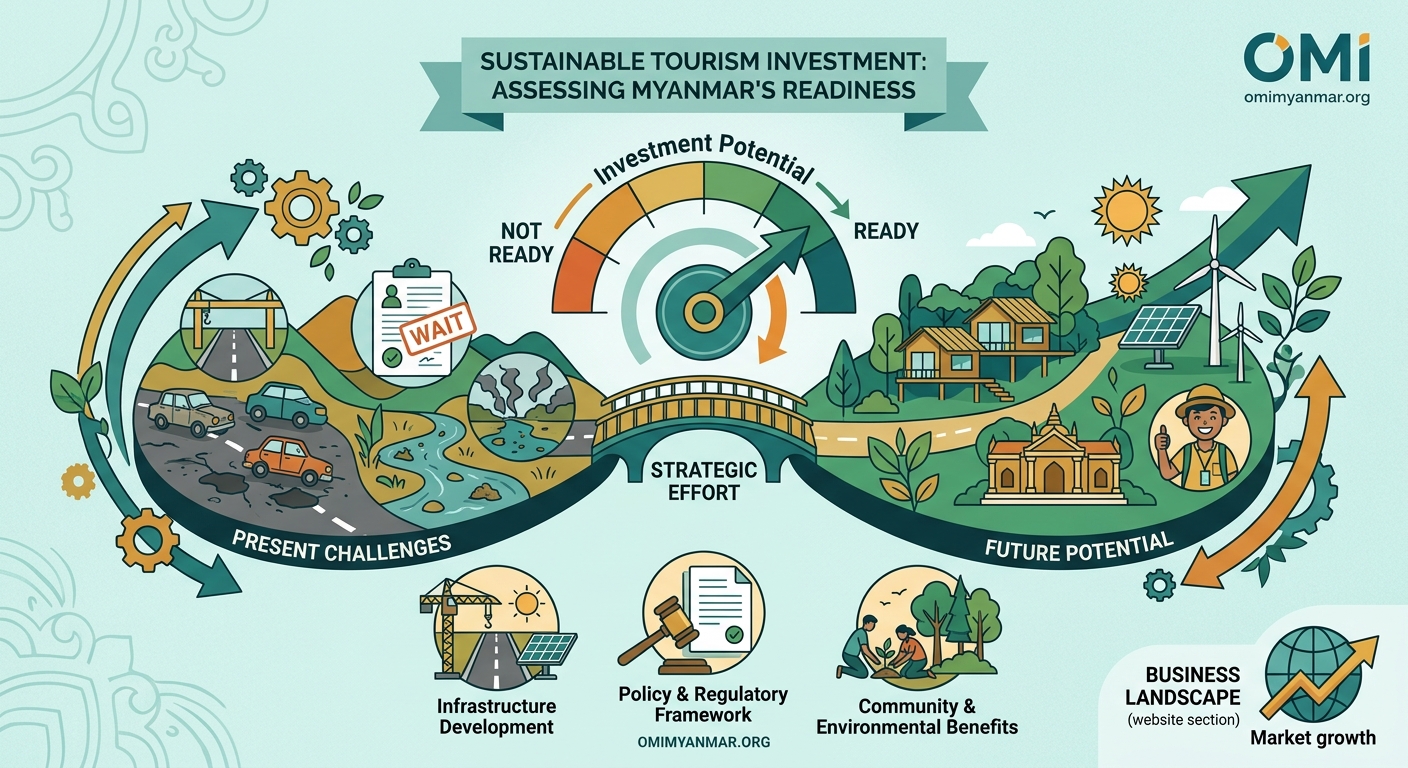
Understanding Myanmar’s current regulatory environment requires acknowledging recent political shifts. The foreign investment regulations in Myanmar have undergone significant changes that directly affect tourism development timelines and approval certainty.
Tourism-specific licenses require coordination across multiple ministries. The Ministry of Hotels and Tourism handles operational permits. The Ministry of Natural Resources and Environmental Conservation oversees protected areas. Local governments control land use approvals. This fragmented system creates delays and coordination challenges.
Environmental impact assessments are required for projects above certain thresholds, yet enforcement standards vary widely by region. Transparency in the approval process remains limited. Anti-corruption measures in Myanmar’s business sector show ongoing challenges that affect investor confidence.
Tax incentives exist for tourism investments in designated zones, but accessing these benefits requires navigating complex bureaucratic procedures. Land tenure issues complicate long-term planning. Many prime tourism sites sit on land with unclear ownership or competing claims between government entities and local communities.
| Approval Stage | Typical Timeline | Common Obstacles |
|---|---|---|
| Initial concept approval | 2-4 months | Multiple ministry coordination |
| Environmental assessment | 3-6 months | Unclear standards, limited local expertise |
| Land use permits | 6-12 months | Ownership disputes, community consultations |
| Construction permits | 2-5 months | Infrastructure connection requirements |
| Operating licenses | 1-3 months | Staff certification, safety inspections |
Community readiness and local partnership requirements
Sustainable tourism investment in Myanmar cannot succeed without genuine local partnerships. Communities near potential tourism sites have witnessed decades of top-down development that brought limited benefits to residents.
Village leadership structures vary significantly across ethnic regions. What works in Bamar-majority lowlands may fail in Shan or Kachin highlands. Investors must invest time understanding local decision-making processes before proposing projects.
Language barriers extend beyond translation. Many rural communities have limited exposure to tourism concepts. Explaining sustainable tourism models requires patience and culturally appropriate communication methods. Working with local transparency initiatives can help build trust and ensure community voices shape project design.
Revenue-sharing expectations differ from Western models. Communities often prioritize employment guarantees over equity stakes. Training programs matter more than one-time payments. Long-term commitment signals seriousness better than large initial investments.
Cultural sensitivity training for investors proves as important as community education. Understanding religious practices, seasonal festivals, and social hierarchies prevents costly missteps. Myanmar’s endangered crafts offer partnership opportunities that create authentic experiences while supporting traditional livelihoods.
Financial mechanisms and funding sources available
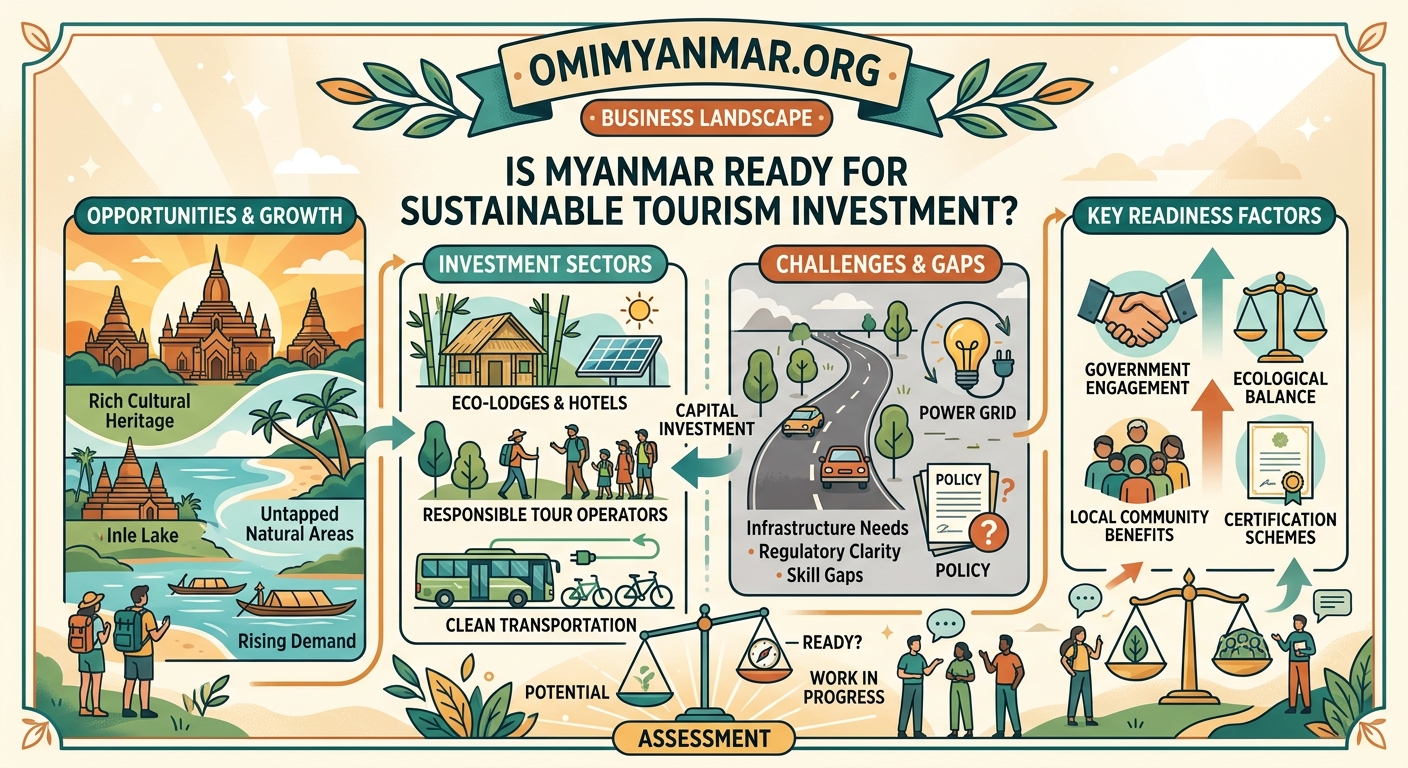
Traditional bank financing for tourism projects remains limited in Myanmar. Local banks lack experience evaluating sustainable tourism business plans. Interest rates run high. Loan terms rarely extend beyond five years, making infrastructure-heavy projects difficult to finance conventionally.
International development finance institutions offer more promising options. The Asian Development Bank, International Finance Corporation, and various bilateral development agencies maintain programs supporting sustainable private sector development. These lenders understand longer payback periods and accept environmental and social safeguards as standard practice.
Blended finance structures combining grants, concessional loans, and commercial investment show growing traction. These arrangements can absorb early-stage risks while demonstrating commercial viability to future investors.
Impact investors focused on Southeast Asia increasingly consider Myanmar opportunities despite governance uncertainties. These investors accept below-market returns in exchange for measurable social and environmental outcomes. Documentation requirements exceed traditional financing but align well with sustainability-focused business models.
Steps for conducting investment feasibility analysis
-
Conduct preliminary political risk assessment using current governance monitoring reports and international watchdog evaluations.
-
Visit proposed sites during both dry and rainy seasons to assess infrastructure resilience and seasonal access challenges.
-
Commission independent environmental baseline studies before engaging with government approval processes.
-
Initiate community consultations early, budgeting adequate time and resources for genuine engagement rather than checkbox exercises.
-
Develop detailed infrastructure upgrade plans identifying which improvements your project must fund versus those requiring government or donor support.
-
Model financial scenarios across optimistic, realistic, and pessimistic governance and market conditions with sensitivity analysis for currency fluctuations and regulatory changes.
-
Identify local partners with proven track records and community credibility rather than solely political connections.
-
Build relationships with NGOs navigating Myanmar’s regulatory environment who can provide practical guidance on approval processes and community engagement.
Comparing Myanmar with regional sustainable tourism markets
Myanmar offers lower land and labor costs than Thailand or Vietnam. Competition for prime sites remains less intense. Cultural authenticity has not yet been diluted by mass tourism.
Yet these advantages come with tradeoffs. Thailand and Vietnam provide clearer regulatory processes, better infrastructure, and more developed local supply chains. Their tourism industries recovered faster from COVID-19 disruptions due to stronger domestic markets and government support.
Cambodia presents the most direct comparison. Both countries share post-conflict histories, infrastructure challenges, and extraordinary cultural assets. Cambodia’s decade head start in tourism development provides useful lessons. Early investors who partnered genuinely with communities and invested in local capacity building achieved better long-term returns than those pursuing extractive models.
Laos offers another relevant case study. Its focus on high-value, low-volume ecotourism aligns with sustainability principles but has struggled to achieve scale. Myanmar’s larger population and more diverse attractions provide advantages, yet also create greater complexity in balancing conservation and development.
Critical mistakes investors should avoid
Underestimating approval timelines ranks among the most common errors. Optimistic projections assuming six-month approvals often stretch to two years or more. This affects financing costs, partnership agreements, and market timing.
Failing to budget adequately for community engagement creates long-term problems. Viewing consultations as obstacles rather than opportunities for co-design leads to projects that face local resistance and struggle to recruit qualified staff.
Ignoring environmental carrying capacity in pursuit of maximum occupancy rates damages the assets that attracted investment initially. Overcrowding sacred sites or overwhelming fragile ecosystems generates negative publicity and regulatory backlash.
Relying exclusively on international supply chains misses opportunities to build local economic linkages. Importing furnishings, food, and management staff when local alternatives exist reduces community benefits and increases operational costs.
Neglecting succession planning for key local partners creates vulnerability. Personal relationships matter enormously in Myanmar business culture. When a trusted partner retires or moves on, projects built around individual connections rather than institutional frameworks often collapse.
Essential due diligence areas requiring expert assessment
-
Land title verification: Engage local legal experts familiar with customary land rights, not just formal title systems. Overlapping claims are common and require careful investigation.
-
Environmental baseline studies: Independent assessments of water sources, wildlife populations, and ecosystem health establish baselines for impact monitoring and identify constraints early.
-
Cultural heritage evaluation: Consult with anthropologists and local historians to identify sacred sites, traditional use areas, and culturally sensitive zones that may not appear in official maps.
-
Infrastructure capacity analysis: Engineering assessments of power, water, and waste systems must account for seasonal variations and growth projections beyond your project alone.
-
Labor market assessment: Evaluate local skill levels realistically and budget for extensive training programs rather than assuming tourism experience exists.
-
Political risk monitoring: Ongoing analysis of governance trends, ethnic tensions, and policy directions should inform adaptive management strategies.
Building resilient partnerships with local stakeholders
Successful Myanmar sustainable tourism investment requires moving beyond transactional relationships. Communities remember investors who disappeared during difficult periods. Building trust means demonstrating commitment through multiple election cycles and economic downturns.
Start with small pilot projects that deliver visible benefits before proposing large-scale development. This approach allows communities to evaluate your reliability and adjust partnership terms based on experience rather than promises.
Create formal benefit-sharing agreements with transparent accounting and regular community reporting. Written contracts matter, yet ongoing communication and flexibility prove equally important. Circumstances change, and rigid agreements that fail to adapt create resentment.
Invest in local capacity building from the beginning. Training programs for guides, hospitality staff, and small business operators create economic opportunities beyond direct employment. These investments pay dividends through improved service quality and stronger community support during challenges.
Support complementary community priorities even when not directly related to tourism. Contributing to school improvements, health clinics, or agricultural programs demonstrates genuine partnership and builds goodwill that proves valuable when navigating regulatory obstacles or market downturns.
Market demand analysis for sustainable tourism products
International travelers increasingly seek authentic experiences with clear sustainability credentials. Myanmar’s relative lack of mass tourism development positions it well for this market segment, yet investors must understand that sustainable tourism commands premium pricing only when backed by credible certification and transparent practices.
European and North American markets show strongest demand for certified sustainable tourism products. Asian markets, particularly Chinese tourists, prioritize convenience and iconic sites over sustainability credentials. Diversifying target markets reduces dependence on any single source but requires different marketing strategies and service standards.
Domestic tourism represents an underdeveloped opportunity. Myanmar’s growing middle class increasingly travels within the country. Economic growth despite uncertainty creates new consumer segments with discretionary income for leisure travel. Domestic tourists have different preferences and price sensitivities than international visitors but provide more stable demand.
Volunteer tourism and educational travel offer niche opportunities aligned with sustainability goals. These segments accept more basic accommodations in exchange for meaningful cultural exchange and learning opportunities. They require less infrastructure investment but demand authentic programming and genuine community interaction.
Understanding what readiness actually means for your investment timeline
Myanmar’s readiness for sustainable tourism investment varies dramatically by location, project scale, and investor capabilities. No single answer applies across all scenarios.
Well-capitalized investors with patient timelines, strong local partnerships, and genuine sustainability commitments will find opportunities that less-prepared competitors cannot access. These investors can absorb regulatory uncertainties and infrastructure gaps while building competitive advantages through community relationships and environmental stewardship.
Investors expecting predictable approval processes, reliable infrastructure, and quick returns should look elsewhere. Myanmar rewards long-term thinking and adaptability, not efficiency and standardization.
The country needs sustainable tourism investment that builds local capacity, respects cultural and environmental limits, and creates shared prosperity. Investors aligned with these priorities will find partners eager to collaborate. Those viewing Myanmar primarily as an arbitrage opportunity between low costs and premium pricing will struggle with regulatory obstacles, community resistance, and reputational risks.
Your investment readiness matters as much as Myanmar’s market readiness. Assess honestly whether your organization has the patience, cultural competence, and financial resilience to succeed in a complex, evolving market. The opportunities are real, but they demand more than capital and tourism industry experience.
Making informed decisions in an uncertain landscape
Myanmar sustainable tourism investment requires accepting ambiguity while maintaining rigorous standards. The regulatory environment will continue evolving. Infrastructure will improve unevenly. Community expectations will shift as tourism exposure increases.
Successful investors will treat uncertainty as a constant rather than a temporary obstacle. Build flexibility into project designs. Maintain financial reserves for unexpected delays. Develop multiple scenarios rather than single projections.
Partner with organizations that have demonstrated staying power through previous disruptions. Local NGOs, community-based organizations, and long-established businesses provide stability and institutional knowledge that newcomers cannot replicate.
Stay informed about governance developments through credible sources rather than relying solely on business contacts or government statements. Understanding broader political and social trends helps anticipate regulatory changes and community concerns before they become project obstacles.
Commit to transparency in your own operations. Share financial information with partners. Report environmental and social impacts honestly. This approach builds trust and differentiates your project from competitors who view disclosure as risk rather than opportunity.
Myanmar’s tourism sector will continue developing with or without international investment. The question is whether that development follows sustainable pathways that benefit communities and protect extraordinary cultural and natural assets, or repeats extractive patterns that have damaged destinations across Southeast Asia. Your investment approach will contribute to one outcome or the other.