

Myanmar’s technology landscape is changing faster than most outsiders realize. While headlines focus on political challenges, a determined community of founders, developers, and investors continues building digital solutions that address real problems for millions of people.
The Myanmar tech startup ecosystem operates through informal networks, mobile-first platforms, and creative funding models. Success requires understanding local payment systems, building trust through community connections, and adapting international business practices to unique regulatory and infrastructure constraints. Digital adoption remains high despite economic volatility, creating opportunities for entrepreneurs willing to navigate complexity.
Understanding the current state of Myanmar’s startup landscape
The Myanmar tech startup ecosystem looks different from its Southeast Asian neighbors. Mobile penetration exceeds 120%, yet credit card usage remains below 5%. This creates a paradox where millions access the internet daily but struggle with digital payments.
Yangon hosts most tech activity, with smaller hubs emerging in Mandalin. Co-working spaces like Phandeeyar and Impact Hub serve as informal headquarters for early-stage ventures. These spaces matter more than you might expect. They provide reliable electricity, internet connectivity, and peer networks that compensate for limited formal infrastructure.
Fintech dominates the startup scene, followed by e-commerce and logistics. Wave Money and KBZ Pay process billions in transactions monthly. Food delivery platforms adapted to cash-on-delivery models years before Western counterparts considered the approach necessary.
The talent pool is young and cost-effective. Developers earn 30-40% less than Bangkok equivalents while maintaining comparable technical skills. English proficiency among educated professionals exceeds regional averages, a legacy of colonial history and modern education priorities.
Five steps to enter the Myanmar tech market
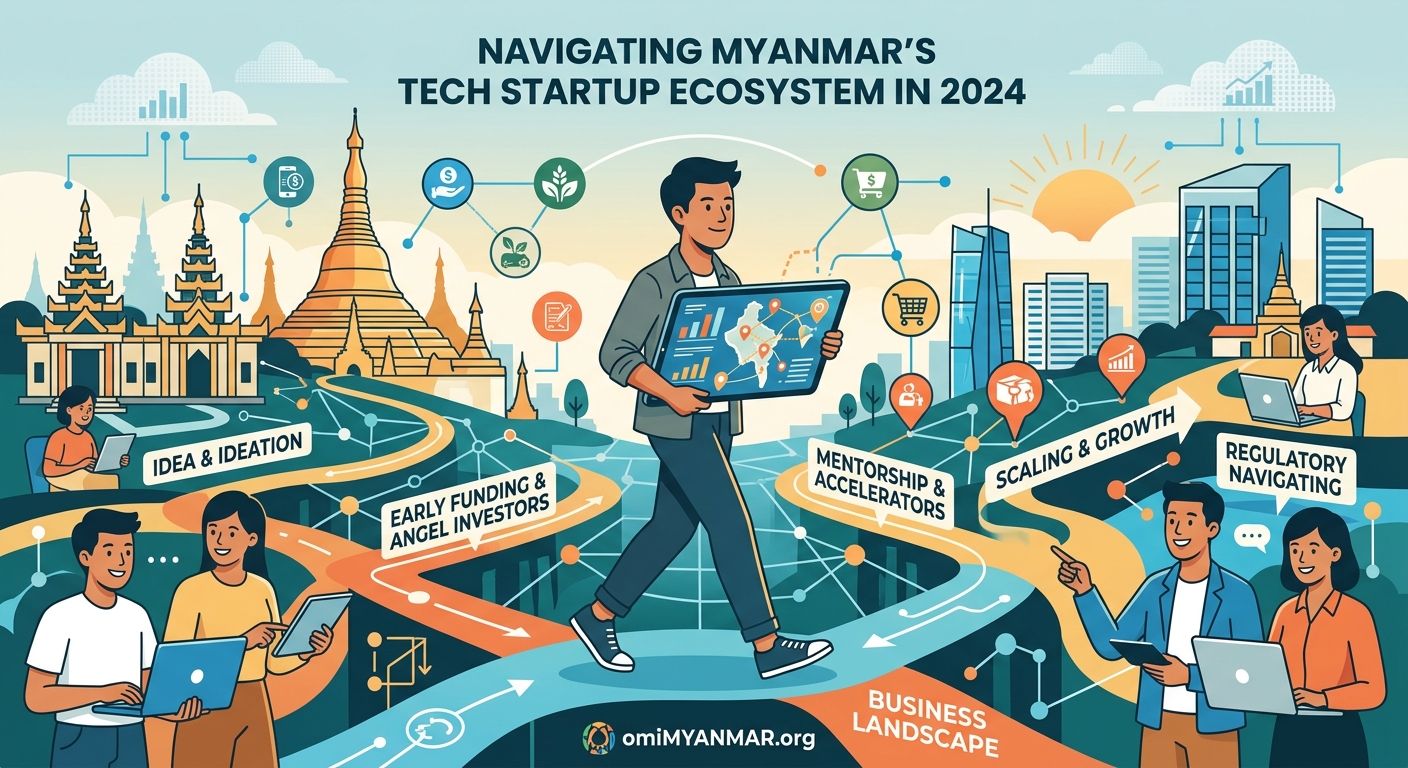
Building a startup presence in Myanmar requires methodical preparation. Here’s a practical roadmap based on successful market entries:
-
Establish local relationships before formal registration. Spend at least two months building connections with potential partners, customers, and advisors. Attend meetups at Phandeeyar or join online communities like Myanmar Startup. These relationships provide context no consultant can offer.
-
Register your business through MyCO (Myanmar Companies Online). The Directorate of Investment and Company Administration digitized registration in recent years. Budget 4-6 weeks for approval and expect to navigate bureaucratic inconsistencies. Hire a local legal advisor familiar with the specific ministry handling your sector.
-
Set up compliant payment infrastructure. Partner with established payment processors rather than building proprietary systems. Wave Money, KBZ Pay, and CB Pay dominate the market. Integration takes 2-3 months and requires local bank accounts, which themselves need 4-6 weeks to establish.
-
Build a hybrid team structure. Hire local developers and product managers while keeping strategic roles distributed. Remote work infrastructure improved dramatically during 2020-2021. Many successful startups operate with founders outside Myanmar while maintaining strong local teams.
-
Launch with a minimum viable product focused on offline-first functionality. Internet reliability varies significantly across regions. Your product must function with intermittent connectivity. Test extensively in Yangon suburbs and secondary cities before full launch.
“The biggest mistake foreign founders make is assuming Myanmar operates like Thailand or Vietnam. The regulatory environment, payment systems, and customer behaviors are distinct. You can’t copy-paste a regional strategy.” (Advice from a Yangon-based accelerator director)
Key players shaping the ecosystem
Several organizations provide structure to Myanmar’s startup community. Understanding their roles helps you connect with the right resources.
Phandeeyar operates as Myanmar’s primary innovation lab and co-working space. They run accelerator programs, host events, and maintain the largest founder network in Yangon. Their programs focus on social impact ventures but welcome commercial startups.
Seedstars brings international startup methodologies to Myanmar through competitions and training programs. They connected Myanmar founders with regional investors and mentorship networks that would otherwise remain inaccessible.
GSMA Ecosystem Accelerator supports mobile-focused startups through funding and technical assistance. Their portfolio includes Kargo (logistics), Greenovator (agriculture), and Neh Thit (mobile services). These companies demonstrate viable business models adapted to local constraints.
Local angel investors operate informally but provide crucial early capital. Most successful founders eventually become angels themselves, creating a self-sustaining funding cycle. These investors bring sector expertise and regulatory navigation skills that matter more than capital alone.
Telecommunications companies increasingly partner with startups rather than building in-house solutions. MPT, Telenor (now Atom), and Ooredoo invested in developer programs and API access that enabled third-party innovation.
Funding realities and creative capital strategies
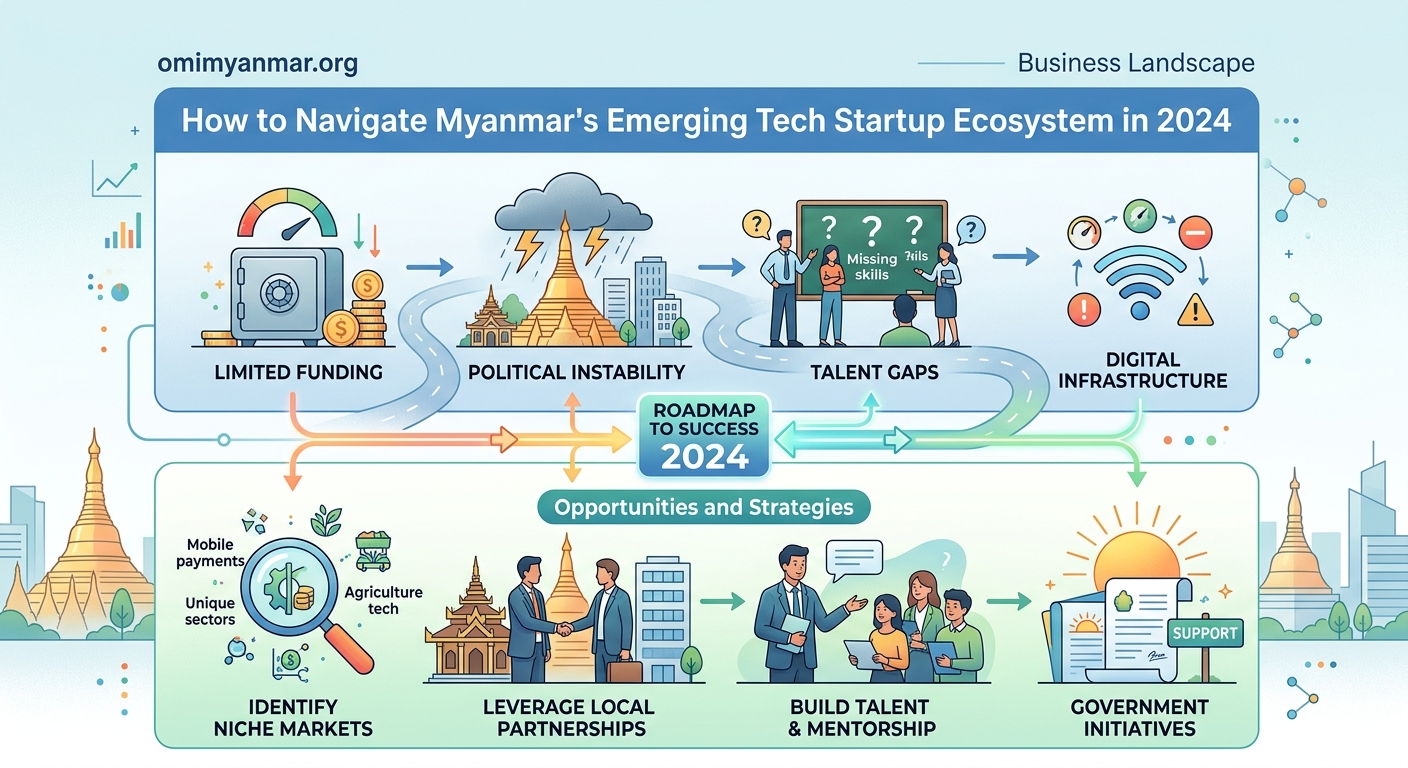
Traditional venture capital operates differently in Myanmar. Deal sizes are smaller, due diligence takes longer, and exit options remain limited. Most startups bootstrap longer than regional counterparts.
Here’s how funding typically progresses:
| Stage | Typical Amount | Primary Sources | Timeline |
|---|---|---|---|
| Pre-seed | $10,000-$50,000 | Personal savings, family, friends | 6-12 months |
| Seed | $50,000-$250,000 | Angel investors, accelerators | 12-18 months |
| Series A | $250,000-$1M | Regional VCs, impact investors | 18-36 months |
| Growth | $1M+ | Strategic investors, private equity | 36+ months |
Revenue-based financing gained traction as an alternative to equity dilution. Several startups use customer prepayments and vendor financing to fund operations. This approach works particularly well for e-commerce and logistics ventures with predictable cash flows.
Grants from development organizations provide non-dilutive capital for social impact startups. USAID, DFID, and various UN agencies fund technology projects addressing development challenges. These grants typically range from $50,000 to $500,000 but require extensive reporting and impact measurement.
The business sector faces ongoing transparency challenges that affect investor confidence. Due diligence processes take 3-6 months longer than comparable Southeast Asian markets.
Technical infrastructure and connectivity challenges
Building technology products in Myanmar means working around infrastructure limitations. Electricity remains unreliable in many areas. Backup generators are standard equipment for tech companies.
Internet speeds improved significantly since 2015 but still lag regional standards. Yangon averages 15-20 Mbps download speeds. Secondary cities often see single-digit speeds. Mobile data is more reliable than fixed broadband in most locations.
Cloud services present unique challenges. AWS and Google Cloud operate normally, but payment processing requires creative solutions. Many startups use regional resellers or maintain accounts through Singapore entities.
Content delivery networks (CDNs) matter more in Myanmar than most markets. Hosting content locally or through regional CDN nodes dramatically improves user experience. Facebook’s Free Basics program shaped user expectations around fast-loading, lightweight applications.
Consider these technical priorities:
- Design for 2G/3G connectivity as baseline
- Implement aggressive caching and offline-first architecture
- Optimize image sizes and minimize external dependencies
- Test extensively on low-end Android devices (market dominant)
- Build progressive web apps rather than native apps when possible
Connectivity infrastructure continues evolving as telecommunications companies expand coverage and capacity.
Regulatory environment and compliance requirements
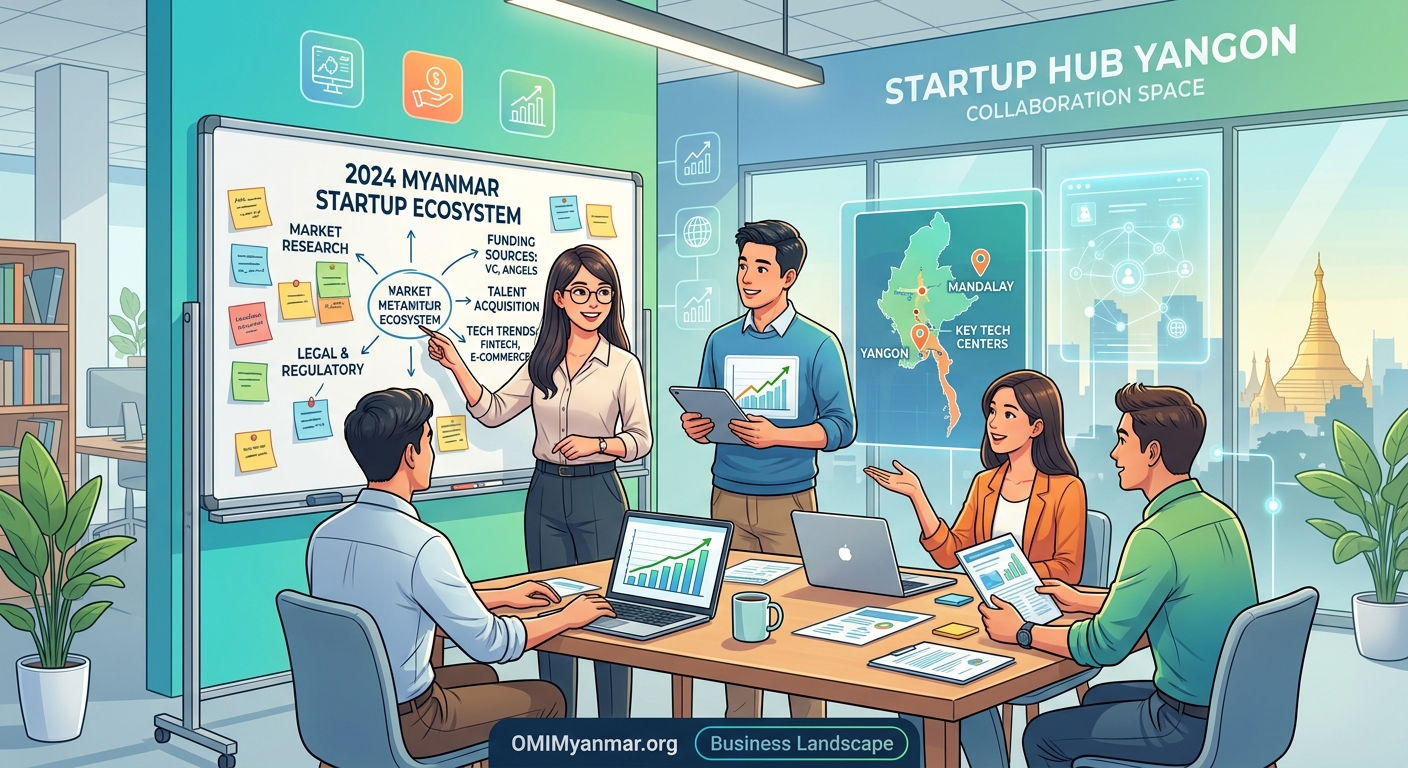
Myanmar’s regulatory framework for technology companies remains under development. Rules change frequently and enforcement varies by sector and region.
Company registration through MyCO streamlined the basic incorporation process. You’ll need:
- Minimum two directors (at least one Myanmar citizen)
- Registered office address in Myanmar
- Minimum capital of 1 million MMK (approximately $500)
- Business plan and activity description
- Director identification documents
Sector-specific licenses add complexity. Fintech requires approvals from the Central Bank of Myanmar. E-commerce platforms need trading licenses from the Ministry of Commerce. Telecommunications-related services require Ministry of Transport and Communications approval.
Tax compliance demands careful attention as rules differ significantly from international norms. Corporate income tax is 25% for most businesses. Withholding taxes apply to various transactions. VAT (commercial tax) is 5% but exemptions exist for specific sectors.
Data protection regulations are minimal compared to GDPR or similar frameworks. However, this creates risk rather than freedom. Operating with strong data protection practices builds customer trust and prepares you for inevitable regulatory development.
Labor laws require Myanmar citizen employees for most positions. Foreign workers need special permits that take 2-3 months to process. Many startups structure as regional entities with Myanmar subsidiaries to maintain flexibility.
Customer behavior and market entry strategies
Myanmar consumers exhibit distinct digital behaviors shaped by rapid mobile adoption and limited e-commerce history. Understanding these patterns determines product-market fit.
Cash remains dominant. Despite high mobile penetration, most transactions happen in cash. Successful platforms offer cash-on-delivery and integrate with mobile wallet providers rather than requiring cards. Building trust takes time. Customers prefer trying products before committing to digital payments.
Facebook functions as the internet. For millions of users, Facebook is their primary (sometimes only) online destination. Marketing strategies must prioritize Facebook and Messenger. Many successful startups operate entirely through Facebook pages before building standalone apps or websites.
Price sensitivity is extreme. Myanmar’s emerging middle class remains price-conscious despite growing incomes. Freemium models work better than upfront payments. Subscription services struggle unless they provide clear, immediate value.
Localization matters beyond language. Translating interfaces to Burmese is necessary but insufficient. Payment methods, customer service approaches, and product features must adapt to local contexts. What works in Thailand or Vietnam often fails without modification.
Community referrals drive adoption. Word-of-mouth marketing outperforms digital advertising for most products. Building ambassador programs and referral incentives generates better returns than Facebook ads in many cases.
Common mistakes foreign entrepreneurs make
Learning from others’ failures saves time and capital. These mistakes appear repeatedly among foreign-led ventures:
Underestimating regulatory complexity. What looks straightforward on paper takes months to implement. Buffer 2-3x your estimated timeline for licensing and approvals. Hire local legal counsel from day one, not after problems emerge.
Overbuilding technology. Myanmar users don’t need cutting-edge features. They need reliable, fast, simple solutions that work on cheap phones with slow internet. Your MVP should be more minimal than you think.
Ignoring payment infrastructure. Assuming you can add payments later creates major problems. Payment integration takes months and requires specific legal structures. Plan this from the beginning.
Copying regional competitors directly. Grab’s model doesn’t transplant to Myanmar without major modifications. Study what succeeded locally rather than importing solutions from Singapore or Jakarta.
Neglecting relationship building. Myanmar business culture emphasizes personal relationships and trust. Trying to move fast and break things alienates potential partners and customers. Invest time in relationship building before asking for commitments.
Misunderstanding the talent market. Myanmar developers are skilled but compensation expectations, work styles, and career priorities differ from Western norms. Imposing Silicon Valley management practices creates friction.
Sector-specific opportunities worth watching
Certain sectors show particular promise for new ventures based on market gaps and adoption trends.
Agricultural technology addresses needs for 70% of the population still involved in farming. Solutions for crop planning, market access, and supply chain efficiency find ready customers. Mobile-based advisory services gain traction even in rural areas with limited connectivity.
Healthcare technology tackles severe infrastructure gaps. Telemedicine platforms, appointment booking systems, and pharmacy delivery services all show strong growth. Regulatory barriers are lower than fintech while market need is urgent.
Education technology serves a young population hungry for skills training. English language learning, vocational training, and university exam preparation generate revenue. Parents prioritize education spending even during economic downturns.
Logistics and delivery remain inefficient across Myanmar. Last-mile delivery solutions, warehouse management systems, and route optimization tools address real pain points. E-commerce growth drives demand for these services.
Business software adoption is early but accelerating. Accounting systems, inventory management, and customer relationship management tools find customers among growing small and medium enterprises. Cloud-based solutions that work offline have particular appeal.
Building for resilience in an uncertain environment
Myanmar’s political and economic volatility requires startups to build resilience into their business models. Companies that survived recent challenges share common characteristics.
Diversified revenue streams protect against sector-specific shocks. Successful startups serve multiple customer segments or offer complementary services. Relying on a single customer type or revenue source creates fragility.
Distributed operations reduce geographic risk. Maintaining team members and infrastructure across multiple cities means disruptions in one location don’t halt operations. Remote work capabilities proved essential during recent crises.
Strong unit economics matter more than growth at all costs. Startups that achieved profitability or near-profitability at small scale survived while heavily-funded competitors struggled. Focus on sustainable business models before scaling.
Flexible technology architecture allows rapid pivoting when circumstances change. Startups built on modular, well-documented codebases adapted products faster than those with technical debt. Investing in clean architecture pays dividends during crisis.
Community connections provide support networks during difficult periods. Founders who invested in peer relationships, mentor connections, and community participation accessed resources and opportunities that isolated founders missed.
What success looks like in Myanmar’s context
Success metrics differ from typical startup benchmarks. Understanding appropriate goals prevents frustration and misallocated resources.
Revenue matters more than user growth in Myanmar’s small market. A startup serving 10,000 paying customers sustainably outperforms one with 100,000 free users and no monetization path. Focus on finding customers willing to pay from the beginning.
Profitability timelines should be shorter. Plan to reach break-even within 18-24 months rather than the 5-7 year horizons common in well-funded ecosystems. Capital scarcity makes this necessary, but it also forces business model discipline.
Team stability indicates success as much as metrics. In a small ecosystem, keeping talented team members signals a healthy company culture and sustainable operations. High turnover raises red flags for investors and partners.
Partnership quality outweighs quantity. A few strong relationships with established companies, government entities, or international organizations provide more value than dozens of superficial connections.
Social impact alongside financial returns attracts both customers and capital. Ventures that improve lives while generating profit access funding sources unavailable to purely commercial plays.
Resources and communities for ongoing support
Building in Myanmar means staying connected to evolving resources and support networks.
Phandeeyar offers co-working space, events, and programs for early-stage founders. Their community provides peer support and practical advice from people facing similar challenges.
Myanmar Startup maintains active online forums where founders share experiences and solutions. The community answers questions ranging from legal issues to technical challenges.
Seedstars Myanmar runs annual competitions and accelerator programs connecting local founders with international mentors and investors.
GSMA Ecosystem Accelerator Innovation Fund provides funding and support for mobile-focused startups addressing development challenges.
Impact Hub Yangon creates space for social entrepreneurs and provides connections to impact investors and development organizations.
Tech in Asia and e27 cover Myanmar startup news and facilitate connections with regional investors and partners.
Local Facebook groups for developers, founders, and specific sectors provide real-time information sharing and problem-solving. These informal networks often prove more valuable than formal organizations.
Making your first moves in Myanmar’s tech scene
Start by visiting if possible. Two weeks on the ground provides more insight than months of remote research. Attend meetups, visit co-working spaces, and talk with founders already operating in the market.
If you can’t visit immediately, connect with the diaspora community. Myanmar professionals in Singapore, Thailand, and Western countries often maintain strong home country connections and can facilitate introductions.
Understanding governance and transparency initiatives helps you navigate institutional relationships and build credibility with stakeholders who value ethical business practices.
Begin with a consulting or service project before committing to a full startup. This allows you to build relationships, understand the market, and generate revenue while testing your assumptions.
Partner with local co-founders rather than trying to operate as a foreign-only team. Local partners provide cultural context, regulatory navigation, and customer insights that determine success or failure.
Why Myanmar’s startup ecosystem deserves your attention
The Myanmar tech startup ecosystem rewards patience, cultural sensitivity, and genuine problem-solving. It’s not the easiest market in Southeast Asia. It’s not the most developed or best-funded.
But it offers something increasingly rare: genuine opportunity to build foundational infrastructure and serve underserved markets. The challenges that deter some entrepreneurs create moats for those willing to commit.
Success here requires adapting international best practices to local realities rather than imposing foreign models. It means building relationships before transactions. It means designing for constraints rather than assuming abundant resources.
The founders and companies succeeding in Myanmar today are creating blueprints for operating in frontier markets globally. The skills you develop navigating this ecosystem transfer to other challenging but opportunity-rich environments.
Start small, build relationships, solve real problems, and stay committed through inevitable obstacles. Myanmar’s tech startup ecosystem isn’t for everyone. But for entrepreneurs seeking meaningful challenges and outsized impact, few markets offer comparable potential.