
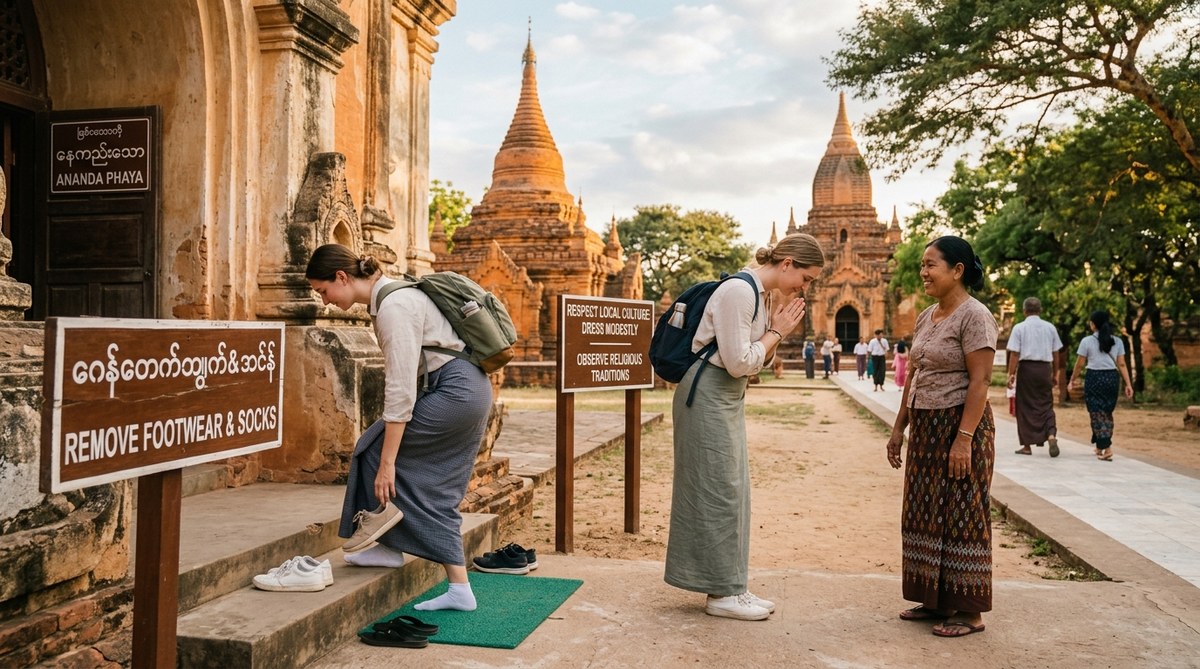
Traveling to Myanmar offers a chance to immerse yourself in a rich tapestry of traditions, spiritual practices, and warm community life. Respectful behavior is key to truly experiencing the country’s beauty and building genuine connections with locals. Understanding Myanmar’s cultural etiquette in 2026 is more important than ever as the country continues to evolve socially and politically. By following a few simple guidelines, you ensure your visit remains respectful, meaningful, and enriching for everyone involved.
Respecting Religious Sites and Practices
Myanmar is a deeply spiritual country where Buddhism influences daily life. Temples, pagodas, and monasteries are sacred spaces that demand respectful conduct from visitors.
How to behave at temples and pagodas
- Remove your shoes and socks before entering any religious site. Most temples have designated areas for shoe removal, usually outside. This practice shows respect and keeps the sacred space clean.
- Dress modestly. Cover shoulders and knees when visiting religious sites. Women should avoid tight or revealing clothing. Carry a scarf or shawl to cover shoulders if needed.
- Speak softly. Keep noise levels low to maintain the serene atmosphere. Loud conversations or phone calls are considered disrespectful.
- Avoid pointing. Pointing your feet or fingers at statues or monks is considered impolite. Use your whole hand to gesture if necessary.
- Refrain from touching sacred objects. Respect boundaries and do not climb or lean on statues or relics.
Practical Process for visiting religious sites
- Check local customs – some sites may have specific rules.
- Dress appropriately and carry a scarf or shawl.
- Remove shoes and socks at designated areas.
- Approach monks with respectful gestures, like a slight bow or hands together.
- Avoid taking photos during religious ceremonies or inside shrines unless explicitly permitted.
“Always remember that Myanmar’s religious traditions are a cornerstone of local identity. Showing reverence ensures a positive experience and demonstrates genuine respect for the culture,” advises cultural expert Dr. Aung Soe.
Interacting with Locals and Gender Etiquette
Building respectful relationships with Myanmar residents involves understanding social norms around greetings, gender roles, and personal space.
How to greet and interact
- Use a respectful greeting. The traditional Burmese greeting is pressing your palms together in front of your chest and bowing slightly. This gesture, called a mingalaba, is appropriate for all ages and genders.
- Address people with titles. Use “U” for men and “Daw” for women followed by their first name if known. This shows politeness.
- Avoid physical contact. Handshakes are acceptable in urban settings but wait for the local to initiate. Touching someone’s head or shoulder without permission can be seen as intrusive.
- Respect personal space. Burmese people tend to keep a comfortable distance in social interactions. Be mindful not to stand too close.
Gender considerations
- Men and women often have different roles in social settings.
- Women may prefer to be addressed with formal titles.
- Always ask permission before taking photos of individuals, especially women.
Practical Process for respectful interaction
- Learn and practice the mingalaba greeting.
- Use proper titles and polite language.
- Observe body language and wait for cues before physical contact.
- Respect personal boundaries and avoid sensitive topics.
- Ask permission before photography.
Dress Code and Personal Appearance
Myanmar’s climate and cultural sensitivities influence appropriate dress. Wearing respectful clothing not only shows consideration but also helps avoid unwanted attention.
How to dress appropriately
- Cover shoulders and knees, especially when visiting temples or rural areas.
- Avoid tight, transparent, or overly casual attire.
- Women should consider wearing long skirts or pants, and men should opt for collared shirts and trousers.
- Carry a scarf or shawl to adapt to different settings.
Common mistakes to avoid
| Technique | Mistake |
|---|---|
| Wearing sleeveless shirts | Seen as disrespectful in religious or rural settings |
| Short skirts or shorts | Considered inappropriate outside tourist beaches |
| Tight or transparent clothing | May offend local sensibilities |
| Not covering shoulders | Can be refused entry to temples or pagodas |
“Dressing modestly and respectfully signals your understanding of Myanmar’s cultural values. It opens doors to authentic experiences,” notes cultural anthropologist Dr. Maung Maung.
Personal Space and Social Taboos
Myanmar’s social etiquette emphasizes humility, respect, and avoiding confrontation or embarrassment.
Key taboos to keep in mind
- Never point your feet at people or religious objects.
- Do not touch or pat someone on the head, especially monks or elders.
- Avoid raising your voice or displaying anger publicly.
- Refrain from public displays of affection, which are considered inappropriate in most settings.
- Respect elders by offering them seats or greeting with a slight bow.
Techniques and mistakes
| Technique | Mistake |
|---|---|
| Using both hands to give or receive | Giving with only one hand can be seen as disrespectful |
| Sitting with feet tucked under | Appropriate in informal settings; avoid in temples |
| Maintaining a humble posture | Standing too confidently or showing arrogance |
“Understanding social nuances helps foster trust and respect in Myanmar. Small gestures like bowing or offering a seat go a long way,” advises social behavior expert Lina Chen.
Dining and Table Manners
Food is a central part of Myanmar’s culture, and dining etiquette reflects respect and mindfulness.
How to eat respectfully
- Use your right hand for eating or passing food.
- Avoid pointing with chopsticks or fingers directly at others.
- Finish your plate to show appreciation.
- Share dishes if dining family-style, which is common.
- Respect local customs around alcohol and drinking rituals.
Common mistakes
- Using the left hand for eating or passing items, which is considered unclean.
- Touching shared dishes with your fingers without utensils.
- Making noise while eating, which can be seen as impolite.
Practical process for dining
- Observe how locals eat and follow suit.
- Use utensils or your right hand, ensuring cleanliness.
- Compliment the cook or host.
- Be mindful of portion sizes and avoid wasting food.
- Respect the local drinking customs, including offerings to monks or spirits.
Practical Techniques and Mistakes Table
| Technique | Mistake |
|---|---|
| Removing shoes before entering homes or temples | Wearing shoes inside religious or home spaces |
| Using respectful greetings like mingalaba | Ignoring local greeting customs |
| Covering shoulders and knees when appropriate | Wearing revealing clothing in sacred sites |
| Giving and receiving with both hands | Using only one hand can be viewed as disrespectful |
| Avoiding public displays of affection | Showing affection openly in public can offend locals |
Final Tips for a Respectful Journey
- Learn basic phrases like “hello” and “thank you” in Burmese. It shows effort and appreciation.
- Observe and adapt. Watch how locals behave and mirror their actions.
- Ask permission before taking photos of people or sacred sites.
- Be patient and humble. Cultural differences may lead to misunderstandings, but kindness and respect go a long way.
“Traveling with a respectful attitude not only enriches your experience but also leaves a positive impression on the community,” emphasizes travel expert Lisa Bennett.
The Heart of Myanmar’s Hospitality
Respectful cultural conduct in Myanmar is about more than following rules. It reflects an attitude of humility, appreciation, and genuine curiosity. By adopting these Myanmar cultural etiquette tips 2026, you open yourself to authentic encounters, meaningful conversations, and lasting memories. Approach your journey with openness and respect, and Myanmar will warmly welcome you into its vibrant, spiritual heart.
Happy travels and may your visit be filled with kindness, learning, and unforgettable moments.