

Operating an NGO in Myanmar means understanding a regulatory environment that has shifted dramatically in recent years. The rules governing international nonprofits have changed hands multiple times, creating layers of requirements that can confuse even experienced humanitarian professionals. Getting compliance right isn’t just about avoiding penalties. It’s about building trust with communities, protecting your team, and ensuring your programs can continue serving the people who need them most.
NGO regulatory requirements Myanmar encompass registration with multiple government bodies, regular financial reporting, project approval processes, and ongoing compliance monitoring. Understanding these frameworks helps organizations maintain legal status, protect staff, and deliver effective humanitarian programs. This guide covers registration procedures, documentation standards, partnership requirements, and practical strategies for maintaining compliance in a complex regulatory landscape that continues to evolve.
Understanding the current legal framework for NGOs
Myanmar’s regulatory system for international NGOs operates through several overlapping authorities. The primary governing body changes depending on political circumstances, but core requirements remain consistent across transitions.
International NGOs typically need registration at both national and state or regional levels. National registration establishes your legal presence in the country. State-level registration allows you to operate in specific geographic areas.
The Ministry of Planning and Finance historically handled international NGO registration, though administrative control has shifted. Organizations must navigate whichever authority currently manages nonprofit oversight.
Local NGOs face different requirements than international organizations. Domestic nonprofits register under the Associations Registration Act, while international NGOs follow separate procedures outlined in memorandums of understanding with government entities.
“The biggest mistake NGOs make is assuming registration is a one-time event. Myanmar requires continuous engagement with regulatory authorities, regular reporting, and proactive communication about program changes.”
Registration procedures step by step
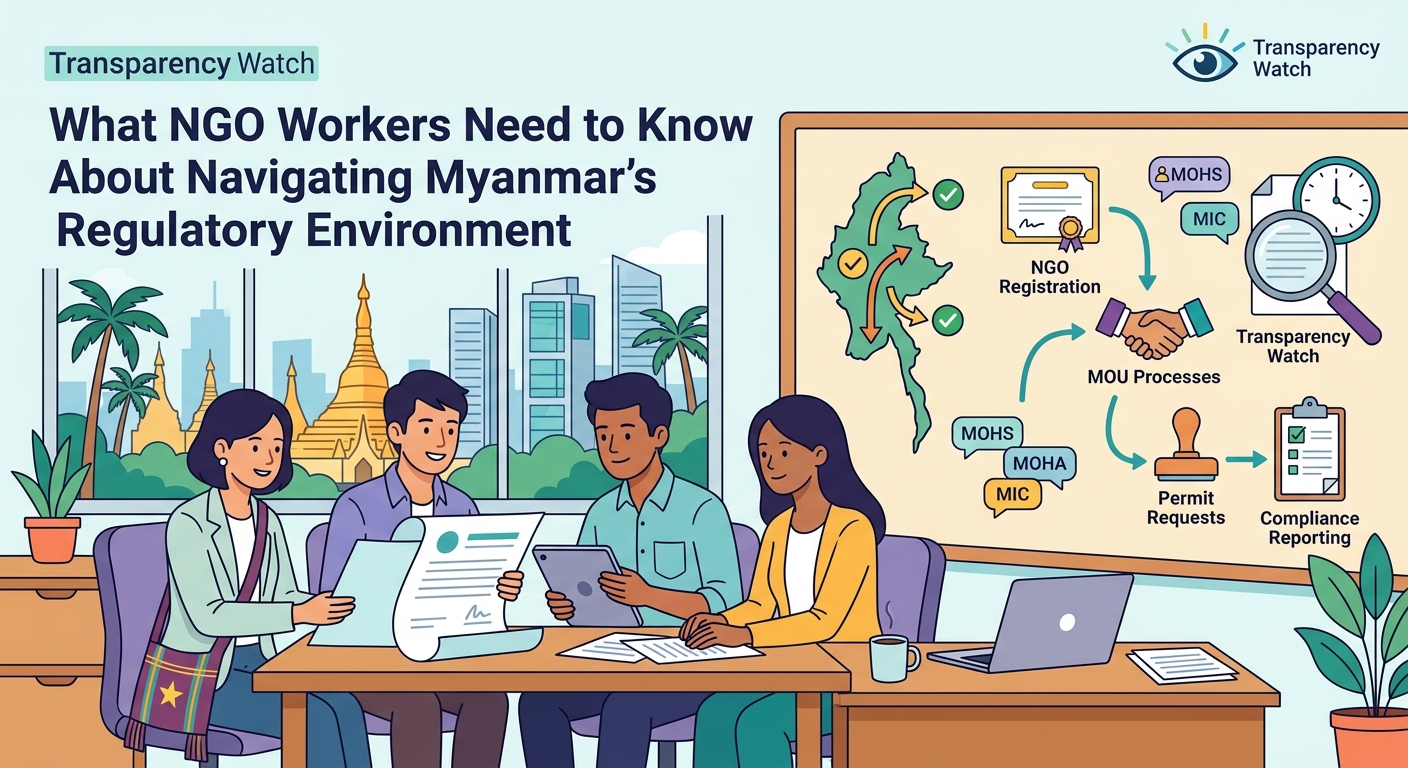
Getting your organization legally established requires careful attention to documentation and timing. Here’s how the process typically unfolds:
-
Submit a formal application letter to the relevant ministry or authority explaining your organization’s mission, proposed activities, and geographic focus areas.
-
Provide certified copies of your organization’s founding documents, including articles of incorporation, bylaws, and proof of registration in your home country.
-
Include detailed project proposals outlining specific activities, target beneficiaries, budget allocations, and expected outcomes for each program you plan to implement.
-
Submit financial documentation showing your organization’s funding sources, global budget, and specific allocations for Myanmar operations.
-
Provide background information on key personnel, including CVs, passport copies, and police clearance certificates for expatriate staff who will work in country.
-
Wait for initial review, which can take anywhere from three to six months depending on current processing capacity and political conditions.
-
Respond to requests for additional information or clarification, which often come in multiple rounds as different departments review your application.
-
Receive preliminary approval and sign a memorandum of understanding outlining your obligations, reporting requirements, and operational parameters.
-
Complete state or regional registration for each area where you plan to work, repeating abbreviated versions of the national process with local authorities.
The entire registration process typically takes six months to one year. Starting early prevents program delays.
Documentation standards that authorities expect
Proper documentation protects your organization and demonstrates good faith compliance. Authorities expect specific formats and content standards.
Financial records must follow international accounting standards while meeting local reporting requirements. Maintain separate ledgers for each project, tracking income and expenses by funding source and activity category.
Program reports should include quantitative data on beneficiaries reached, activities completed, and outputs delivered. Qualitative information about community impact and lessons learned adds context but shouldn’t replace hard numbers.
Personnel records need updating whenever staff changes occur. This includes hiring local employees, bringing in international workers, or changing roles for existing team members.
Partnership agreements with local organizations require documentation showing the nature of collaboration, fund flows, and division of responsibilities. Informal partnerships can create compliance issues if authorities discover undocumented relationships.
| Document Type | Update Frequency | Key Elements Required |
|---|---|---|
| Financial reports | Quarterly | Income by source, expenses by category, bank statements |
| Program progress reports | Every six months | Beneficiary numbers, activity completion rates, geographic coverage |
| Staff roster updates | Within 30 days of changes | Names, positions, nationalities, visa status |
| Partnership agreements | Before collaboration begins | Scope of work, budget allocation, reporting responsibilities |
Working with local partner organizations
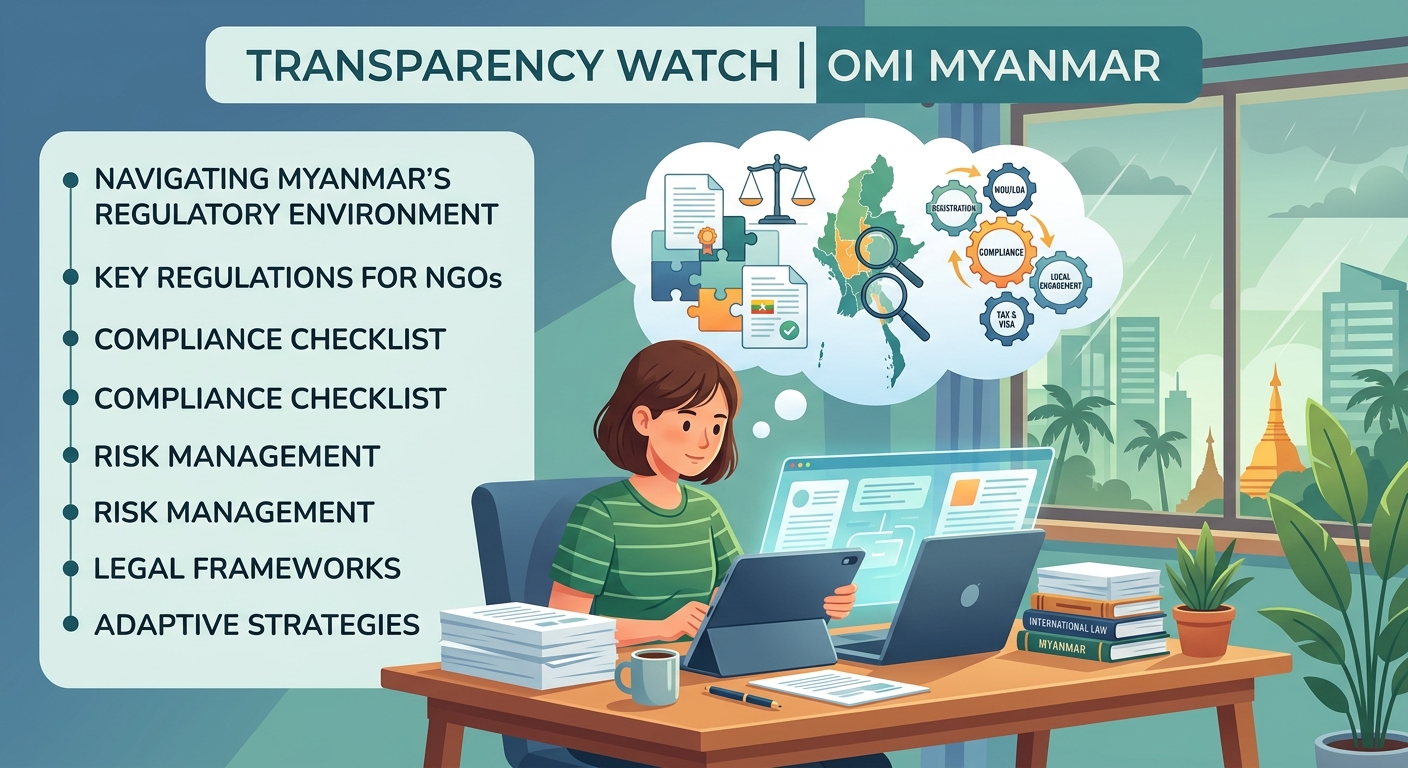
Most international NGOs operate through partnerships with Myanmar civil society groups. These relationships require careful structuring to meet regulatory expectations.
Local partners must have their own valid registration under the Associations Registration Act. Verify registration status before signing agreements. Operating through unregistered partners can jeopardize your own legal standing.
Capacity building for local partners serves dual purposes. It strengthens their organizational systems while ensuring they can meet the reporting and compliance standards authorities expect from your partnership.
Fund transfers to local partners need clear documentation showing the purpose, amount, and intended use of each payment. How international watchdogs are monitoring Myanmar’s governance reforms in 2024 provides context on transparency expectations that apply to NGO partnerships.
Joint program implementation requires defining roles explicitly. Ambiguity about who does what can lead to compliance gaps when authorities ask questions about specific activities.
Reporting requirements and timelines
Staying current with reporting prevents most compliance problems. Different authorities expect different reports on different schedules.
Financial reporting happens quarterly for most organizations. Submit detailed breakdowns of income and expenses within 30 days of each quarter’s end. Annual financial reports require external audits by firms recognized by Myanmar authorities.
Program reporting typically occurs every six months. These reports describe activities completed, beneficiaries reached, and progress toward stated objectives. Include challenges encountered and how you addressed them.
Staff changes require notification within 30 days. This applies to both international and local employees. Bringing in new expatriate staff requires advance approval, not just notification after arrival.
Project modifications need prior approval before implementation. This includes geographic expansion, adding new activity types, or significant budget reallocations between program areas.
Managing visa and work permit processes
Getting your international staff legally authorized to work involves separate procedures from organizational registration.
Business visas allow initial entry but don’t authorize employment. Upon arrival, staff must convert to stay permits and obtain work permits through the Ministry of Labour.
The stay permit process requires your organization’s registration documents, the employee’s passport and visa, a health certificate from an approved clinic, and a letter from your organization explaining the person’s role.
Work permits need renewal annually. Start the renewal process at least 60 days before expiration to avoid gaps in legal work authorization.
Some positions require special approval beyond standard work permits. Technical roles in certain sectors may need additional clearances from relevant ministries.
Operating in conflict-affected and restricted areas
Geographic restrictions limit where some NGOs can work. Certain states and regions require special approval beyond standard registration.
Conflict-affected areas often have military authorities who control access separately from civilian government structures. Both sets of permissions may be necessary.
Travel authorizations for these areas require advance application, sometimes weeks before planned visits. Last-minute travel rarely receives approval in restricted zones.
Security protocols become part of compliance in sensitive areas. Authorities expect organizations to have systems for staff safety, incident reporting, and emergency response.
Common compliance mistakes and how to avoid them
Even experienced organizations make errors that create regulatory problems. These mistakes appear repeatedly.
- Starting activities before receiving proper approvals because programs have urgent deadlines
- Assuming verbal permissions from officials constitute formal authorization
- Failing to report staff changes promptly when team members leave suddenly
- Treating registration as permanent rather than something requiring active maintenance
- Neglecting state-level registration while focusing only on national approval
- Operating in new geographic areas without updating registration documents
- Missing reporting deadlines during busy program periods
- Inadequate documentation of cash distributions or direct beneficiary payments
The consequences of compliance failures range from warnings to program suspension or organizational deregistration. Prevention costs far less than remediation.
Building relationships with regulatory authorities
Successful NGOs treat compliance as relationship management, not just paperwork submission. Regular communication with relevant ministries builds understanding and goodwill.
Courtesy visits to officials when you don’t need anything specific demonstrate respect and keep your organization visible in positive contexts. These relationships become valuable when you do need approvals or face questions about your work.
Inviting officials to program events, when appropriate and not compromising beneficiary safety, helps them understand your work firsthand. Seeing impact directly can smooth future interactions.
Responding promptly to information requests, even when deadlines seem unreasonable, shows good faith. Explain challenges respectfully while making every effort to provide what’s requested.
Financial management and banking requirements
NGOs must maintain local bank accounts for Myanmar operations. All funds entering the country should flow through registered organizational accounts, not personal accounts of staff members.
Foreign currency regulations affect how you receive and convert funds. Work with banks experienced in NGO transactions who understand reporting requirements for foreign currency inflows.
Cash management requires particular attention. Large cash withdrawals or payments need supporting documentation explaining the purpose and recipients. Programs involving direct cash transfers to beneficiaries need robust tracking systems.
Navigating Myanmar’s tax system as a foreign business owner covers tax obligations that also apply to some NGO activities, particularly income-generating projects.
Data protection and beneficiary privacy
Collecting beneficiary information creates responsibilities for data protection. While Myanmar lacks comprehensive data privacy legislation, international standards still apply to your organization.
Informed consent processes should explain how you’ll use beneficiary data, who will have access, and how long you’ll retain information. This applies to program enrollment, monitoring activities, and case management.
Sharing beneficiary data with government authorities requires careful consideration. Understand what information authorities can legally request versus what you should protect to maintain beneficiary trust and safety.
Digital data storage needs security measures preventing unauthorized access. This includes password protection, encryption for sensitive information, and limited user access based on job requirements.
Adapting to regulatory changes
Myanmar’s regulatory environment remains fluid. Organizations need systems for tracking and responding to changes.
Maintaining networks with other NGOs helps everyone stay informed about new requirements or shifting interpretations of existing rules. Information sharing within the humanitarian community provides early warning of changes.
Legal counsel familiar with Myanmar nonprofit law provides guidance when regulations change or become unclear. Having a lawyer on retainer costs less than fixing compliance problems after they occur.
Flexibility in program design allows adaptation when new restrictions emerge. Building contingency plans for potential regulatory scenarios helps organizations respond without losing momentum.
Understanding Myanmar’s freedom of information laws offers perspective on transparency frameworks that intersect with NGO operations.
Training staff on compliance expectations
Your team’s understanding of regulatory requirements directly affects organizational compliance. Regular training keeps everyone current.
Orientation for new staff should cover basic compliance obligations before they begin program work. This includes what activities require advance approval, how to document program implementation, and when to escalate questions to management.
Annual refresher training addresses changes in requirements and common mistakes observed during the previous year. Use real examples from your organization to make training relevant.
Finance staff need specialized training on banking regulations, reporting formats, and documentation standards. Program staff need different training focused on activity approvals, beneficiary documentation, and geographic restrictions.
Maintaining organizational integrity under pressure
Compliance pressures sometimes conflict with humanitarian principles. Organizations face difficult choices about what compromises they can accept.
Access negotiations with authorities may involve restrictions on beneficiary selection, geographic coverage, or program approaches. Understanding your organization’s red lines before negotiations begin helps you make consistent decisions.
Transparency about your limitations builds trust with communities. If you can’t serve certain populations or areas due to regulatory restrictions, explaining this honestly prevents misunderstandings.
Documenting pressure or inappropriate requests from officials creates records that may prove valuable later. Maintain these records securely and share them appropriately with coordination bodies or donors.
5 grassroots transparency initiatives reshaping local governance in Myanmar demonstrates how civil society organizations work within challenging environments while maintaining accountability.
Planning for suspension or closure scenarios
Every organization should have contingency plans for scenarios where continuing operations becomes impossible or inadvisable.
Suspension plans address temporary halts in activities due to security concerns, regulatory problems, or funding gaps. These plans should cover staff safety, asset protection, and beneficiary communication.
Closure plans outline how you’d wind down operations permanently if necessary. This includes final reporting obligations, asset disposition, staff severance, and transfer of ongoing programs to other organizations.
Documentation systems should allow another organization to understand and potentially continue your programs if you must exit suddenly. Organized records protect program continuity even when your organization can’t maintain presence.
Resources and support networks
No organization navigates Myanmar’s regulatory environment alone. Various networks provide guidance and collective problem solving.
Humanitarian coordination bodies share information about regulatory changes and common challenges. Participating in these forums keeps you connected to the broader NGO community’s experience.
Embassy contacts from your home country can provide support when regulatory problems arise, though their influence varies depending on diplomatic relationships.
Professional associations for specific sectors sometimes maintain relationships with relevant ministries and can facilitate communication or clarification of requirements.
Making compliance sustainable for your organization
Regulatory compliance isn’t separate from program work. It’s the foundation that allows programs to function.
Integrating compliance into regular workflows prevents it from becoming an overwhelming burden. When reporting, documentation, and approval processes become routine parts of how you operate, they require less special effort.
Budgeting adequate resources for compliance activities ensures you can meet requirements without diverting program funds. This includes staff time, legal counsel, translation services, and travel for government meetings.
Building institutional knowledge about regulatory processes protects your organization from depending on any single staff member’s understanding. Document procedures, maintain compliance calendars, and cross-train team members.
Keeping your programs running while staying compliant
Understanding NGO regulatory requirements Myanmar helps your organization operate effectively in a complex environment. The regulatory landscape will continue changing, but the fundamental principles remain constant: maintain clear documentation, communicate proactively with authorities, report accurately and on time, and build relationships before you need them.
Compliance protects your team, your programs, and the communities you serve. Investing in strong systems now prevents crises later and demonstrates the professionalism that builds trust with both authorities and beneficiaries. Your organization’s long-term impact depends on maintaining the legal standing that allows you to keep working when others face suspension or closure.