
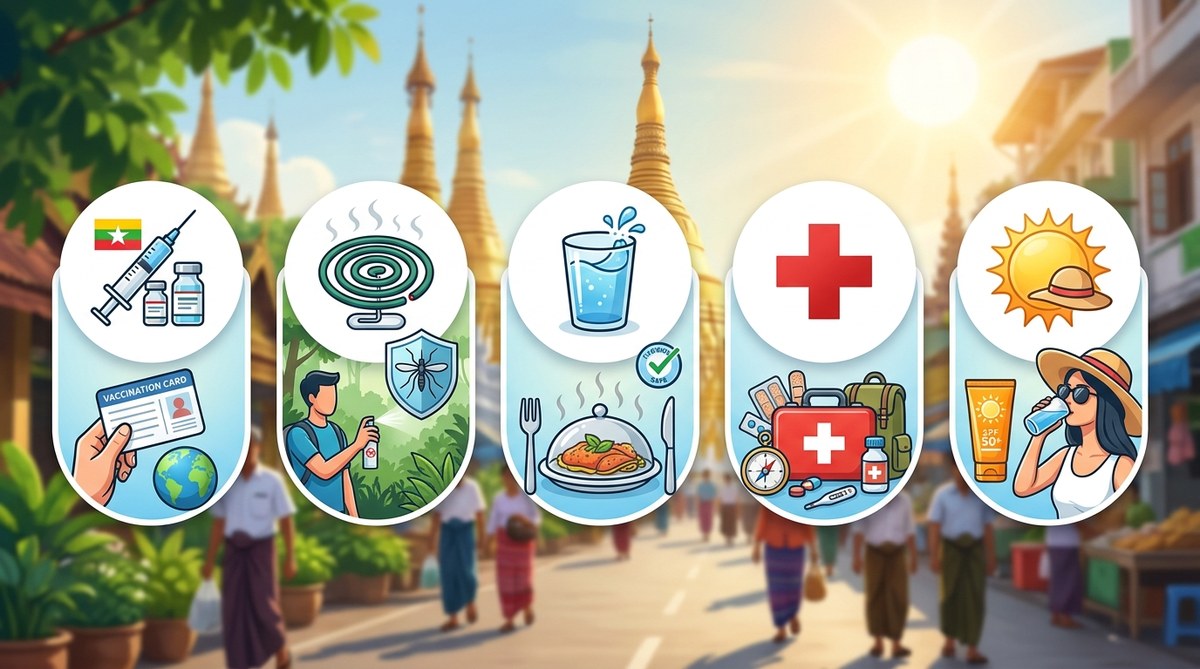
Thinking about a trip to Myanmar is exciting. The golden pagodas, bustling markets, and warm hospitality make it a destination like no other. But before you pack your bags, you need to think about your health. The health risks in Myanmar are real, and a little planning goes a long way. This guide covers the most important Myanmar travel health precautions so you can focus on the adventure.
Myanmar’s tropical climate and limited healthcare infrastructure require careful preparation. Schedule a travel clinic visit 4–6 weeks before departure. Protect against mosquito bites, drink only safe water, and secure comprehensive travel insurance with evacuation coverage. Prioritize vaccines for Hepatitis A, Typhoid, Japanese Encephalitis, and Rabies. Carry a medical kit and know where to find clinics in Yangon and Mandalay.
Plan Your Vaccinations Early
The CDC and WHO recommend several vaccines for Myanmar. Some are required, others are strongly encouraged. Book an appointment with a travel medicine specialist at least a month before your trip. Here is a breakdown of the essential shots.
| Vaccine | Disease | Who Needs It |
|---|---|---|
| Hepatitis A | Contaminated food/water | All travelers |
| Typhoid | Contaminated food/water | Most travelers, especially if staying with locals or eating street food |
| Japanese Encephalitis | Mosquito bites | Travelers spending a month or more in rural areas; shorter trips if visiting outbreak zones |
| Rabies | Animal bites | Travelers at risk of animal contact (hikers, cyclists, or working with animals) |
| Yellow Fever | Required if arriving from an endemic country | Only if you are traveling from a country with yellow fever |
| Routine vaccines (MMR, DTaP, polio, flu) | Various | Ensure all routine immunizations are up to date |
Talk to your doctor about your specific itinerary. If you plan to visit rural villages near the Thai border or trek in Shan State, Japanese Encephalitis and Rabies become more important. For a standard city trip to Yangon, Mandalay, and Bagan, focus on Hepatitis A and Typhoid.
Stay Safe with Food and Water
Traveler’s diarrhea is the most common health issue for visitors to Myanmar. The local cuisine is delicious, but your stomach may not be used to the bacteria. Follow these steps to reduce your risk:
- Drink only bottled or boiled water. Check that the bottle seal is intact.
- Avoid ice in drinks unless you know it is made from purified water.
- Eat freshly cooked food that is served hot.
- Skip raw vegetables and salads unless you wash them with safe water.
- Peel fruits yourself. Bananas, oranges, and mangoes are good choices.
- Use hand sanitizer or wash your hands before eating.
Street food can be safe if you choose busy stalls with high turnover. Watch how they handle the food. If the stall looks clean and the food is cooked in front of you, it is usually fine. For more detailed advice on local dishes, check out our guide on eating your way through Myanmar.
Protect Yourself from Mosquitoes
Mosquitoes carry diseases like dengue, malaria, and Zika. Myanmar has both urban and rural mosquito problems. Prevention is your best defense.
- Use EPA-registered insect repellent with DEET, picaridin, or oil of lemon eucalyptus.
- Reapply often, especially after sweating.
- Wear long-sleeved shirts and long pants, especially during dawn and dusk.
- Sleep under a mosquito net if your room is not air-conditioned or screened.
- Treat clothing with permethrin for extra protection.
- Consider taking malaria medication if you are visiting rural areas with high transmission. Talk to your doctor.
Dengue is a particular concern in cities like Yangon. It is transmitted by daytime biters. Do not let your guard down during the day. For more on safety and security, read our realistic assessment for travelers.
Know the Reality of Medical Care
Myanmar’s healthcare system is limited. Outside of Yangon and Mandalay, hospitals may lack supplies and trained staff. For serious emergencies, you will likely need to be evacuated to Bangkok or Singapore. That is expensive.
Travel insurance with medical evacuation coverage is non-negotiable. Make sure the policy covers at least $100,000 in evacuation costs. Check for exclusions related to political unrest or adventure sports if you plan to hike or bike.
In Yangon, several international clinics provide decent care. The Pun Hlaing Hospital and Yangon General Hospital are options. Still, for anything beyond a simple infection, evacuation is safer.
Bring a well-stocked travel medical kit. Include:
– Antibiotic for traveler’s diarrhea (prescription from your doctor)
– Antihistamines for allergies
– Pain relievers like ibuprofen or acetaminophen
– Oral rehydration salts
– Bandages, antiseptic wipes, and blister pads
– Medications for any pre-existing conditions (carry extra)
“Many travelers underestimate how hard it is to get proper care in remote areas. I always tell my patients to pack a basic medical kit and know the phone number of their insurance provider’s 24-hour assistance line. A few minutes of preparation can save a lot of stress.” — Dr. Sarah Mitchell, travel medicine specialist at World Travel Clinic.
Additional Health Concerns
Rabies Awareness
Dogs roam freely in Myanmar streets. Rabies is present. If you are bitten or scratched by any animal, wash the wound thoroughly with soap and water for 15 minutes and seek medical help immediately. The rabies vaccine series is not usually part of pre-travel vaccinations for short trips, but post-exposure shots are available in Yangon. Consider the pre-exposure vaccine if you plan to spend a lot of time outdoors or in rural areas.
Altitude Sickness
Myanmar has mountainous regions, but most tourist areas are low-lying. If you trek to higher altitudes near Putao or Chin State, know the symptoms of altitude sickness (headache, nausea, dizziness). Ascend slowly and stay hydrated.
Air Quality
During the dry season (November to February), some areas experience haze from agricultural burning. If you have respiratory issues, bring an N95 mask. Yangon can have moderate air pollution.
Sun and Heat
The tropical sun is strong. Use high SPF sunscreen, wear a hat, and drink plenty of water. Heat exhaustion and heatstroke are real risks. Take breaks in the shade during the midday heat.
For a broader look at the country’s health landscape, read about Myanmar’s healthcare system. It provides context on the challenges locals face and why your preparation matters.
Stay Connected and Informed
Having reliable communication is part of staying healthy. You may need to call your insurance or a clinic. Buy a local SIM card at the airport or download an eSIM before you go. Our guide on connecting to Myanmar explains the best options.
Also, save the contact information for your embassy or consulate. They can help in a medical crisis. Register with the Smart Traveler Enrollment Program (STEP) if you are a U.S. citizen.
A Final Word on Staying Well
Myanmar rewards prepared travelers. The health risks are manageable if you take the right steps. Visit a travel clinic, pack smartly, and keep safety in mind every day. The country’s ancient temples, vibrant festivals, and friendly people will make the effort worthwhile.
Do not let health fears stop you from experiencing one of Southeast Asia’s most fascinating destinations. Plan ahead, stay aware, and you will return home with incredible memories.