

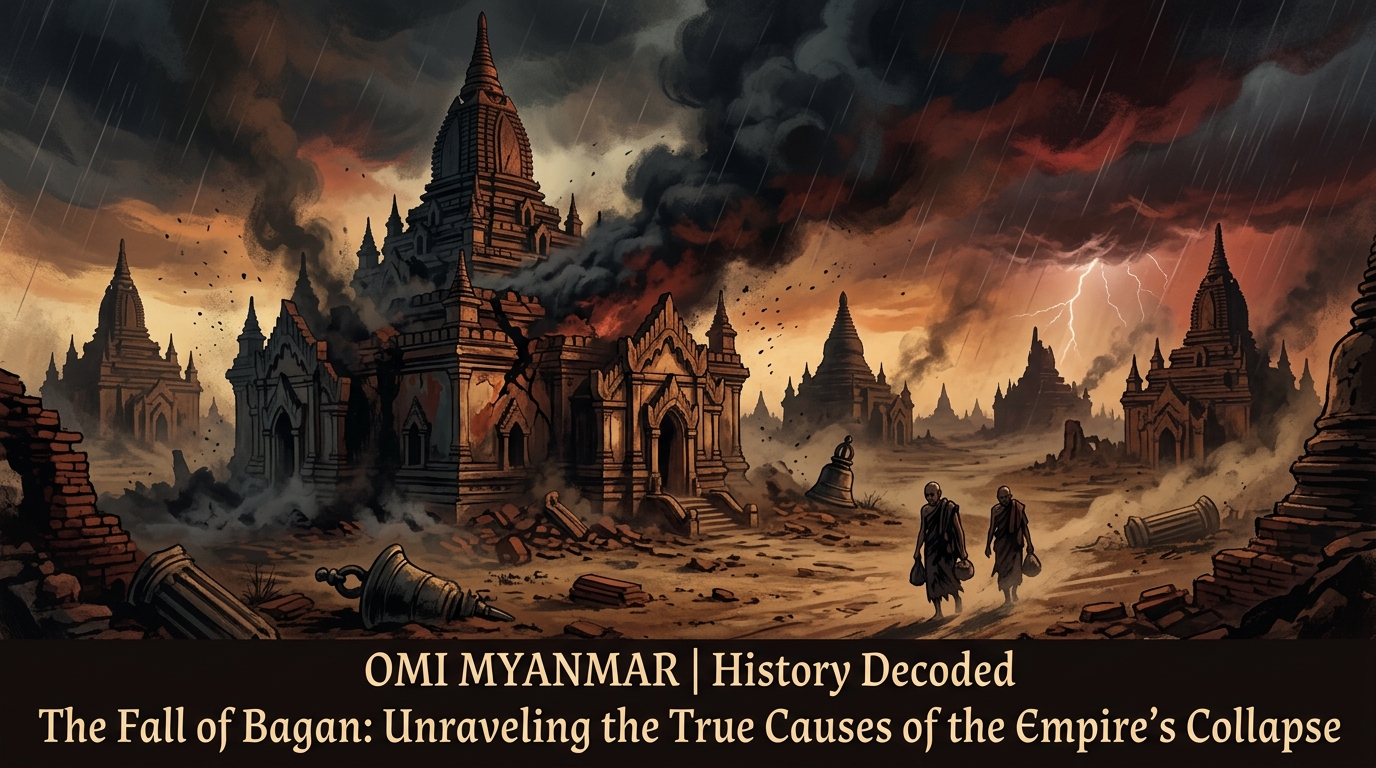
The Bagan Empire once stretched across the Irrawaddy River valley, its thousands of temples and pagodas testament to centuries of power and prosperity. Then, in the late 13th century, this mighty civilization crumbled. The fall of Bagan empire wasn’t a single catastrophic event but a convergence of internal weaknesses and external pressures that historians still debate today.
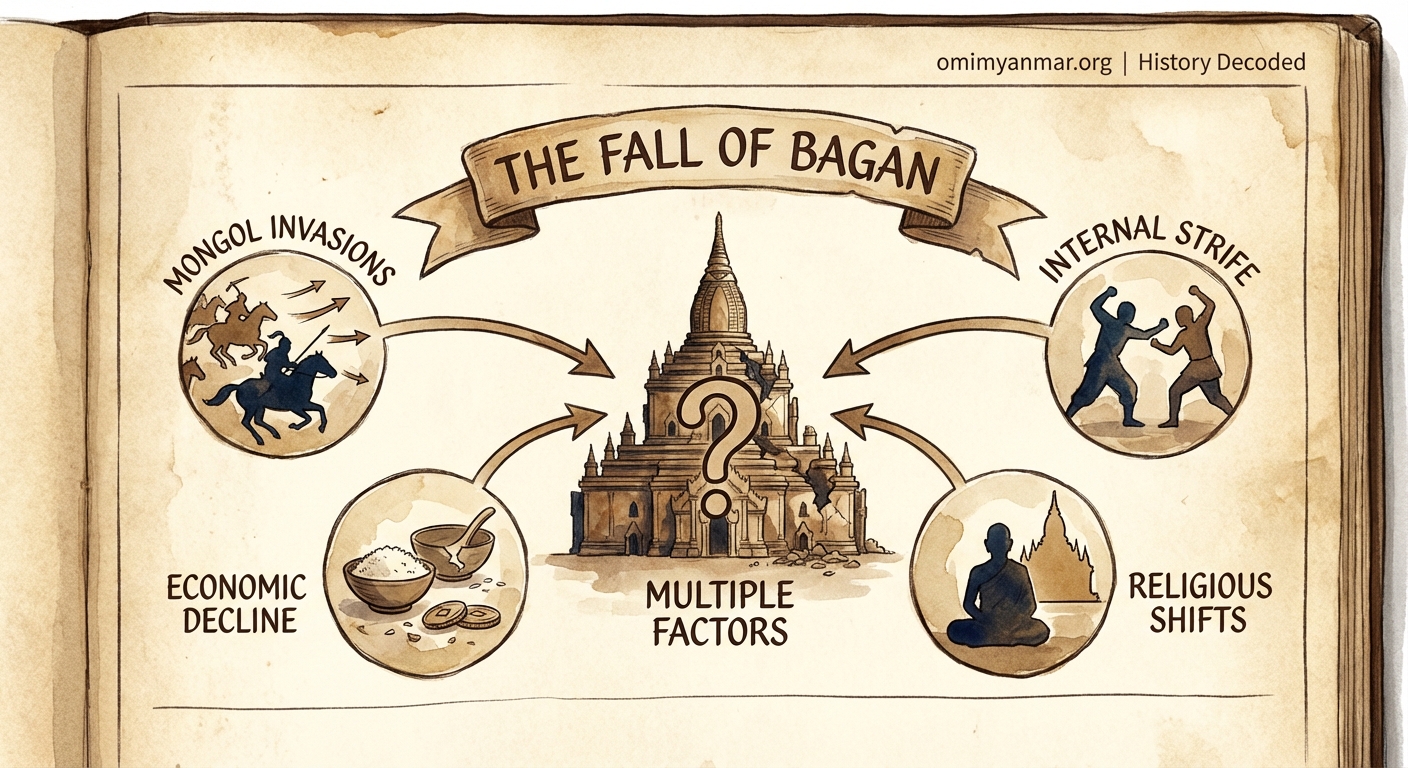
The Bagan Empire collapsed between 1287 and 1297 due to multiple converging factors. Mongol invasions weakened military strength, excessive temple building drained economic resources, religious institutions controlled too much land, administrative fragmentation undermined central authority, and environmental challenges reduced agricultural productivity. No single cause explains the fall; rather, these interconnected pressures created a perfect storm that ended Southeast Asia’s most magnificent Buddhist kingdom.
The Mongol Shadow Over Bagan
The Mongol invasions of the 1280s delivered a devastating blow to Bagan’s stability. Kublai Khan’s forces had already conquered China’s Song Dynasty and turned their attention southward. When King Narathihapate refused to submit to Mongol authority, he sealed his kingdom’s fate.
The first major confrontation came in 1277 at the Battle of Ngasaunggyan. Bagan’s army, despite fielding war elephants and thousands of soldiers, couldn’t match Mongol cavalry tactics and superior military organization. The defeat shattered the myth of Bagan’s invincibility.
Subsequent Mongol raids in 1283 and 1287 forced the royal court into crisis mode. Narathihapate fled south to Bassein, earning the derisive nickname “the king who ran away from the Chinese.” His assassination in 1287 by his own son marked the symbolic end of centralized Bagan authority.
The Mongols never permanently occupied Bagan. They didn’t need to. The psychological impact and military humiliation fractured the empire’s cohesion beyond repair.
Religious Excess and Economic Collapse
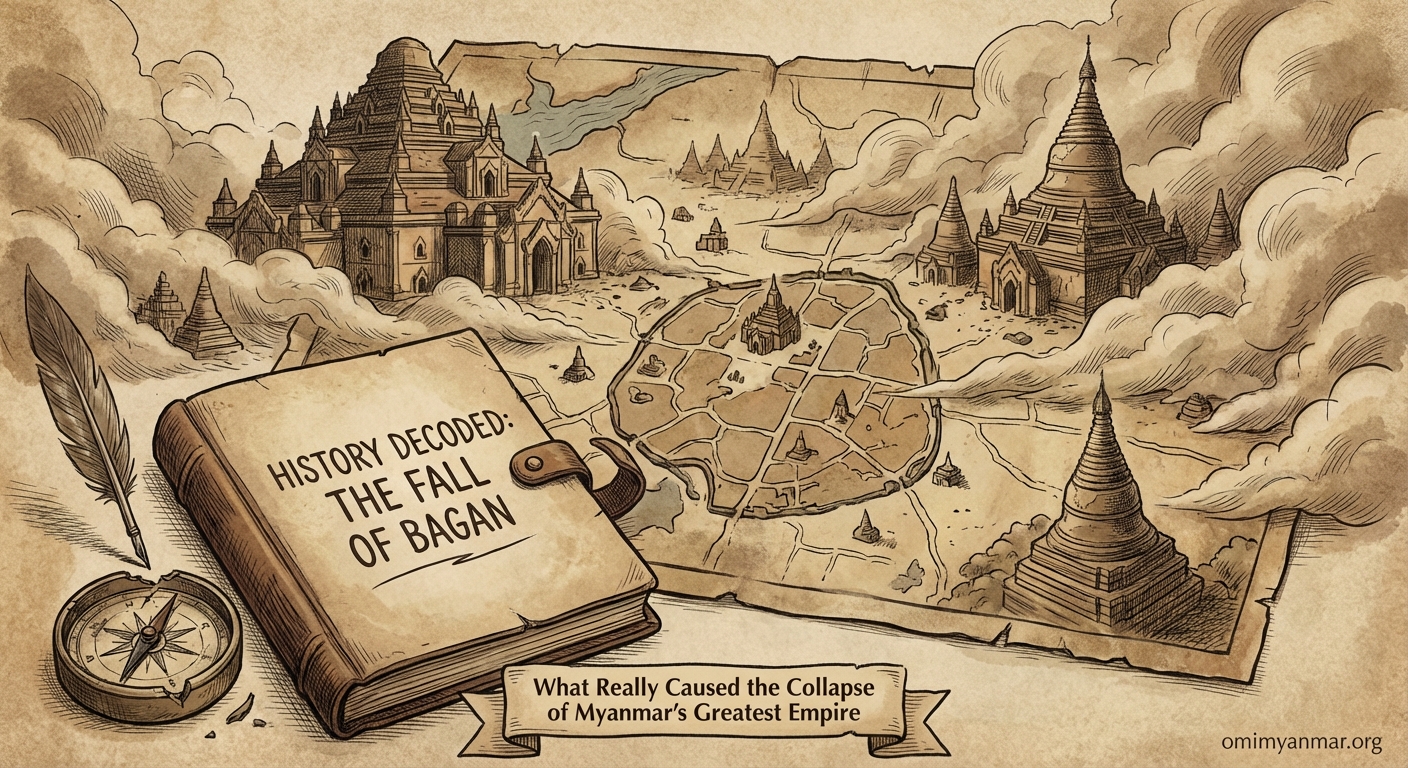
Temple construction defined Bagan’s identity, but it also became an economic millstone. Between the 11th and 13th centuries, rulers and nobles built over 10,000 Buddhist structures across the plains. This architectural ambition carried a staggering cost.
Buddhist monasteries accumulated vast landholdings through royal donations and merit-making practices. By the late 13th century, religious institutions controlled an estimated two-thirds of Bagan’s arable land. This land paid no taxes and produced no revenue for the state.
The economic strain manifested in several ways:
- Agricultural productivity declined as the best lands served religious rather than commercial purposes
- Tax revenue plummeted, weakening the state’s ability to maintain infrastructure and military forces
- Labor shortages emerged as workers shifted from farming to temple construction and monastic service
- Trade networks deteriorated without state investment in roads and security
King Htilominlo’s reign (1211-1235) marked the peak of construction activity. His successors inherited an economy hollowed out by religious devotion. The state treasury couldn’t support both massive building projects and effective governance.
“The very piety that made Bagan great became the weight that crushed it. When religious merit-making consumes more resources than the economy can sustain, collapse becomes inevitable.” – From Burmese historical chronicles
Administrative Fragmentation and Power Struggles
Bagan’s political structure contained inherent weaknesses that became fatal under pressure. The empire operated as a mandala system, where peripheral regions owed allegiance to the center but maintained considerable autonomy.
As central authority weakened after the Mongol invasions, regional governors and local strongmen asserted independence. The process accelerated through these stages:
- Provincial governors stopped sending tribute to the capital
- Local military commanders built private armies loyal to themselves rather than the crown
- Ethnic minorities in outlying regions rejected Burman dominance
- Rival claimants to the throne sparked civil conflicts
The Shan people, who had served as military auxiliaries, began carving out independent principalities in the north. Mon populations in the south reasserted their distinct identity. The Irrawaddy delta region fragmented into competing power centers.
By 1297, no single ruler controlled the former empire’s territory. Instead, multiple successor states emerged, each claiming legitimacy but lacking Bagan’s former reach.
Environmental Pressures and Agricultural Decline
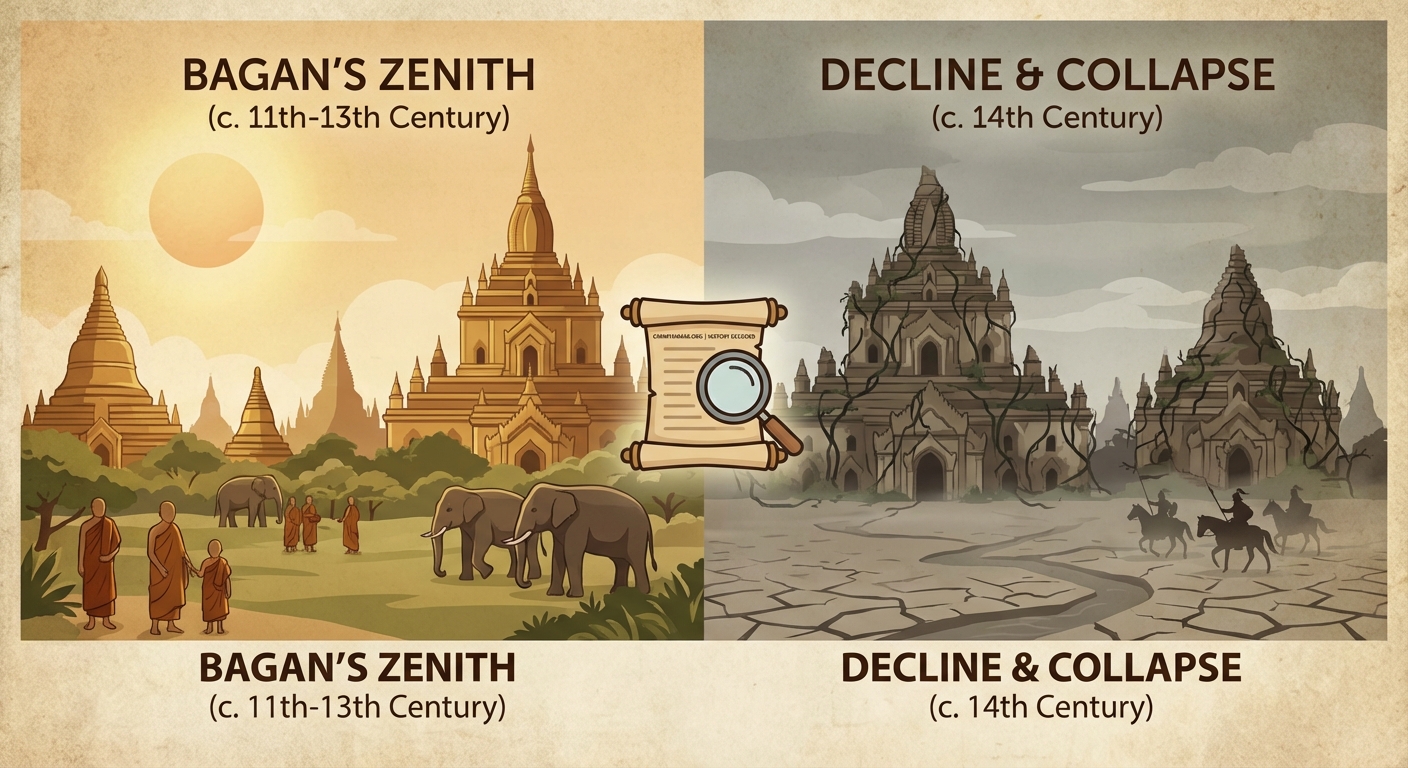
Climate and environmental factors compounded Bagan’s political and economic troubles. The central dry zone where Bagan developed required sophisticated irrigation systems to support intensive agriculture.
Archaeological evidence suggests declining rainfall patterns during the 13th century. Drought stress reduced crop yields across the empire’s heartland. The irrigation infrastructure, neglected as resources flowed to temple construction, fell into disrepair.
Deforestation around Bagan accelerated soil erosion. Timber demands for temple building stripped nearby forests. Without tree cover, monsoon rains washed away topsoil, reducing agricultural productivity.
The population may have outgrown the land’s carrying capacity. Estimates suggest Bagan’s core region supported 200,000 to 400,000 people at its peak. When environmental conditions deteriorated, this density became unsustainable.
Food shortages sparked social unrest. Peasants abandoned marginal lands and migrated to more fertile regions. The tax base shrank further, creating a downward spiral of declining revenues and weakening state capacity.
Comparing Theories of Collapse
| Theory | Primary Evidence | Strengths | Weaknesses |
|---|---|---|---|
| Mongol Invasion | Military defeats, chronicle accounts | Explains sudden political disruption | Mongols withdrew; didn’t occupy territory |
| Economic Overextension | Land records, temple inscriptions | Accounts for long-term decline | Doesn’t explain timing of collapse |
| Administrative Failure | Regional independence movements | Fits pattern of fragmentation | Many empires survived similar challenges |
| Environmental Stress | Archaeological climate data | Explains agricultural decline | Climate change alone rarely topples states |
| Multi-Causal | Combination of all factors | Most comprehensive explanation | Difficult to weight individual factors |
Modern historians favor the multi-causal explanation. The fall of Bagan empire resulted from interconnected pressures that reinforced each other. Economic weakness made military resistance difficult. Military defeats undermined political authority. Political fragmentation prevented coordinated responses to environmental challenges.
The Human Cost of Imperial Decline
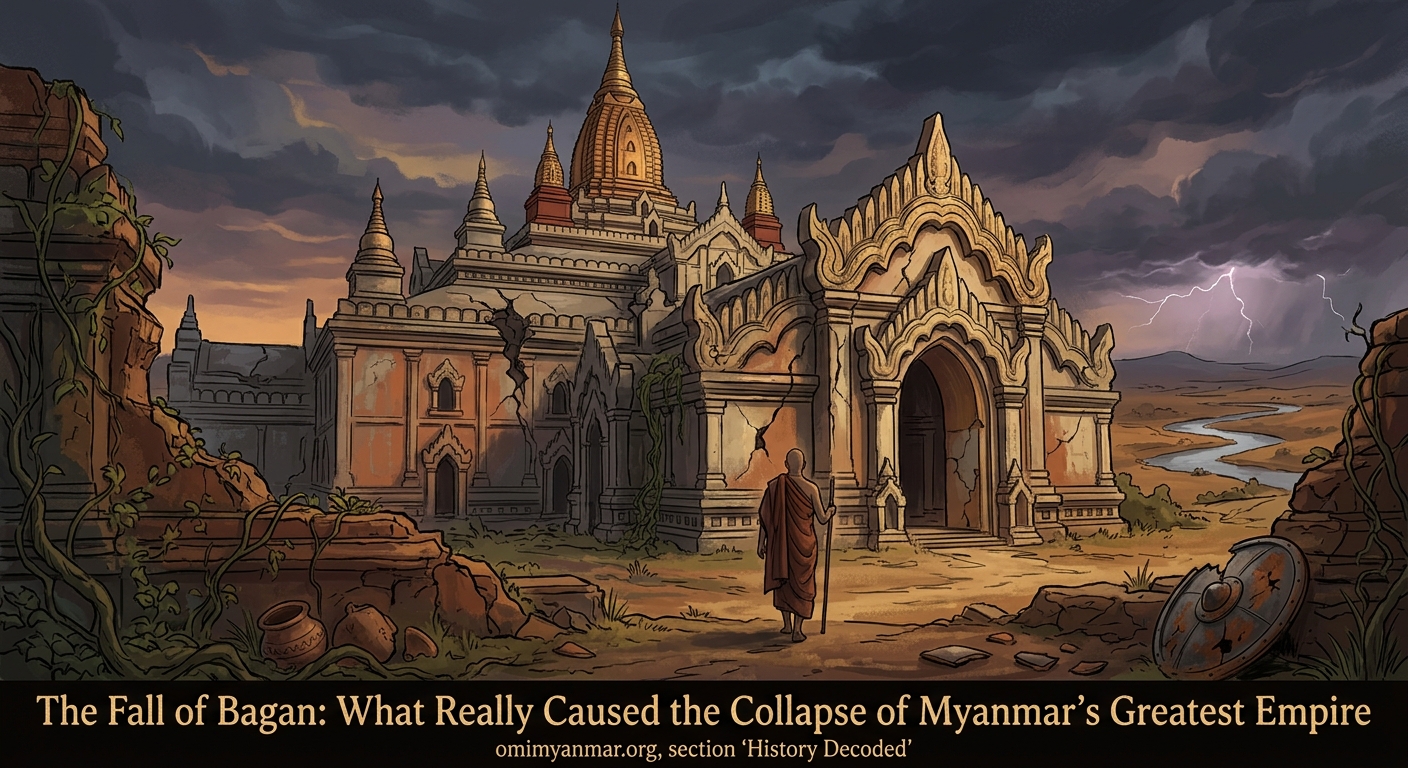
Behind the historical forces stood ordinary people whose lives were upended. Farmers watched their fields dry up while labor obligations pulled them to temple sites. Merchants saw trade routes become dangerous as banditry increased. Artisans who had crafted temple decorations found fewer patrons.
The monastic community faced its own crisis. Temples that had relied on royal patronage suddenly lacked maintenance funding. Monks who had devoted their lives to study found their institutions destabilized. Some monasteries became centers of local power, filling the vacuum left by collapsed state authority.
Elite families scrambled to preserve their status. Those with connections to regional strongmen survived the transition. Others saw their wealth and influence evaporate. The old aristocracy that had served Bagan’s kings found itself irrelevant in the new fragmented political landscape.
Refugees fled conflict zones, seeking safety in peripheral regions. This migration spread Bagan’s cultural influence even as its political power dissolved. Beyond the Bagan temples, new religious centers emerged in areas that absorbed displaced populations.
Cultural Continuity After Political Collapse
The empire fell, but Bagan’s cultural legacy endured. The Theravada Buddhism that Bagan championed remained Myanmar’s dominant faith. Architectural styles pioneered during the empire’s height influenced temple construction for centuries.
Myanmar’s endangered crafts trace their lineages to Bagan-era workshops. Techniques for working bronze, carving wood, and painting murals survived through master-apprentice relationships that transcended political boundaries.
The Burmese language, standardized during Bagan’s peak, became the foundation for literary development in successor states. Palm-leaf manuscripts copied in Bagan scriptoriums preserved knowledge that later kingdoms built upon.
Temple complexes remained pilgrimage sites even after the empire’s collapse. Religious devotion to these sacred spaces created continuity across political transitions. Villagers maintained local temples, ensuring their survival through centuries of upheaval.
This cultural persistence explains why the fall of Bagan empire, though politically decisive, didn’t erase Myanmar’s civilizational identity. The empire’s achievements became shared heritage for all subsequent Burmese states.
Lessons From Bagan’s Trajectory
Bagan’s rise and fall offer insights that extend beyond medieval Myanmar. The empire demonstrates how civilizations can exhaust themselves through excessive ambition. Building 10,000 temples showcased devotion and artistic achievement, but the economic cost proved unsustainable.
The collapse also illustrates the danger of inflexible systems. Bagan’s mandala political structure worked during periods of strength but fractured under stress. Institutions that can’t adapt to changing conditions become liabilities.
External shocks like the Mongol invasions often expose rather than create vulnerabilities. The military defeats accelerated decline but didn’t cause the underlying economic and administrative problems. Resilient systems absorb such shocks; brittle ones shatter.
Environmental factors matter more than traditional political histories acknowledge. Climate shifts and ecological degradation constrain what societies can achieve. Ignoring these limits invites disaster.
Modern Myanmar faces different challenges, yet some patterns resonate. Questions about balancing tradition with development, managing resources sustainably, and maintaining institutional flexibility remain relevant. Understanding how education reform is reshaping Myanmar’s youth and why Myanmar’s middle class is growing despite difficulties shows resilience that Bagan ultimately lacked.
What the Ruins Remember
Standing among Bagan’s brick temples today, you see both triumph and tragedy. The architectural splendor speaks to human creativity and spiritual devotion. The crumbling walls remind us that no empire lasts forever.
The fall of Bagan empire wasn’t predetermined. Different choices might have produced different outcomes. Limiting temple construction, maintaining military strength, preserving agricultural productivity, and adapting administrative structures could have extended the empire’s life.
Yet history doesn’t offer do-overs. The empire fell, its territory fragmented, and new political orders emerged. The temples remained, silent witnesses to vanished glory.
For travelers walking these ancient paths, the ruins pose questions about sustainability, ambition, and the true measures of civilizational success. For students of history, Bagan offers a case study in how multiple pressures can converge to topple even the mightiest empires.
The story doesn’t end with collapse. Myanmar’s subsequent kingdoms, including the powerful Konbaung Dynasty, learned from Bagan’s mistakes while building on its cultural foundations. That pattern of learning, adapting, and rebuilding defines Myanmar’s historical journey.
Why Bagan Still Matters Today
The fall of Bagan empire happened over 700 years ago, yet its lessons remain fresh. Societies still struggle to balance competing demands on limited resources. Governments still grapple with maintaining authority across diverse territories. Environmental pressures still threaten agricultural systems.
Bagan’s temples attract hundreds of thousands of visitors annually, making the ancient capital a living part of Myanmar’s present. Tourism revenue supports local communities, creating economic value from historical heritage. The site connects modern Myanmar to its deepest roots.
For anyone interested in Southeast Asian history, understanding Bagan’s trajectory is fundamental. The empire shaped the region’s religious landscape, influenced architectural traditions across neighboring kingdoms, and established cultural patterns that persist today.
The collapse also reminds us that greatness and vulnerability often coexist. The same ambition that built thousands of temples created economic fragility. The same religious devotion that unified the empire eventually drained its resources. Success contains the seeds of failure when taken to extremes.
Whether you’re planning to visit Bagan’s archaeological zone, studying medieval Asian history, or simply curious about how civilizations rise and fall, this empire’s story offers rich material for reflection. The temples stand as monuments not just to faith, but to the complex forces that shape human societies across time.