

Sending money home to Myanmar isn’t just a financial transaction. It’s a lifeline, a duty, and often a source of guilt that keeps overseas workers awake at night. When political turmoil and economic collapse intersect with family obligations, the simple act of transferring funds becomes a complex calculation of survival, sacrifice, and responsibility.
Myanmar remittances families depend on face mounting challenges as political instability disrupts banking systems and inflation erodes purchasing power. Overseas workers balance emotional obligations with practical constraints, often sacrificing personal financial security to support relatives back home. Understanding alternative transfer methods, communication strategies, and emotional boundaries helps diaspora members maintain sustainable support systems while protecting their own wellbeing.
The Real Cost of Staying Connected
Myanmar workers abroad sent an estimated $2.4 billion home in 2019, before the world changed. That number tells only part of the story. Behind every transfer lies a conversation about medical bills, school fees, or whether the electricity will stay on this week.
The financial burden extends beyond the transfer amount itself. Exchange rates fluctuate wildly. Transfer fees eat into already stretched budgets. Banking restrictions force families to rely on informal channels that carry their own risks.
But the emotional toll weighs heavier than any transaction fee.
Workers in Singapore, Thailand, Malaysia, and beyond often send 30 to 50 percent of their earnings home. They skip meals, share cramped apartments with multiple roommates, and postpone their own healthcare to ensure their families can eat.
One nurse working in Bangkok described choosing between renewing her work visa and sending money for her mother’s medication. She chose the medication and risked deportation.
These aren’t exceptional stories. They’re the norm for Myanmar remittances families navigating an impossible situation.
How Money Actually Gets Home
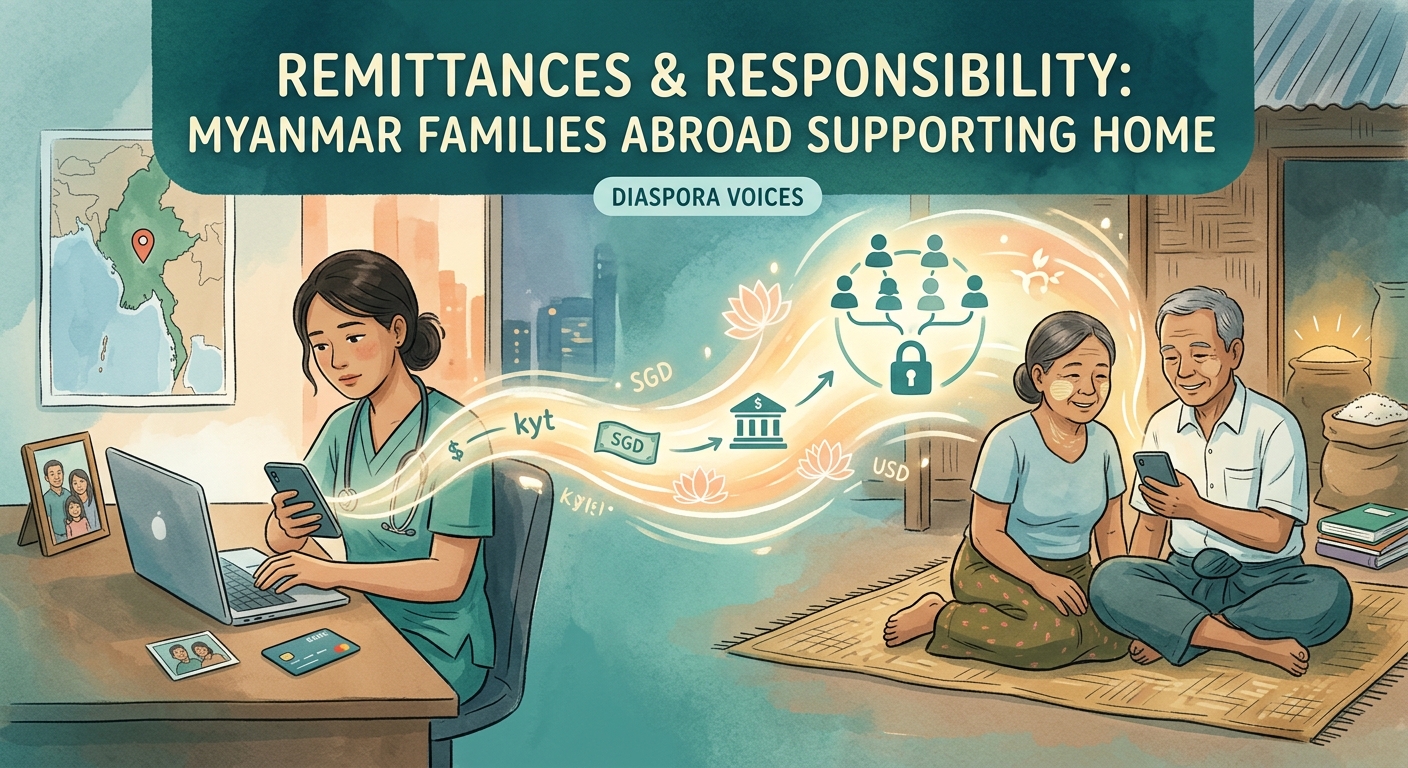
The mechanics of sending remittances have become increasingly complicated since 2021. Traditional banking channels face restrictions. International services like Western Union operate with limited access. Workers adapt by piecing together multiple methods.
Here’s how most transfers happen now:
-
Informal money transfer networks operate through trusted intermediaries who collect cash abroad and distribute it through contacts inside Myanmar. These networks charge 3 to 8 percent but offer reliability when formal systems fail.
-
Border-based exchanges allow workers in Thailand to send money to agents near the border who then transfer funds through local networks. This works well for families in border regions but less effectively for those in central Myanmar.
-
Cryptocurrency transfers have gained traction among tech-savvy diaspora members, though the learning curve remains steep for older family members receiving funds.
-
Physical cash transfers through trusted travelers still account for significant remittance flows, despite obvious security risks.
-
Mobile money platforms like Wave Money and KBZ Pay function intermittently, depending on internet access and regulatory changes.
Each method carries distinct advantages and vulnerabilities. Workers often rotate between options based on current conditions, creating a patchwork system that requires constant monitoring and adjustment.
The digital transformation in Myanmar has created both opportunities and challenges for remittance flows, as infrastructure development collides with political restrictions.
Making Difficult Decisions About Support
Not every request can be fulfilled. Not every need can be met. This reality forces overseas workers into painful choices that strain family relationships and personal wellbeing.
Consider these common scenarios:
- A sister needs money for university fees while a parent requires surgery. Both costs exceed available funds.
- Extended family members request support for non-essential expenses while immediate family struggles with basic needs.
- Children ask for items that seem frivolous from abroad but represent normalcy and dignity at home.
- Multiple relatives claim urgent needs simultaneously, each presenting compelling reasons.
“The hardest part isn’t sending money. It’s deciding who gets help and who has to wait. Every choice feels like you’re choosing one family member over another.” – Myanmar construction worker in Malaysia
Setting boundaries becomes essential for long-term sustainability, yet cultural expectations around family obligation make boundaries feel like betrayal.
Some workers establish clear guidelines: medical emergencies first, education second, everything else as funds allow. Others rotate support among family members, ensuring everyone receives help periodically even if not immediately.
Neither approach eliminates the guilt or the requests.
Understanding What Your Money Actually Buys
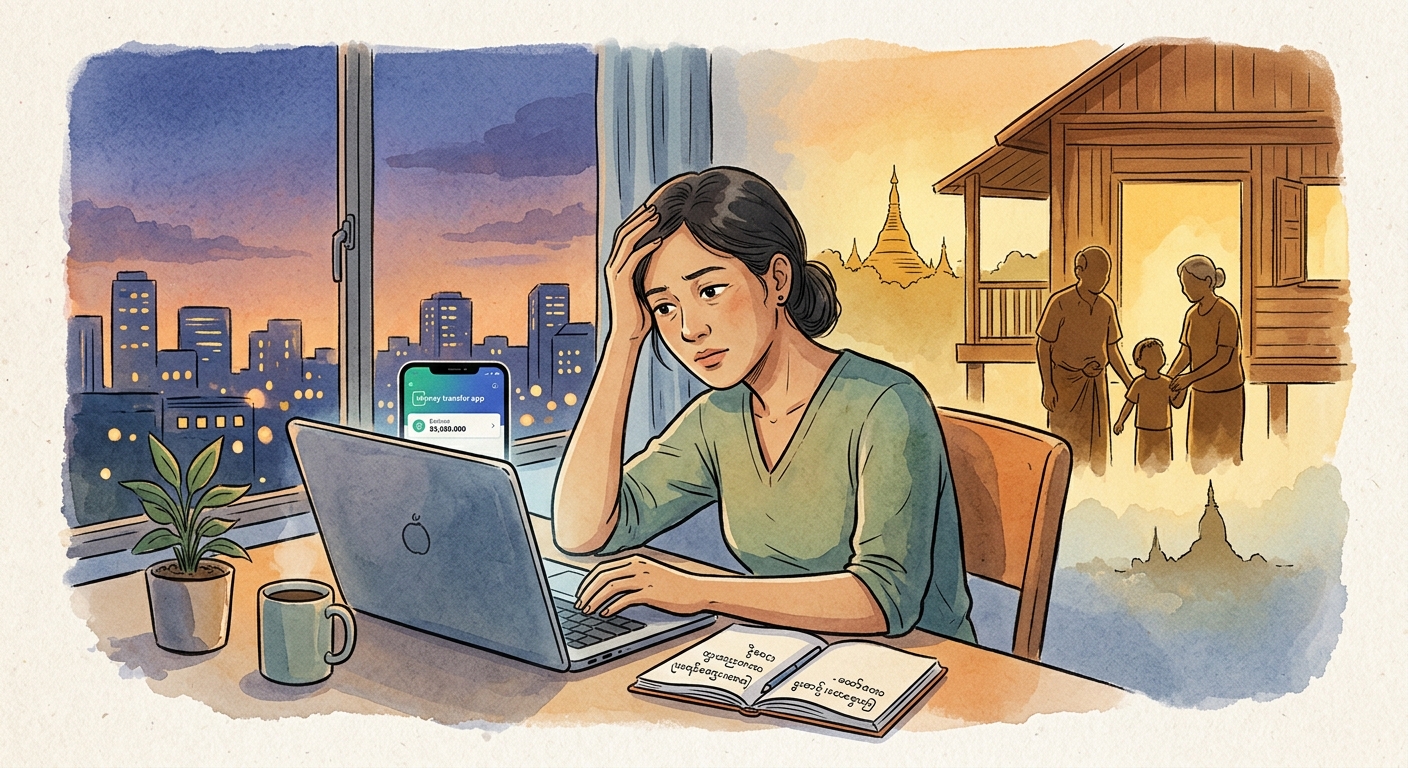
Inflation has fundamentally altered the purchasing power of remittances. What covered a month of expenses in 2020 now barely covers a week. Workers abroad often don’t grasp how dramatically prices have shifted until family members explain the new mathematics of survival.
| Expense Category | 2020 Monthly Cost (MMK) | 2024 Monthly Cost (MMK) | Percentage Increase |
|---|---|---|---|
| Basic food basket | 150,000 | 450,000 | 200% |
| Electricity | 20,000 | 80,000 | 300% |
| Medicine | 30,000 | 120,000 | 300% |
| School supplies | 25,000 | 75,000 | 200% |
| Transportation | 40,000 | 100,000 | 150% |
These numbers represent averages. Actual costs vary significantly by region and availability. Some items simply aren’t available at any price.
The economic instability has created a secondary challenge: timing transfers to maximize value. Exchange rates can shift dramatically within days. A transfer delayed by a week might lose 10 percent of its purchasing power.
Families have learned to stockpile essentials when money arrives, anticipating future shortages and price increases. This survival strategy works until storage space runs out or goods spoil.
Workers sending money home now factor in not just immediate needs but also buffer amounts for unexpected price spikes or supply disruptions.
The Emotional Labor Nobody Talks About
Financial support represents only one dimension of the remittance relationship. The emotional work of maintaining connection, managing expectations, and processing guilt operates constantly in the background.
Phone calls home become exercises in careful navigation. Workers want to hear about family life but dread hearing about new problems they can’t solve. Families want to share their struggles but fear burdening their overseas relatives further.
This dance of partial truths and protective silences erodes authentic connection over time. Workers feel increasingly distant from the daily realities of life in Myanmar. Families feel their overseas relatives don’t truly understand their situation.
Children grow up with absent parents who provide financially but miss birthdays, school performances, and daily rituals. Parents age without their adult children present for medical appointments or simply sharing tea in the evening.
The silent struggle of Myanmar professionals who left successful careers behind extends beyond career disruption to fundamental questions about identity, belonging, and purpose.
Some diaspora members report feeling reduced to ATM machines, valued only for their earning capacity rather than their personhood. Others describe profound guilt about living relatively comfortable lives while family members face daily hardship.
Mental health support remains largely inaccessible for both overseas workers and their families. Cultural stigma around seeking help compounds the isolation many feel.
Building Sustainable Support Systems
Long-term sustainability requires shifting from crisis-driven reactions to structured approaches. This doesn’t eliminate emergencies but creates frameworks for managing them.
Successful strategies include:
- Establishing regular transfer schedules so families can plan around predictable income rather than uncertain arrivals
- Creating emergency funds within Myanmar that family members can access for urgent needs without waiting for international transfers
- Developing income-generating activities for family members capable of working, reducing total dependence on remittances
- Coordinating with other diaspora family members to distribute support responsibilities and prevent burnout
- Setting clear communication protocols about when and how to request additional support beyond regular transfers
These approaches work best when implemented gradually and adapted to specific family circumstances. A system that works for a small nuclear family won’t necessarily work for extended family networks spanning multiple households.
The rise of social enterprises in Myanmar communities offers models for how families can develop local economic resilience alongside remittance support.
Some diaspora organizations now offer financial literacy programs for both overseas workers and their families in Myanmar. These programs address budgeting, savings strategies, and realistic planning under unstable conditions.
Navigating Legal and Regulatory Challenges
Sending money to Myanmar involves more than logistics. It requires understanding evolving regulations in both sending and receiving countries.
Many host countries have implemented restrictions on transfers to Myanmar following political changes. These regulations aim to prevent funds from supporting military activities but often complicate legitimate family support.
Workers must document the purpose of transfers, provide recipient information, and sometimes demonstrate family relationships. This bureaucratic burden adds time and complexity to already stressful processes.
Inside Myanmar, recipients face their own regulatory challenges. Large transfers may trigger scrutiny. Multiple transfers from different sources can raise questions. Families must navigate these requirements while protecting their privacy and safety.
Some workers have found that understanding what NGO workers need to know about navigating Myanmar’s regulatory environment helps them better understand the constraints their families face.
Informal transfer networks operate in legal gray areas. While they provide essential services, they offer no recourse if funds disappear or transfers fail. Workers using these systems accept risk in exchange for reliability.
Currency regulations inside Myanmar further complicate matters. Official exchange rates diverge significantly from black market rates. This gap creates opportunities for maximizing transfer value but also increases risk.
The Gender Dimension of Remittance Responsibility
Women comprise a significant portion of Myanmar’s overseas workforce, particularly in domestic work, garment manufacturing, and healthcare sectors. Their experiences with remittance responsibilities often differ from their male counterparts.
Female workers frequently face additional pressure to support not just immediate family but also extended relatives. Cultural expectations around women’s caregiving roles extend across borders, creating obligations that male workers may not experience as intensely.
Domestic workers in Singapore, Hong Kong, and Malaysia often earn less than other migrant workers yet face similar or greater family demands. They sacrifice more of their already limited income to fulfill support obligations.
The women’s roles in modern Myanmar continue evolving, but traditional expectations around female family duty remain powerful forces shaping remittance patterns.
Women workers also report different emotional experiences around remittance sending. Many describe feeling they must prove their worth through financial contribution, especially if they left children behind to work abroad.
Single mothers working overseas face particularly acute challenges, balancing their children’s immediate needs with their own ability to earn income far from home.
When Remittances Stop
Job loss, illness, deportation, or simple burnout can interrupt remittance flows. These disruptions create crises for families who have structured their survival around expected transfers.
Workers who can no longer send money face not just financial stress but profound guilt and shame. They may hide their situation from family, creating additional anxiety as relatives wonder why transfers have stopped.
Families suddenly without remittance income must rapidly adjust budgets, often cutting essential expenses like medication or school fees. The psychological impact compounds the financial hardship.
Some workers take on debt to maintain remittance flows even after losing income, creating unsustainable situations that eventually collapse more dramatically.
Having contingency plans helps but can’t eliminate the fundamental vulnerability of remittance-dependent households. Diversifying income sources, building local support networks, and maintaining emergency savings all reduce risk but require resources many families lack.
Finding Balance Between Duty and Self-Care
The tension between family obligation and personal wellbeing defines the remittance experience for many overseas workers. Cultural values emphasizing family duty clash with the practical reality that exhausted, unhealthy workers can’t sustain support long-term.
Self-care isn’t selfishness. This message challenges deeply held beliefs but represents essential truth for sustainable support systems.
Workers who maintain their physical health, mental wellbeing, and financial stability can provide more consistent, reliable support over time. Those who sacrifice everything often burn out, become ill, or face their own crises that interrupt their ability to help anyone.
Practical self-care strategies include:
- Setting aside a percentage of income for personal savings before calculating remittance amounts
- Maintaining adequate nutrition and healthcare rather than deferring all personal needs
- Building social connections and support networks in host countries
- Seeking counseling or support groups for diaspora members facing similar challenges
- Allowing yourself occasional small pleasures without guilt
These steps feel impossible when family members face genuine hardship. The guilt of spending money on yourself while relatives struggle never fully disappears.
But the alternative is collapse. Workers who give everything eventually have nothing left to give.
Connecting Through More Than Money
Remittances represent one form of connection between overseas workers and their families, but not the only form. Maintaining relationships requires attention to emotional bonds beyond financial transfers.
Regular communication about non-financial topics helps preserve family connections. Sharing daily experiences, asking about routine activities, and discussing hopes and dreams maintains intimacy that pure transaction erodes.
Technology enables video calls, photo sharing, and real-time messaging that previous generations of migrant workers couldn’t access. These tools require reliable internet, which remains challenging in many parts of Myanmar, but when available they transform the experience of separation.
Some families establish virtual rituals like shared meals over video call or watching the same shows simultaneously while messaging. These small acts of togetherness help bridge physical distance.
Building bridges through diaspora organizations creates community support systems that extend beyond individual family networks, providing both practical resources and emotional connection.
Children growing up with overseas parents benefit from consistent communication that emphasizes the parent’s love and interest beyond financial support. This requires intentional effort but pays dividends in long-term relationships.
The Path Forward for Myanmar Families
The challenges facing Myanmar remittances families won’t disappear soon. Political instability and economic hardship will likely persist, requiring continued adaptation and resilience.
Yet within these constraints, families are finding ways to survive and sometimes even thrive. They’re building informal support networks, developing local income sources, and creating systems that reduce vulnerability to remittance disruptions.
Overseas workers are learning to set boundaries while maintaining support. They’re connecting with other diaspora members to share strategies and emotional support. They’re recognizing that sustainable help requires protecting their own wellbeing.
The situation remains difficult. The choices remain painful. But understanding the full scope of challenges helps both workers and families approach remittances more strategically and sustainably.
Your financial support matters immensely to your family. But you matter too. Finding balance between duty and self-preservation isn’t betrayal. It’s the foundation for lasting support that serves everyone better over time.