
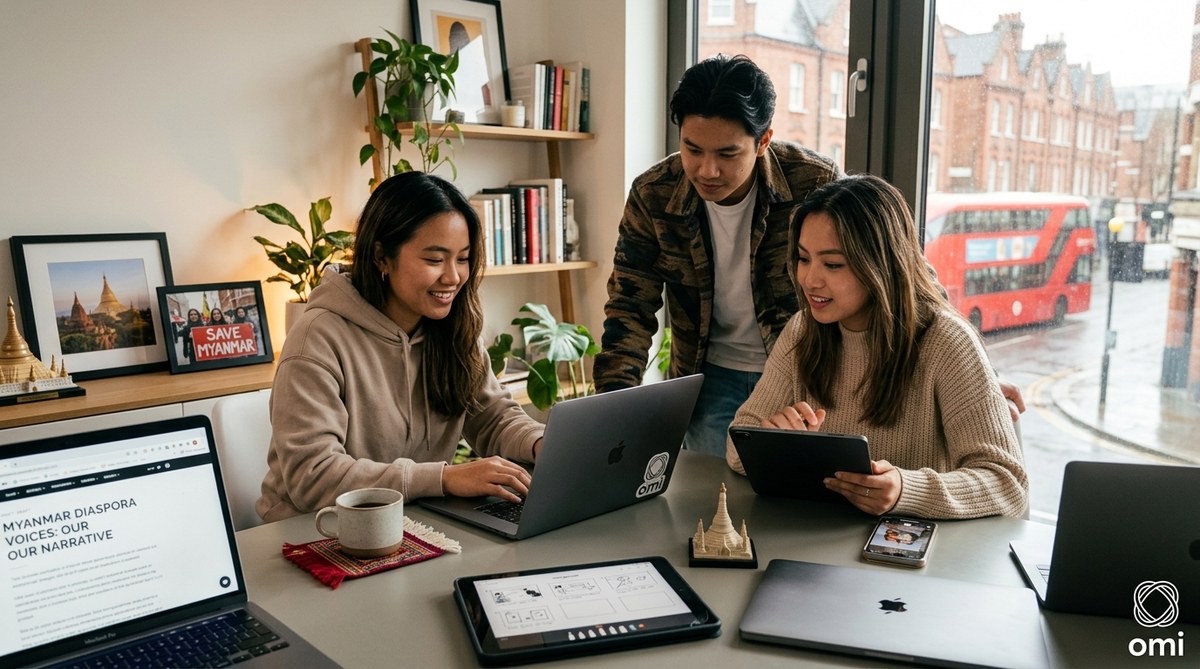
For a young person raised in the United States with roots in Myanmar, the question “Where are you from?” rarely has a simple answer. The reply might depend on who is asking. At a university orientation, the answer might be “Texas” or “California.” At a family gathering, it might be “from the Irrawaddy Delta region.” This back-and-forth between two worlds is not just a social dance. It is a daily negotiation of identity. And in 2026, that negotiation increasingly takes place online.
Social media platforms, messaging apps, and content creation tools have become the primary stage where Myanmar diaspora youth perform, question, and solidify their sense of self. They are not just passive consumers of culture. They are active architects of a new, hybrid identity that borrows from both their parents’ homeland and their own American upbringing. This article looks at how they do it, what tools they use, and the challenges they face along the way.
Myanmar diaspora youth are using digital platforms to actively craft a dual identity that honors their heritage while fitting their American lives. They move beyond simple labels by creating content, building communities, and navigating online spaces with intention. This guide explains the practical steps they take, the common mistakes they avoid, and how you can do the same.
The Digital Bridge Between Two Homes
For many second-generation Myanmar Americans, the internet is the first place they felt truly seen. At school, they might have been the only one whose lunch looked different. Online, they found others who ate the same food, celebrated the same festivals, and struggled with the same pronunciation of their own last name.
Platforms like TikTok, Instagram, and YouTube have become archives of living culture. A teenager in San Jose can watch a video of her grandmother making mohinga in Yangon. A college student in Chicago can join a Discord server where members switch between English and Burmese mid-sentence. These digital spaces offer something that physical spaces often cannot: a community that understands the specific tension of holding two identities at once.
This is not about choosing one culture over the other. It is about building a third space where both can exist. That third space is digital, and it is reshaping what it means to be part of the Myanmar diaspora.
Three Practical Steps to Building Your Online Cultural Identity
If you are a young diaspora adult looking to engage more intentionally with your heritage online, you do not need to start a viral channel overnight. You can begin with small, consistent actions.
-
Curate your feed with intention. Unfollow accounts that make you feel like you have to perform a certain identity. Follow creators who speak openly about the diaspora experience. Look for pages that share recipes, language lessons, or history from Myanmar. Let your algorithm work for you, not against you. Over time, your feed becomes a mirror that reflects the identity you want to build, not the one others expect.
-
Create something small and share it. You do not need to be a professional. Post a photo of your family’s tea leaf salad. Record a short video of yourself trying to read a Burmese children’s book. Write a caption about what Thingyan means to you. The act of creating helps you claim your narrative. Even if only five people see it, you have put a piece of your identity into the world on your own terms.
-
Join a community space made for diaspora voices. Look for Facebook groups, subreddits, or Slack channels focused on the Myanmar diaspora. These spaces are often more forgiving than mainstream platforms. People there understand the gaps in your knowledge. They will not judge you for mispronouncing a word. They will celebrate your effort. These communities are where the real work of identity building happens, through conversation, shared memes, and collective memory.
Common Mistakes and Better Approaches
It is easy to fall into traps when trying to represent a culture you are still learning about. The table below outlines some common pitfalls and the smarter alternatives that diaspora youth are using in 2026.
| Common Mistake | Why It Falls Short | A Better Approach |
|---|---|---|
| Using only English to talk about Myanmar culture | It alienates older relatives and flattens the language’s richness. | Code-switch naturally. Use Burmese words for specific dishes, festivals, or family roles. Explain them in English without apology. |
| Posting only about trauma or political crisis | It reduces a complex country to its struggles. | Balance serious posts with everyday joy. Share a funny family story, a beautiful landscape photo, or a recipe. Let your audience see the full picture. |
| Trying to sound like a native speaker when you are not | It feels inauthentic and creates pressure. | Embrace your accent and your mistakes. Many diaspora creators caption their posts with “I am still learning” or “correct me if I say this wrong.” That honesty builds trust. |
| Repeating stereotypes from Western media | It reinforces shallow narratives you may not even believe. | Do your own research. Talk to your elders. Read sources written by people from Myanmar, not just about Myanmar. Then share what you learn in your own voice. |
“The most powerful thing I did for my own identity was stop apologizing for not being ‘Burmese enough.’ I am Burmese American. That is its own thing. The internet let me find other people who feel the same way, and together we are defining what that means.”
* A 24-year-old content creator from the Myanmar diaspora based in Los Angeles.
How Platforms Shape the Narrative
Not all digital spaces are created equal. The platform you choose affects how your identity is expressed and received.
Instagram and TikTok favor visual storytelling. They are great for showing traditional clothing, food, and festivals. A short video of a longyi being folded or thanaka being applied can teach more than a paragraph of text. But these platforms also reward trends. You may feel pressure to make your heritage “digestible” for a general audience.
YouTube remains a space for longer, more thoughtful content. Diaspora creators use it to film conversations with their parents, document trips back to Myanmar, or explain historical events in depth. The comments section on these videos often becomes a support group where viewers share their own family stories.
Messaging apps like WhatsApp and Telegram are the quiet backbone of diaspora life. Family group chats share news from home in real time. Language exchange groups pair fluent speakers with learners. These private spaces allow for vulnerability without the pressure of public performance.
For a closer look at how technology is changing daily life in Myanmar itself, you can read about digital transformation in Myanmar.
A Quick Reference for Getting Started
If you are ready to take action but do not know where to begin, here is a checklist of small steps you can take this week.
- Search for a new Myanmar or Burmese American creator to follow.
- Learn one new Burmese word and use it in a sentence.
- Ask a family member to teach you a recipe and write it down.
- Join one diaspora-focused online group.
- Share one post about your heritage, even if it feels awkward.
The Risks of Digital Identity Work
Building your identity online is not without risk. Public posts can attract criticism from people who think you are not “authentic” enough. You might face comments from strangers who have rigid ideas about what a “real” Burmese person should be.
There is also the risk of performative identity. It can feel good to post about your culture when it is convenient, but that does not replace the harder work of learning language, history, and family stories offline. The best digital identity is rooted in real world relationships and knowledge.
Finally, be aware of safety. If you have family still in Myanmar, public posts about political topics could put them at risk. Many diaspora youth use pseudonyms or privacy settings to protect relatives back home. This is a responsible practice, not a sign of fear.
For more on how diaspora communities are advocating for change from abroad, read about how Myanmar’s diaspora communities are advocating for accountability from abroad.
Your Identity Is Yours to Shape
The digital world gives you a tool that your parents and grandparents did not have. You can show the world who you are, on your own terms, in your own time. You can weave together the threads of your American upbringing and your Myanmar heritage into something that feels true to you.
You do not have to be a perfect representative of an entire country. You just have to be honest about your own journey. Post the photo. Write the caption. Join the group. Your voice belongs in the conversation.
The goal is not to become a professional influencer. It is to feel at home in your own skin, both online and off. And the more you practice telling your own story, the easier that feeling becomes.