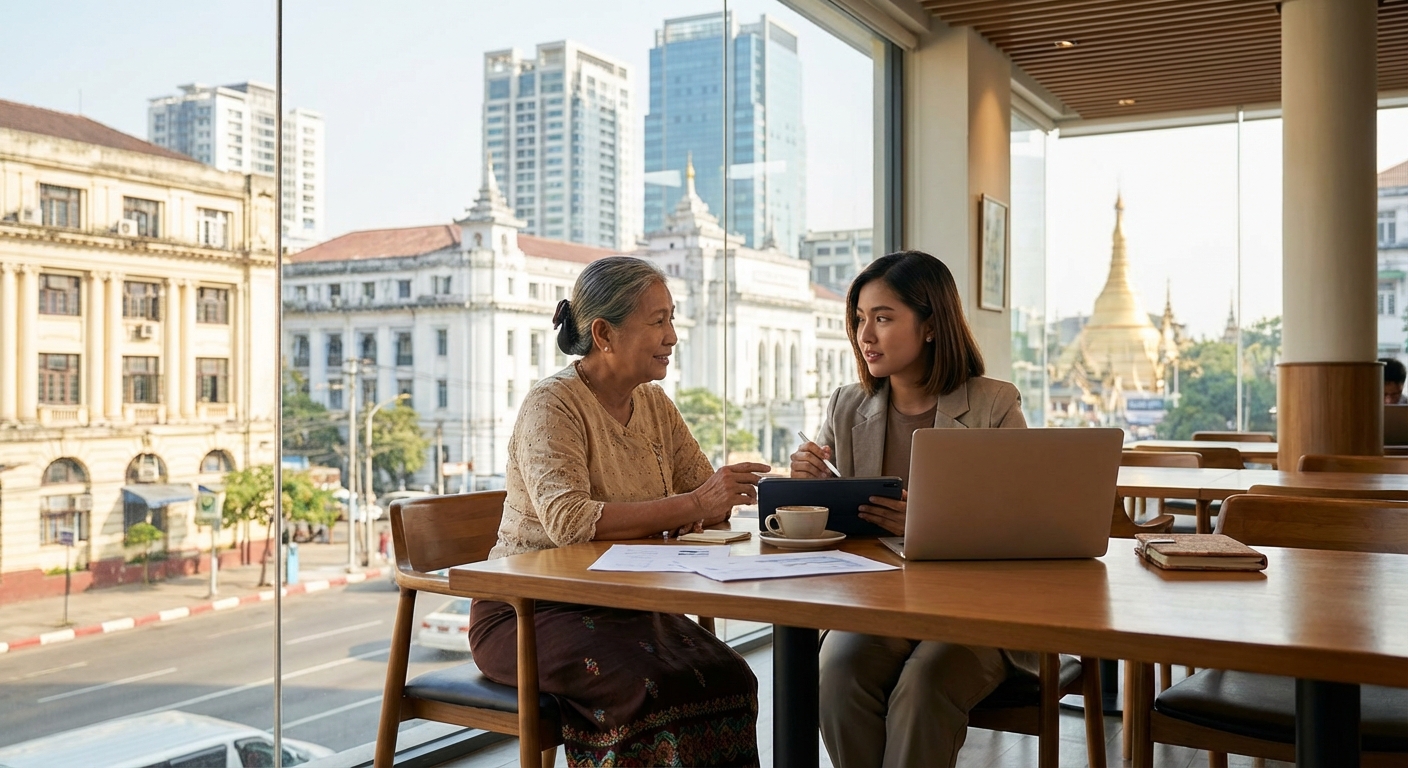
Women in Myanmar stand at a crossroads between ancient tradition and modern transformation. They wear thanaka paste while organizing digital resistance movements. They preserve centuries-old weaving techniques while serving in shadow governments. They honor their grandmothers’ customs while demanding constitutional reform.
This duality defines women’s roles in Myanmar today. The country’s political turmoil since 2021 has thrust women into unprecedented leadership positions, even as traditional expectations persist. Understanding this complexity matters for anyone studying gender dynamics in Southeast Asia, supporting democracy movements, or analyzing how women shape political transitions.
Women in Myanmar balance cultural preservation with political activism, leading grassroots democracy movements while maintaining traditional roles in family and community. Their participation in civil disobedience, shadow governance, and peace negotiations has redefined gender expectations, though systemic barriers to formal political power remain. This transformation reflects broader tensions between Myanmar’s Buddhist heritage and demands for inclusive governance.
Historical foundations of women’s status in Myanmar society
Myanmar women historically enjoyed more autonomy than their counterparts in many Asian societies. Pre-colonial Burma allowed women to own property, conduct business independently, and retain their names after marriage. The legal code of King Dhammazedi in the 15th century granted women inheritance rights and protection against domestic violence.
British colonization introduced Victorian gender norms that conflicted with existing practices. Colonial administrators imposed European family law structures that diminished women’s economic independence. Yet Burmese women adapted rather than surrendered. They dominated market trading, controlled household finances, and maintained significant influence in village affairs.
The post-independence period saw women enter formal politics in small numbers. Daw Khin Kyi, Aung San Suu Kyi’s mother, served as a diplomat and social welfare minister. However, military rule from 1962 onwards systematically excluded women from decision-making positions. The military government promoted a nationalist ideology that confined women to domestic roles while exploiting their labor in state-controlled industries.
Buddhism shapes gender dynamics in complex ways. Monastic institutions remain male-dominated, with full ordination unavailable to women in Myanmar’s Theravada tradition. Yet female lay practitioners wield considerable spiritual authority. The concept of kan (karma) suggests gender is temporary, creating space for women’s agency while simultaneously justifying inequality as merit-based.
Women’s participation in Myanmar’s democracy movements
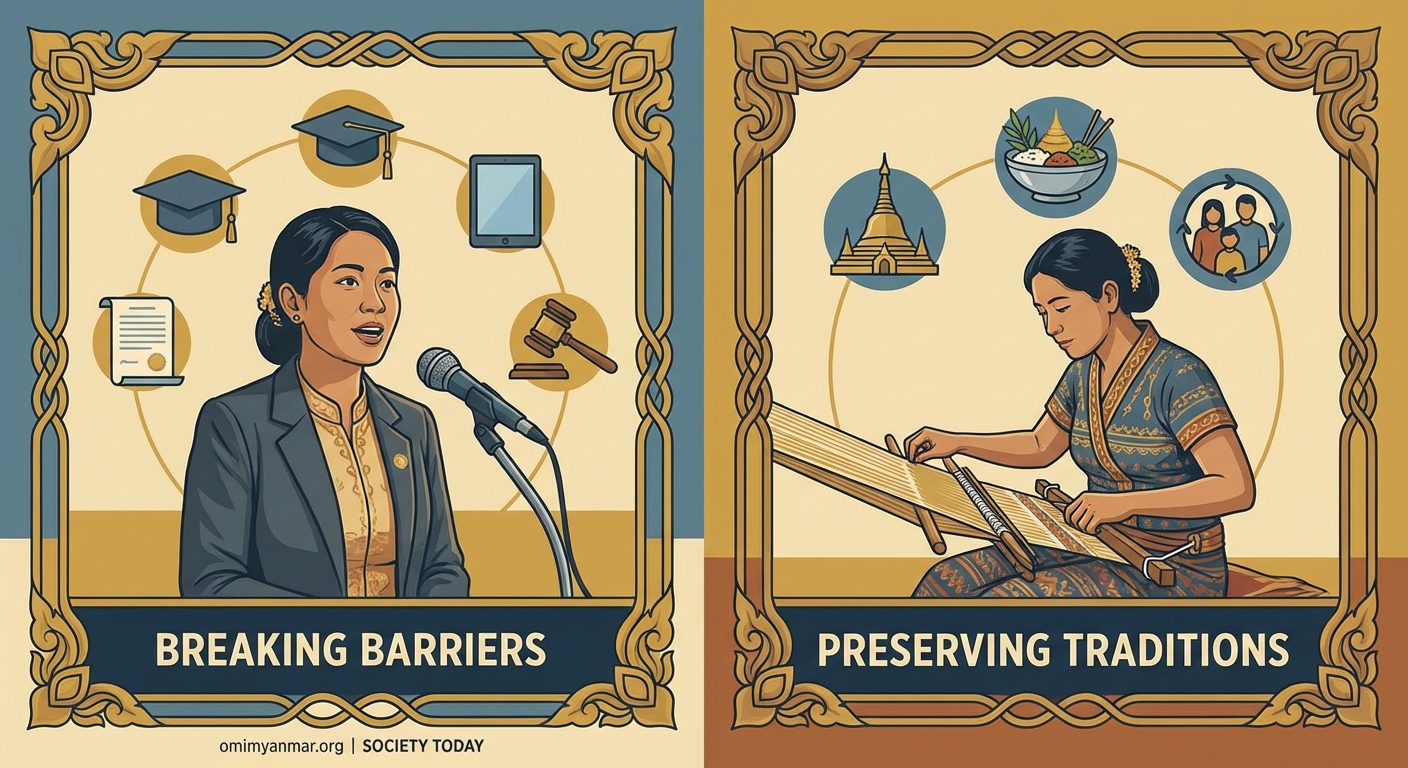
The 1988 uprising marked a turning point for women’s political visibility. Female students joined street protests in equal numbers with male peers. Aung San Suu Kyi emerged as the movement’s symbolic leader, though her prominence sometimes obscured other women’s contributions.
The 2007 Saffron Revolution saw women supporting monks’ protests through food donations and logistical coordination. Security forces targeted women protesters with sexual violence, a pattern that would repeat in subsequent crackdowns. These experiences galvanized women’s rights organizations to document abuses and demand accountability.
The brief democratic opening from 2011 to 2021 created new opportunities. Women’s representation in parliament increased from less than 5% to approximately 10%. Female ministers headed education and social welfare ministries. Civil society organizations focused on women’s empowerment proliferated, addressing issues from domestic violence to economic inclusion.
The 2021 military coup catalyzed unprecedented female mobilization. Women led the Civil Disobedience Movement, organizing strikes in healthcare, education, and banking sectors. They formed the backbone of neighborhood watch networks and mutual aid systems. Female doctors, teachers, and civil servants abandoned careers to join resistance movements.
“We’re not just fighting for democracy. We’re fighting for the right to define our own futures, as women and as citizens. The military wants us silent and submissive. Every act of resistance proves them wrong.” — Anonymous female CDM participant
Current landscape of women’s leadership and activism
Women now occupy prominent positions in Myanmar’s shadow government, the National Unity Government (NUG). The NUG cabinet includes female ministers overseeing human rights, women’s affairs, and education portfolios. Female parliamentarians from the Committee Representing Pyidaungsu Hluttaw (CRPH) advocate for federal democracy and ethnic rights.
Grassroots organizing reveals women’s strategic capabilities. They coordinate underground education programs for students whose schools have closed. They manage supply chains for internally displaced communities. They operate clandestine media networks documenting military atrocities. These activities occur despite severe risks, including arrest, torture, and sexual violence.
Ethnic women play distinct roles shaped by decades of conflict in border regions. Karen, Kachin, and Shan women have long participated in armed resistance and community defense. They bring experience in wartime survival, trauma healing, and cross-border advocacy. Their perspectives challenge Bamar-centric narratives of Myanmar’s democratic struggle.
The relationship between grassroots transparency initiatives reshaping local governance and women’s leadership deserves attention. Female activists pioneer accountability mechanisms in opposition-controlled areas, establishing complaint systems and participatory budgeting processes that prefigure democratic governance.
| Leadership Domain | Women’s Contributions | Remaining Barriers |
|---|---|---|
| Shadow government | Cabinet positions, policy development | Limited military/security roles |
| Civil disobedience | Strike organization, mutual aid networks | Arrest and detention risks |
| Armed resistance | Logistics, intelligence, medical care | Combat role restrictions |
| Peace processes | Track II diplomacy, community mediation | Exclusion from formal negotiations |
| Humanitarian aid | IDP camp management, trauma counseling | Resource constraints, access limitations |
Traditional roles and cultural preservation efforts
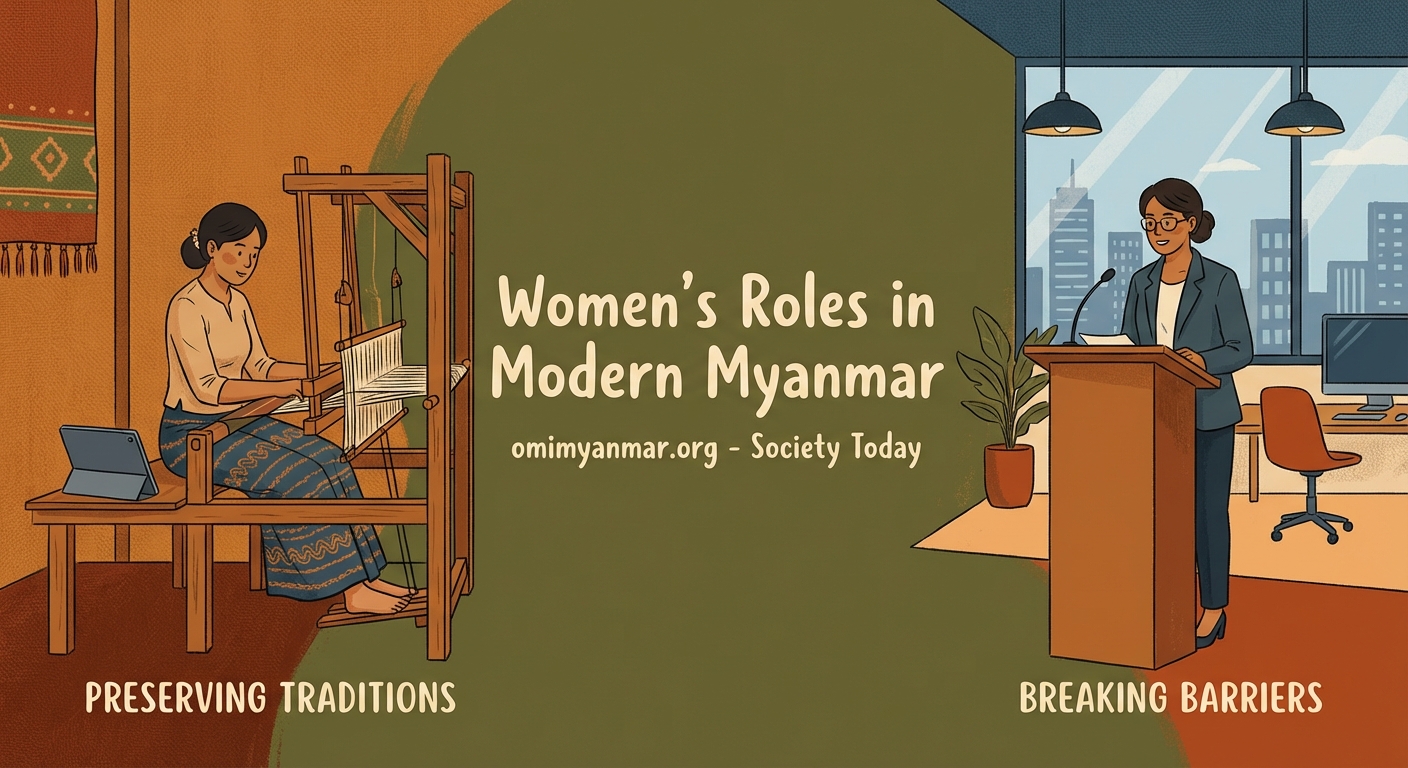
Women remain primary custodians of Myanmar’s cultural heritage. They teach children the Burmese language, prepare traditional foods, and maintain religious observances. Mothers and grandmothers transmit knowledge of textiles, music, and ceremonial practices. This cultural work carries political significance during periods of military rule, when ethnic identities face suppression.
The longyi, Myanmar’s traditional wraparound skirt, illustrates gendered cultural dynamics. Women’s longyis feature intricate patterns and require specific wrapping techniques passed between generations. Wearing traditional dress becomes an act of cultural assertion, particularly for diaspora communities. Yet the same garment symbolizes restrictions, as social norms dictate modest behavior for women in public spaces.
Religious life centers women’s daily routines. They prepare offerings for monks, organize pagoda festivals, and lead household rituals. Female meditation teachers guide lay practitioners, though they cannot ordain as bhikkhunis (fully ordained nuns). Thilashin (nuns wearing pink robes) occupy an ambiguous status, respected for renunciation but lacking institutional support enjoyed by monks.
Artisan traditions depend on women’s labor and expertise. Weaving communities in Inle Lake and Amarapura rely on female weavers who create silk longyis using traditional patterns. Pottery villages near Bagan employ women in clay preparation and decoration. Master artisans fighting to preserve ancient techniques often train daughters and nieces, ensuring knowledge transmission despite economic pressures favoring modern production methods.
Economic contributions and labor market participation
Women constitute approximately 50% of Myanmar’s labor force, concentrated in agriculture, garment manufacturing, and informal trade. Rural women perform essential farming tasks including transplanting rice, weeding, and harvesting. They receive lower wages than men for comparable work, justified through assumptions about physical strength and household responsibilities.
The garment sector employs hundreds of thousands of women in factories around Yangon. Workers face long hours, low pay, and unsafe conditions. Labor organizing remains dangerous, with union leaders facing harassment and dismissal. The post-2021 crisis devastated this sector as international brands withdrew orders, leaving female workers unemployed without safety nets.
Informal trade provides livelihood for millions of women. They sell produce in markets, prepare street food, and operate small shops. This work offers flexibility for childcare but lacks legal protection or social benefits. Women traders navigate corrupt officials demanding bribes, limited access to credit, and competition from larger businesses.
Professional women made gains during the democratic transition. Female doctors, lawyers, and engineers entered fields previously male-dominated. Women established businesses, particularly in hospitality, education, and technology sectors. The current crisis reversed many advances, as professionals who left successful careers behind include disproportionate numbers of women who face additional barriers to rebuilding livelihoods.
Remittances from women working abroad sustain many families. Myanmar women migrate to Thailand, Malaysia, and Singapore as domestic workers, factory employees, and caregivers. They send money home while enduring exploitation, debt bondage, and separation from children. Migration exposes women to trafficking risks, though it also provides income and sometimes expanded horizons.
Gender-based violence and protection challenges
Sexual violence functions as a weapon of war in Myanmar. Military forces systematically rape women in ethnic regions, using sexual assault to terrorize communities and assert control. Survivors face stigma, lack medical care, and rarely obtain justice. Documentation efforts by women’s organizations provide crucial evidence for potential future accountability mechanisms.
Domestic violence affects women across ethnic and class lines. Legal protections remain weak, with the 2013 Prevention of Violence Against Women Law containing loopholes that limit enforcement. Police often dismiss complaints or pressure women to reconcile with abusers. Community attitudes prioritize family unity over women’s safety, discouraging survivors from seeking help.
Trafficking networks exploit political instability and economic desperation. Women and girls are deceived with false job offers, then forced into sexual exploitation or domestic servitude. Border areas with Thailand and China see particularly high trafficking rates. The current crisis exacerbates vulnerabilities as families face extreme poverty and displacement.
Online harassment targets female activists and journalists. Women speaking publicly about politics receive rape threats, doctored photographs, and coordinated campaigns questioning their morality. This digital violence aims to silence women’s voices and reinforce traditional gender hierarchies. Some women adopt pseudonyms or reduce online presence, limiting their advocacy reach.
Protection mechanisms remain inadequate. Shelters for domestic violence survivors operate with minimal funding and capacity. Legal aid services cannot meet demand. International humanitarian agencies struggle to access populations in conflict zones. Women’s organizations provide frontline support despite operating underground and facing arrest risks.
Steps to support women’s empowerment in Myanmar
Supporting women’s roles in Myanmar requires understanding context and respecting local leadership. International actors should follow these principles:
-
Center Myanmar women’s voices in policy discussions and funding decisions. Avoid imposing external frameworks that ignore local priorities and cultural contexts.
-
Provide flexible, long-term funding for women-led organizations. Core operational support matters more than project-specific grants that create administrative burdens.
-
Support documentation of gender-based violence and human rights abuses. Fund survivor-centered approaches that prioritize safety, confidentiality, and informed consent.
-
Advocate for women’s inclusion in formal peace processes and political negotiations. Push back against arguments that gender equality is a “Western” concern or secondary to other issues.
-
Amplify women’s economic resilience through skills training, microfinance, and market access programs. Ensure initiatives address practical constraints like childcare and mobility restrictions.
-
Protect women human rights defenders through emergency relocation assistance, digital security training, and international visibility that deters targeting.
Key considerations for effective support include:
- Recognize diversity among Myanmar women based on ethnicity, class, location, and political affiliation
- Understand that women’s priorities may differ from international gender equality frameworks
- Avoid romanticizing women’s suffering or framing them solely as victims
- Support women’s leadership without creating additional risks or burdens
- Coordinate with existing networks rather than establishing parallel structures
- Commit to sustained engagement beyond immediate crises or news cycles
Intersections between gender and ethnic identity
Ethnic minority women face compounded discrimination based on gender, ethnicity, and often religion. Rohingya women in Rakhine State experienced genocidal violence including mass rape, forced displacement, and family separation. Their exclusion from citizenship denies basic rights and perpetuates vulnerability.
Kachin women in conflict zones manage households amid ongoing warfare, displacement, and militarization. They maintain cultural practices including language, dress, and Christian religious observance despite pressure to assimilate. Female community leaders negotiate with multiple armed groups to protect civilians and secure humanitarian access.
Chin women preserve indigenous knowledge systems and traditional governance practices. They face particular challenges accessing education and healthcare due to geographic isolation and poverty. Migration to urban areas for work often means accepting exploitative conditions in domestic service.
The National Unity Government’s commitment to federalism creates possibilities for ethnic women’s political participation. Draft constitutional proposals include ethnic state powers and minority rights protections. However, translating principles into practice requires addressing deep-seated prejudices and power imbalances.
Solidarity between Bamar and ethnic minority women remains fragile. Historical grievances about Bamar privilege and nationalist movements’ exclusion of ethnic concerns create mistrust. Building genuine alliances requires Bamar women acknowledging complicity in ethnic oppression and supporting ethnic self-determination.
Education and knowledge transmission
Female literacy rates have improved significantly, reaching approximately 90% for younger generations. However, quality education remains unevenly distributed. Rural girls face barriers including poverty, early marriage, and limited school infrastructure. Ethnic minority girls often lack instruction in their native languages.
The current crisis devastated education systems. School closures affect girls disproportionately, as families prioritize sons’ education when resources are scarce. Underground schools operate secretly, with female teachers risking arrest to continue instruction. These alternative education systems demonstrate women’s commitment to knowledge preservation.
Higher education opened new opportunities during the democratic transition. Women enrolled in universities in equal or greater numbers than men in some fields. Female students led campus activism, organizing protests and establishing student unions. The military’s targeting of educated youth has driven many female students into exile or underground.
Traditional knowledge systems value women’s expertise in specific domains. Herbal medicine, midwifery, and textile production involve specialized knowledge transmitted between women. This expertise faces erasure as younger generations pursue formal education and urban migration disrupts intergenerational learning.
Education reform reshaping Myanmar’s youth must address gender dimensions including sexual harassment, discriminatory curricula, and unequal career guidance. Empowering female educators and incorporating women’s history into teaching materials would advance both educational quality and gender equality.
Women in media and cultural production
Female journalists face particular risks covering Myanmar’s political crisis. They document military abuses, interview resistance leaders, and maintain information flows despite internet shutdowns and surveillance. Many operate in exile, separated from families while continuing reporting. Some have been arrested, with charges including terrorism and incitement.
Women writers and poets use literature to process trauma and imagine alternative futures. Their work circulates through underground networks and exile publications. Themes include loss, resistance, and the emotional labor of sustaining hope during prolonged crisis. This cultural production preserves historical memory and nurtures collective identity.
Female filmmakers create documentaries exposing human rights violations and celebrating resistance. They work under extreme constraints, using mobile phones and basic editing software. Distribution occurs through encrypted channels and international film festivals. This visual documentation serves both immediate advocacy and long-term accountability goals.
Traditional performing arts depend on women’s participation. Classical dance forms require years of training, with female dancers interpreting religious narratives and court traditions. Modern adaptations address contemporary themes including women’s rights and political freedom. Performance becomes a site for negotiating tradition and change.
Social media enables women’s political expression while exposing them to surveillance and harassment. Female influencers balance personal branding with political commentary, navigating risks of arrest or online abuse. Platforms like Facebook and Telegram facilitate organizing but also enable military intelligence gathering.
Reproductive rights and maternal health
Access to reproductive healthcare remains limited, particularly in rural and conflict-affected areas. Maternal mortality rates exceed regional averages due to inadequate prenatal care, unsafe delivery conditions, and limited emergency obstetric services. Traditional birth attendants provide essential care but lack supplies and training.
Family planning services expanded during the democratic transition, with increased contraceptive access and reproductive health education. However, conservative social attitudes and religious objections limit comprehensive sexuality education. Young women often lack accurate information about their bodies and reproductive choices.
The current crisis disrupted healthcare systems, forcing many facilities to close. Female healthcare workers participating in civil disobedience abandoned government hospitals to establish underground clinics. These clandestine services provide essential care despite resource shortages and constant security threats.
Abortion remains legally restricted except to save the woman’s life. Unsafe abortions cause significant maternal mortality and morbidity. Women seek services from unlicensed providers or attempt self-induced procedures using dangerous methods. Advocacy for reproductive rights faces opposition from religious conservatives and military authorities alike.
Maternal health outcomes reflect broader inequalities. Ethnic minority women, rural women, and poor women face higher risks due to geographic isolation, discrimination, and poverty. Addressing maternal mortality requires not just medical interventions but also tackling structural inequalities affecting women’s status and access to resources.
Future pathways for gender equality
Myanmar’s political future remains uncertain, but women’s expanded roles during crisis may create lasting change. Female activists demand constitutional provisions guaranteeing gender equality, including quotas for political representation and protections against discrimination. These demands challenge patriarchal norms embedded in law and custom.
Younger generations show shifting attitudes toward gender roles. Urban youth increasingly reject traditional expectations about women’s domestic duties and deference to male authority. Social media exposes them to global feminist movements and alternative relationship models. However, conservative backlash against perceived Western influence complicates progress.
Economic development patterns will shape women’s opportunities. Growth in technology, services, and creative industries could benefit educated women with relevant skills. However, without intentional policies addressing discrimination and care work burdens, development may reinforce existing inequalities. Social enterprises building economic resilience offer models for inclusive growth that prioritizes women’s economic participation.
International pressure for women’s inclusion in peace processes and transitional justice must persist. Myanmar’s history shows that political transitions often sideline women’s concerns once immediate crises pass. Sustained advocacy ensures that women’s wartime leadership translates into peacetime political power.
The diaspora plays an increasingly important role in shaping discourse about gender and Myanmar’s future. Second-generation Myanmar Americans and others reclaiming their heritage bring perspectives informed by gender equality norms in their countries of residence. Their engagement with homeland issues introduces new frameworks while sometimes creating tensions with those living under military rule.
Building solidarity across movements and borders
Women’s movements in Myanmar connect with regional and global feminist organizing. They participate in ASEAN civil society forums, UN mechanisms, and transnational advocacy networks. These connections provide resources, amplify voices, and build solidarity across borders. However, international engagement must avoid co-opting local movements or imposing external agendas.
Labor rights organizing offers another avenue for women’s collective action. Female garment workers share interests with workers globally facing exploitation by multinational brands. Cross-border solidarity campaigns can pressure companies to maintain ethical sourcing standards and support workers’ rights even during political instability.
Environmental movements increasingly recognize gender dimensions. Women depend on natural resources for livelihoods and bear disproportionate impacts from environmental degradation. Female environmental defenders protect forests, rivers, and land from extractive industries, often facing violence for their activism.
Digital rights advocacy addresses surveillance, online harassment, and internet shutdowns affecting women’s organizing. Female activists develop security practices, document digital threats, and advocate for platform accountability. These efforts connect Myanmar women with global movements for digital justice and privacy rights.
Peace networks bring together women across conflict lines. Track II diplomacy initiatives create space for dialogue between ethnic groups, political factions, and civil society. Women’s participation in these informal processes builds trust and develops shared visions for Myanmar’s future, even as formal negotiations exclude them.
What sustained engagement looks like
Supporting women’s roles in Myanmar requires patience, humility, and long-term commitment. The country’s crisis will not resolve quickly, and women’s struggle for equality predates and will outlast current political turmoil. Effective solidarity means showing up consistently, not just during dramatic moments that capture international attention.
Listen to Myanmar women’s own analysis of their situations and priorities. Their lived experience provides insights that external observers cannot replicate. Defer to their judgment about risks, strategies, and goals. Support their leadership rather than seeking to direct it.
Recognize that progress is nonlinear. Gains may be reversed, and setbacks are inevitable. Women’s empowerment occurs through countless small acts of resistance and daily negotiations of power, not just through visible political victories. Celebrate incremental changes while maintaining commitment to fundamental transformation.
Understand your own position and privilege. Researchers, advocates, and policymakers from outside Myanmar benefit from freedoms and securities that Myanmar women lack. Use your relative safety to amplify their voices, advocate with institutions, and mobilize resources. Do not center your own comfort or career advancement.
Women in Myanmar are rewriting their country’s future through courage, creativity, and collective action. They deserve support that matches their commitment and respects their agency. The world’s response to Myanmar’s crisis will be judged partly by whether it honors women’s leadership and advances their vision of a more just society.
Leave a Reply