
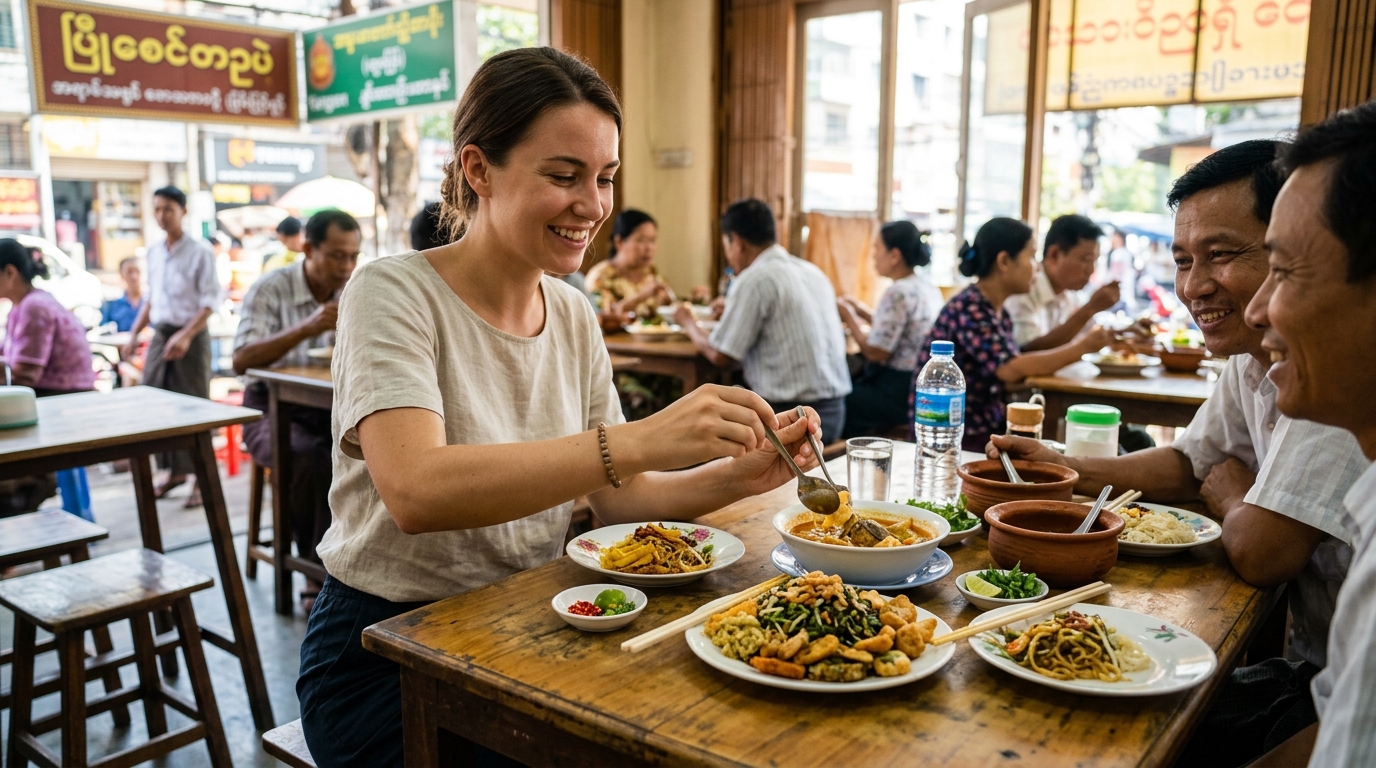
Street vendors stir steaming bowls of mohinga at dawn while tea shop owners arrange trays of samosas on rickety tables. The smells pull you in, but your stomach tightens with worry. Will this meal make you sick?
Eating in Myanmar doesn’t have to be a gamble with your health. With the right knowledge, you can savor the country’s incredible cuisine while keeping your digestive system happy.
Myanmar food safety tips center on choosing busy vendors, drinking only bottled or boiled water, washing hands frequently, avoiding raw vegetables at questionable establishments, and carrying basic medications. Understanding local dining customs like sharing dishes and eating with your right hand enhances both safety and cultural respect while traveling through the country.
Understanding Myanmar’s food hygiene landscape
Myanmar’s food safety standards differ significantly from Western countries. Infrastructure challenges, inconsistent refrigeration, and varying hygiene practices create real risks for travelers.
But locals eat this food every day and thrive. The difference lies in knowing what to watch for.
Water quality remains the primary concern. Tap water throughout Myanmar contains bacteria that local residents have adapted to but will send unprepared travelers straight to the bathroom. Ice cubes pose the same risk unless you’re at an upscale restaurant with filtered water systems.
Street food vendors operate without consistent health inspections. Some maintain impeccable standards. Others don’t. Your ability to distinguish between them determines whether you’ll spend your trip admiring temples or hugging a toilet.
What you really need to know before traveling to Myanmar in 2024 includes understanding these realities without letting fear prevent you from experiencing authentic local cuisine.
The five essential Myanmar food safety tips every traveler needs
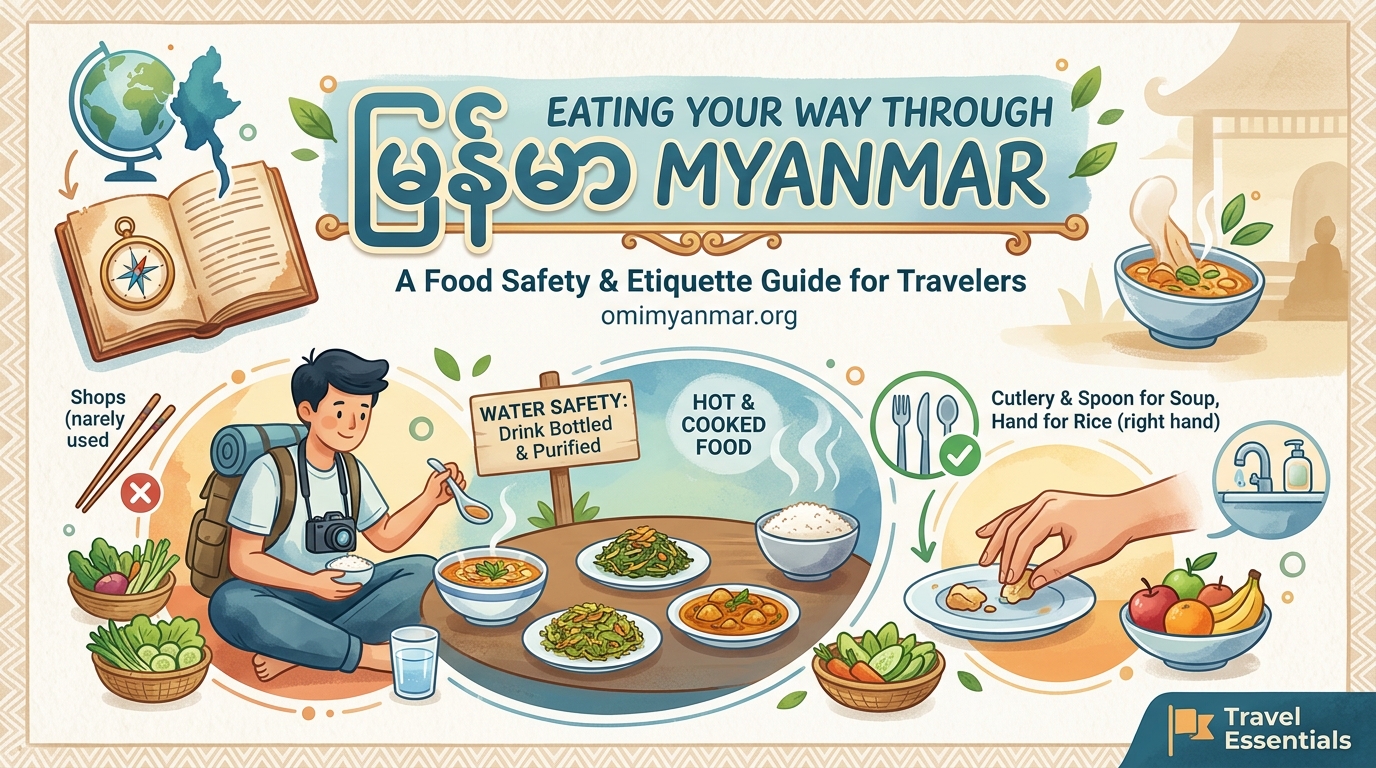
These practical strategies will protect your health while letting you enjoy Myanmar’s culinary offerings.
1. Choose vendors with visible crowds of locals
Busy food stalls turn over inventory fast. Fresh ingredients mean fewer opportunities for bacterial growth.
Empty restaurants raise red flags. Food sits longer. Standards may be lower.
Watch where Myanmar residents eat. They know which vendors maintain quality. A crowd of office workers at lunch signals reliable food safety practices.
2. Drink only sealed bottled water or properly boiled beverages
Purchase bottled water from reputable shops. Check that seals are intact before buying.
Hot tea and coffee are generally safe because boiling kills pathogens. Let extremely hot beverages cool slightly rather than adding ice.
Brush your teeth with bottled water. Keep your mouth closed in the shower. These small habits prevent accidental water ingestion that causes illness.
3. Wash your hands obsessively and carry hand sanitizer
Soap and water remain your best defense against foodborne illness. Wash before every meal and after using restrooms.
Many local restaurants lack proper handwashing facilities. Carry alcohol-based hand sanitizer with at least 60% alcohol content.
Use sanitizer after handling money, touching surfaces in public transportation, and before eating street food. This simple habit prevents most digestive issues travelers face.
4. Skip raw vegetables and unpeeled fruits at questionable establishments
Raw produce gets washed in local tap water. That water harbors bacteria your system can’t handle.
Cooked vegetables are safer because heat kills pathogens. Fruits you peel yourself like bananas, mandarins, and papayas present minimal risk.
Salads at tourist-oriented restaurants with filtered water systems are usually fine. Street vendor salads are not.
5. Pack essential medications before you arrive
Bring anti-diarrheal medication like loperamide for emergencies. Oral rehydration salts help replace lost fluids and electrolytes.
Antibiotics prescribed by your doctor before departure can treat serious bacterial infections. Probiotics may help maintain gut health during travel.
Pharmacies in major cities like Yangon and Mandalay stock these items, but availability varies in rural areas. Come prepared rather than searching while sick.
Reading the signs of safe food vendors
Visual cues help you assess hygiene standards before ordering.
| Safety indicator | What to look for | Red flags to avoid |
|---|---|---|
| Vendor cleanliness | Clean apron, tied-back hair, no visible dirt | Dirty clothes, unwashed hands, open sores |
| Food storage | Covered dishes, refrigerated items cold | Uncovered meat, food sitting in sun |
| Cooking practices | Food cooked to order, high heat used | Lukewarm reheated items, raw and cooked food touching |
| Utensil handling | Clean plates, separate serving utensils | Dirty dishes reused, vendor touching food with bare hands |
| Customer volume | Steady stream of local diners | Empty stall during meal hours |
Trust your instincts. If something looks or smells off, walk away. Myanmar offers countless food options. You don’t need to risk illness at any single vendor.
Navigating Myanmar dining etiquette while staying safe
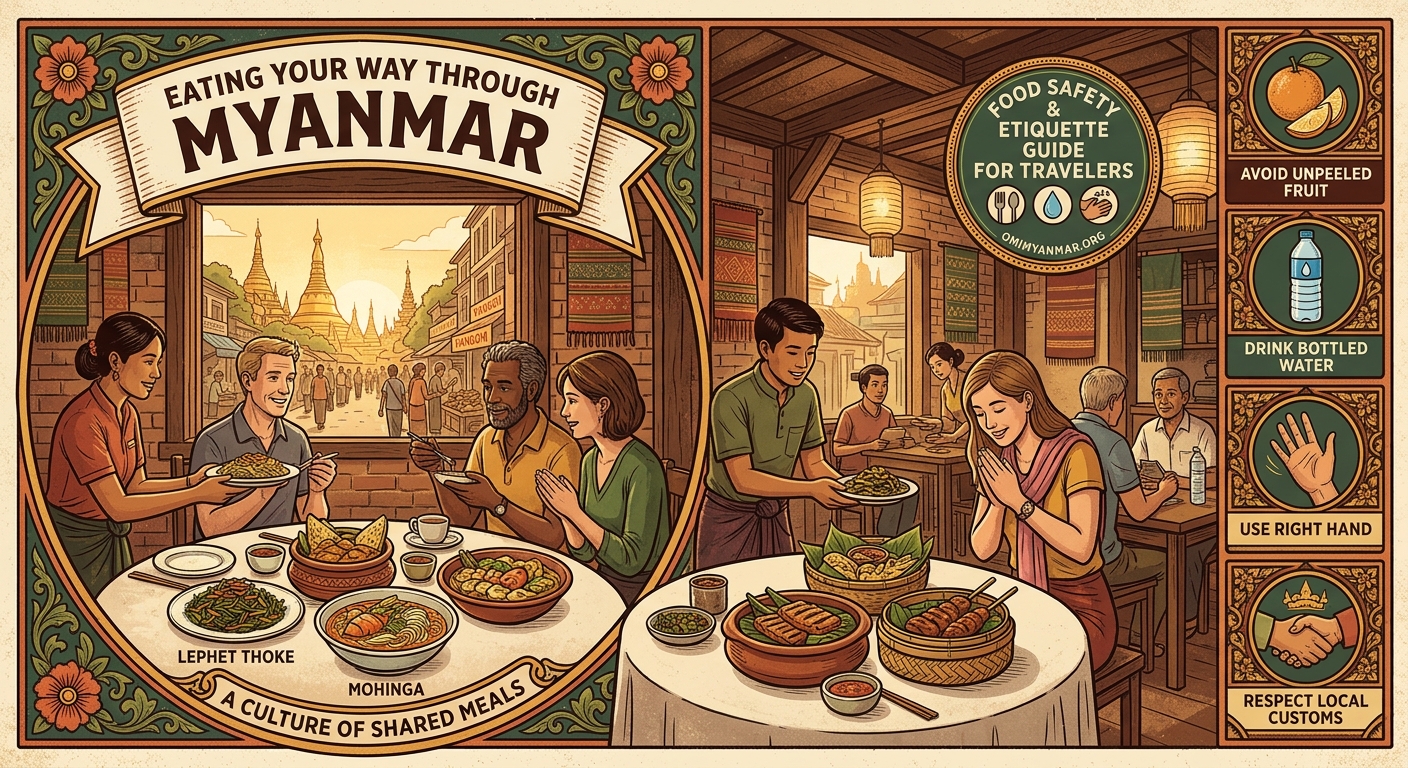
Cultural customs around eating intersect with food safety practices in interesting ways.
Myanmar meals are communal affairs. Dishes arrive in the center of the table for everyone to share. This tradition poses hygiene challenges when dining with strangers or in casual settings.
Use serving spoons rather than your personal utensil when taking food from shared dishes. This prevents spreading germs.
Eat with your right hand only. The left hand is considered unclean in Myanmar culture. Even if you’re left-handed, adapt this custom out of respect.
“When locals invite you to share their meal, they’re offering genuine hospitality. Accept graciously, but watch how they eat and follow their lead. If they use serving spoons and avoid certain dishes, take that as guidance about what’s safest.” – Experienced Myanmar tour guide
Some traditional restaurants provide a shared bowl for washing hands before meals. The water gets reused by multiple diners. Skip this and use your own hand sanitizer instead.
Tea shops serve as social hubs throughout Myanmar. The tea itself is safe because it’s boiled, but be cautious about accompanying snacks that may have sat out for hours.
Specific foods that require extra caution
Certain Myanmar dishes carry higher risk than others.
- Raw or undercooked meat and seafood
- Unpasteurized dairy products
- Pre-cut fruit from street vendors
- Ice cream from questionable sources
- Dishes with raw eggs
- Fermented fish products for sensitive stomachs
Mohinga, Myanmar’s beloved breakfast soup, is generally safe because it’s served piping hot. The fish is cooked thoroughly and the broth boils continuously.
Laphet thok (tea leaf salad) gets mixed with raw vegetables and served at room temperature. Order it only at established restaurants, not street stalls.
Grilled skewers cooked fresh over charcoal present low risk. Watch the vendor cook your skewer completely rather than accepting pre-cooked items being reheated.
Shan noodles from busy morning stalls are typically safe. The noodles are fresh, broths stay hot, and high turnover ensures ingredients don’t spoil.
Regional variations in food safety standards
Myanmar’s diverse geography creates different food safety conditions across regions.
Yangon and Mandalay feature the most developed infrastructure. Higher-end restaurants in these cities maintain international hygiene standards. Tourist areas like Bagan and Inle Lake cater to foreign visitors with adapted practices.
Rural areas and small towns present greater challenges. Refrigeration may be unreliable. Water sources are less treated. Vendor training varies widely.
Coastal areas offer incredible seafood, but shellfish carries particular risk. Eat shellfish only at reputable restaurants where you can verify freshness. Watch for clear eyes on fish, firm flesh, and no ammonia smell.
Mountain regions like Chin State and Shan State have cooler temperatures that slow bacterial growth but also feature more preserved and fermented foods that may challenge unaccustomed digestive systems.
Adjust your caution level based on location. What’s acceptable in central Yangon may be risky in a remote village.
Building your digestive system’s resilience
Your gut health before arriving influences how well you tolerate Myanmar cuisine.
Start taking probiotics two weeks before departure. This helps establish beneficial bacteria that can compete with potential pathogens.
Avoid overeating during your first few days. Smaller, more frequent meals give your system time to adjust to new foods and cooking styles.
Gradually introduce street food rather than jumping straight into the deep end. Begin with clearly cooked items from busy vendors, then expand your choices as your confidence grows.
Stay hydrated with safe water. Dehydration makes you more susceptible to illness and slows recovery if you do get sick.
Get adequate sleep and manage stress. Both factors significantly impact immune function and digestive resilience.
What to do when food makes you sick anyway
Despite precautions, some travelers experience digestive issues in Myanmar. Knowing how to respond matters.
Mild diarrhea without fever or blood typically resolves within 24 to 48 hours with rest and hydration. Drink oral rehydration solution to replace lost fluids and electrolytes.
Avoid anti-diarrheal medication initially. Your body is trying to expel whatever made you sick. Stopping that process can prolong illness.
Eat bland, easily digestible foods like plain rice, bananas, and toast once you can tolerate solid food again.
Seek medical attention if you experience high fever, bloody stools, severe abdominal pain, or symptoms lasting more than three days. Is Myanmar safe to visit includes information about healthcare facilities in major cities.
International clinics in Yangon and Mandalay provide Western-standard care. Outside major cities, medical facilities are basic. Travel insurance with medical evacuation coverage provides peace of mind.
Smart strategies for different meal settings
Your approach should vary based on where and what you’re eating.
Hotel breakfasts: Generally safe. Opt for hot dishes over cold buffet items that may have sat out. Stick with peelable fruits and avoid raw vegetables.
Local tea shops: Hot beverages are fine. Be selective about pastries and snacks. Items fried to order are safer than pre-made sweets.
Street food stalls: Choose vendors with high turnover. Watch your food being cooked. Avoid anything lukewarm or sitting out.
Mid-range restaurants: Usually maintain decent standards. Stick with thoroughly cooked dishes. Request no ice in beverages.
High-end establishments: Follow international hygiene practices. Safe to eat salads and drink tap water-based beverages.
Home-cooked meals: Accept invitations graciously. Home cooks typically maintain higher standards than commercial vendors because they’re feeding their own families.
Essential items for your Myanmar food safety kit
Pack these items to handle most situations:
- Bottled water purification tablets as backup
- Alcohol-based hand sanitizer (multiple bottles)
- Anti-diarrheal medication
- Oral rehydration salts
- Probiotics
- Antibiotics (prescription required)
- Antacids for mild stomach upset
- Wet wipes for cleaning hands and surfaces
- Small bottle of dish soap for washing utensils if needed
Keep this kit accessible in your day bag rather than buried in hotel luggage. You’ll use these items frequently.
Balancing caution with cultural openness
Myanmar’s food culture offers profound insights into daily life, regional identity, and social bonds. Excessive fear prevents meaningful cultural exchange.
Yes, take precautions. Follow Myanmar food safety tips consistently. But also take calculated risks.
Sharing a meal with locals creates connections that transform travel from tourism into genuine cross-cultural understanding. The grandmother who insists you try her homemade curry is offering more than food. She’s welcoming you into her world.
Accept these invitations. Watch how food is prepared. Ask questions. Show appreciation for culinary traditions that stretch back centuries.
The goal isn’t to avoid all risk. That’s impossible and would mean missing Myanmar’s greatest pleasures. The goal is managing risk intelligently so you can eat adventurously without spending your trip sick.
Making peace with your adventurous stomach
Food is how Myanmar tells its story. Every region’s cuisine reflects its history, geography, and cultural influences.
The Chinese-influenced noodles of Mandalay. The Indian-spiced curries of Yangon. The sour and spicy flavors of Shan State. The coconut-rich dishes of coastal areas.
You can’t fully experience Myanmar from behind the walls of international hotel restaurants. Real understanding happens at plastic tables on sidewalks, in family-run tea shops, and at monastery meal offerings.
The Myanmar food safety tips outlined here give you tools to eat confidently throughout the country. Use them consistently. Trust your instincts. Start cautiously and expand gradually.
Your stomach will adapt. Your palate will expand. Your understanding of this complex, beautiful country will deepen with every shared meal. That’s worth far more than playing it safe.