
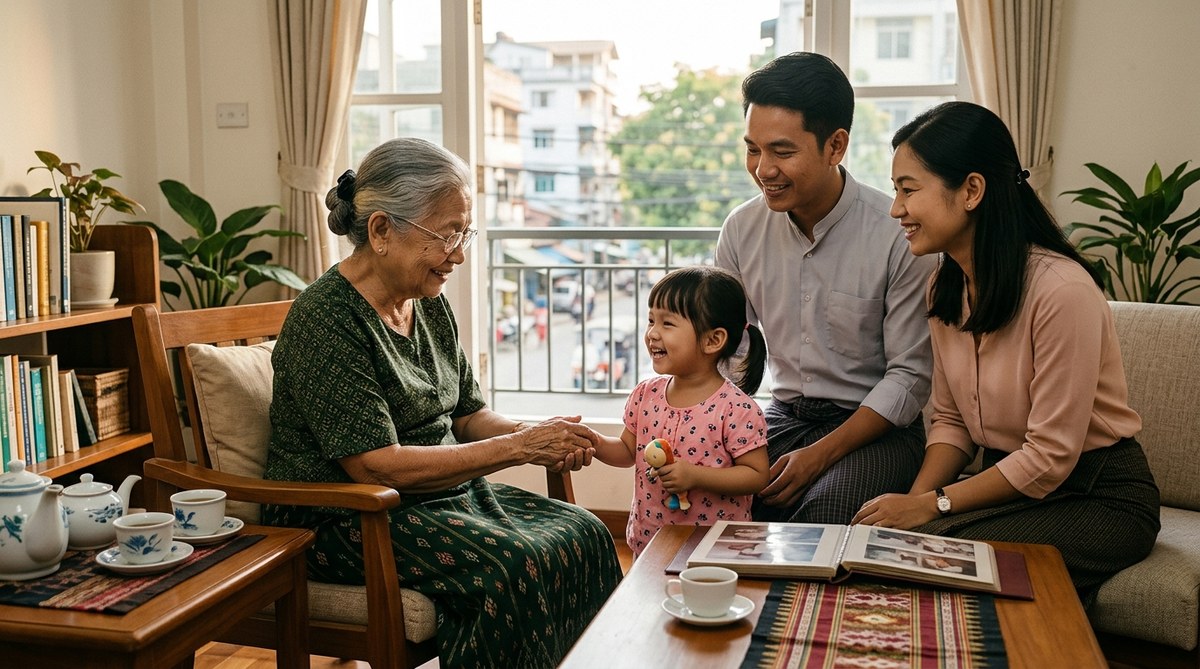
The first thing you notice about Myanmar today is how young its streets still feel. Yet beneath the surface, a quiet transformation is underway. By 2026, the median age in Myanmar has climbed to over 30 years, and the proportion of people aged 60 and above is rising faster than at any point in the country’s modern history. This isn’t a sudden shock. It is the result of decades of declining fertility, better child survival, and increased life expectancy. For families, communities, and the nation as a whole, this shift brings both profound challenges and unexpected opportunities.
Myanmar’s aging population in 2026 is no longer a distant projection; it is a lived reality. Families are taking on more caregiving duties with fewer siblings to help, while health systems and pension schemes strain under new demands. However, this demographic shift also opens doors for intergenerational innovation, community-based elder care, and policy reforms that can strengthen social cohesion. Understanding these changes is the first step toward building a Myanmar that supports people of all ages.
A Slow Creep That Picked Up Speed
Myanmar’s demographic story is different from that of many of its Southeast Asian neighbors. The country did not experience a dramatic “demographic dividend” fueled by a quick drop in birth rates. Instead, fertility has declined gradually. In the 1960s, women in Myanmar had an average of six children. By 2026, that number is around two. At the same time, life expectancy has risen from about 50 years in the 1960s to nearly 68 today. Those two trends combine to push the median age upward and the share of older adults into double digits.
Data from the United Nations Population Division shows that in 2026, nearly 10 percent of Myanmar’s population is aged 60 or older. That’s more than five million people. By 2050, that share is expected to double. For researchers and policymakers, the window to prepare is closing.
What This Means for Families
In a society where extended family networks have long been the primary safety net, aging puts enormous pressure on household dynamics. Adult children, especially daughters, traditionally care for aging parents. But with smaller families and higher rates of urban migration, fewer hands are available.
Let’s look at the ripple effects:
- Caregiver burden: A single adult child may be responsible for two aging parents, possibly with their own children to raise. This “sandwich generation” is growing.
- Financial strain: Many older adults in Myanmar lack formal pensions. They rely on savings, family transfers, or continued work. When health fails, families often face catastrophic medical expenses.
- Emotional toll: Distance from adult children who moved to Yangon or abroad creates loneliness and depression among the elderly. Phone calls cannot replace physical presence.
A study by HelpAge International in Myanmar found that over 60 percent of older people depend on their children for daily support. With the Myanmar aging population 2026 pushing this dependency further, families need more support from the state and civil society.
Societal and Economic Consequences
The effects ripple beyond the home. A shrinking workforce relative to dependents means fewer tax contributors to fund public services. The dependency ratio (people under 15 and over 64 divided by working-age adults) is rising. In 2026, there are about 45 dependents for every 100 working-age people. That number will climb.
Healthcare systems in Myanmar are already stretched. Chronic diseases such as hypertension, diabetes, and stroke become more common with age. Hospitals and clinics in both urban and rural areas lack geriatric specialists and age-friendly facilities. Palliative care is almost nonexistent outside major cities.
Pension coverage is another worry. Only a fraction of workers are enrolled in the Social Security Board scheme, and most are in the formal sector. For the vast majority of older adults in agriculture, informal trade, or domestic work, there is no regular income after retirement.
On the positive side, older people bring experience, knowledge, and often care for grandchildren, freeing younger women to work. Many are still active in farming and small businesses well into their 70s. Recognizing this contribution is essential.
The table below outlines some of the main challenges and corresponding opportunities for action.
| Challenge | Opportunity |
|---|---|
| Rising healthcare costs for chronic diseases | Invest in community-based primary care and preventive health programs for older adults |
| Low pension coverage | Expand social protection through universal old-age grants and voluntary savings schemes |
| Caregiver stress and burnout | Promote flexible work policies and adult day-care centers in urban areas |
| Rural aging hollows out villages | Develop age-friendly rural infrastructure and support intergenerational farming cooperatives |
| Lack of geriatric training among health workers | Integrate gerontology into medical and nursing curricula starting in 2026 |
A Policy Roadmap: What Needs to Happen
Policymakers and advocates are not starting from zero. There are examples from Thailand, Vietnam, and even within Myanmar’s own limited pilot programs. The challenge is scaling them.
Below is a practical five-step approach for researchers and social advocates to push forward:
- Map the data gap. Much of the information on older populations in Myanmar is outdated or fragmented. Support a national survey focusing on health, income, and living arrangements of people aged 60+.
- Build cross-sector coalitions. Aging touches health, labor, housing, and social welfare. Form a working group that includes government agencies, NGOs, and academic institutions.
- Design a universal social pension. Start with a modest monthly transfer for everyone above age 70. Pilot it in two townships and evaluate before scaling.
- Train community health volunteers. Equip them with basic geriatric screening and referral protocols. Pair them with existing maternal and child health networks.
- Launch a public awareness campaign. Use radio, social media, and monastery networks to reduce stigma around aging and promote respect for elder care, while encouraging families to plan.
“The biggest mistake would be to treat aging as a crisis rather than a natural demographic progression,” says Dr. Khin Mar Kyi, a Yangon-based public health researcher. “Myanmar can turn this challenge into a strength by investing now in community-based care and family support systems.”
How Different Groups Are Adapting
Across Myanmar, responses are emerging at the local level. Some townships have created “senior clubs” where older people gather for exercise, shared meals, and health talks. In Mandalay, a monastery runs a free day-care for elderly people whose families work in the market. In the delta region, women’s groups are training as home health aides.
International partners like the UNFPA and HelpAge International have been advocating for policy change, but sustained funding is uncertain. For those working on governance and transparency, understanding how public funds are allocated to social programs is important. The article on how open data platforms are revolutionizing transparency in Myanmar’s local governments offers a useful parallel on how information can drive better services.
A New Mindset for an Older Myanmar
Myanmar’s aging population in 2026 is not a problem to solve; it is a condition to manage thoughtfully. Families will continue to do the heavy lifting, but they need stronger backup from the state and community. For researchers, this is a rich field of study. For policymakers, it is a chance to build systems that last. For social advocates, it is a call to ensure that no one grows old without dignity.
The next time you see an elderly person walking slowly down a dusty road in a Myanmar village, remember: they represent a growing part of the country’s future. How we respond today will determine whether that future is one of isolation or connection, hardship or support. The choice is ours.