
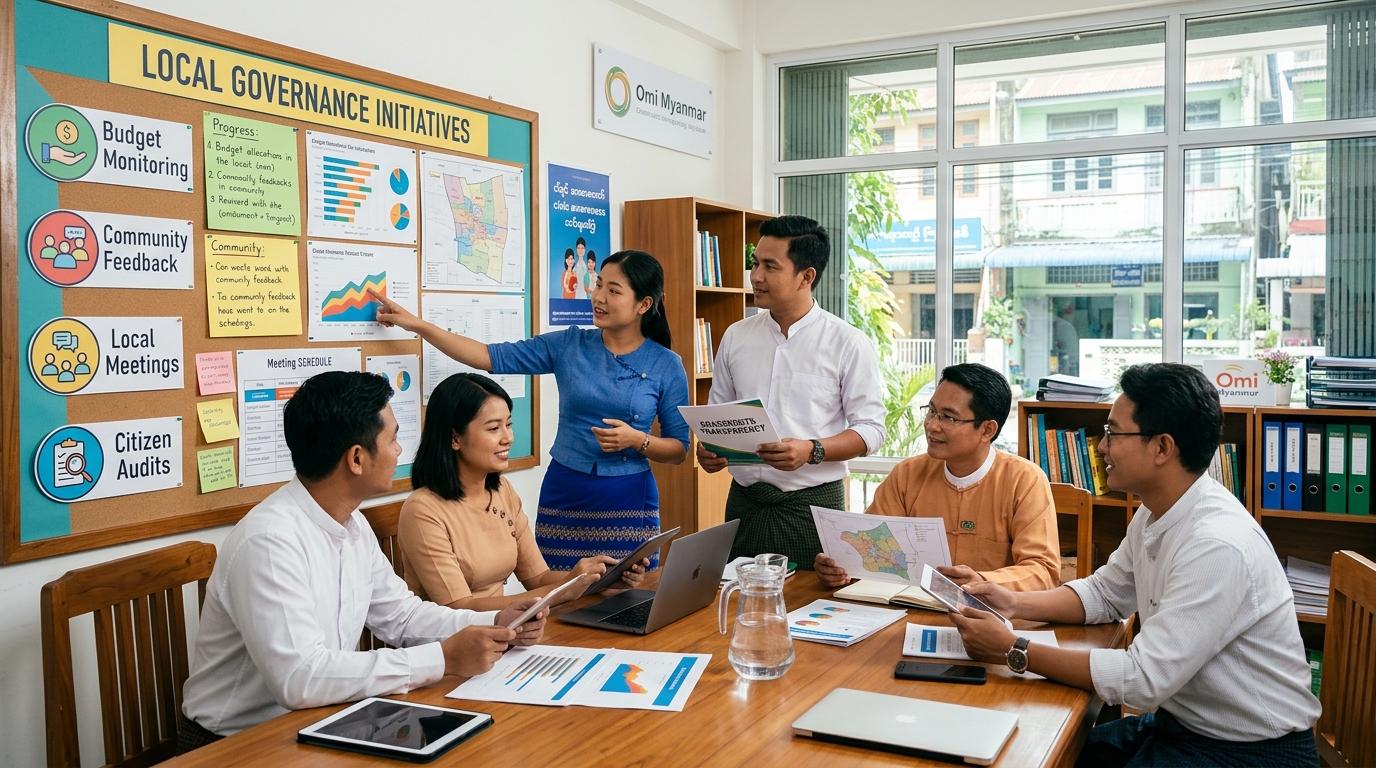
Myanmar’s local governance system operates through layers that most outsiders never see. Village administrators report to township officers. Township officers answer to district commissioners. District commissioners coordinate with regional governments. And at every level, the relationship between formal authority and actual power shifts depending on geography, ethnicity, and political circumstance.
Local governance in Myanmar functions through a hierarchical system connecting village tracts, townships, districts, and states or regions. Understanding this structure requires examining both formal administrative frameworks and informal power networks. Recent reforms have attempted to strengthen citizen participation, but implementation varies widely across geographic and ethnic contexts, making local governance one of Myanmar’s most complex policy challenges.
Understanding Myanmar’s Administrative Hierarchy
Myanmar divides into seven states and seven regions, plus one union territory containing the capital Naypyitaw. Each state or region breaks down into districts. Districts contain townships. Townships encompass village tracts in rural areas and wards in urban zones.
This structure mirrors systems inherited from British colonial administration, modified during decades of military rule. The hierarchy creates clear reporting lines on paper. Reality proves messier.
Village tract administrators serve as the foundation. These officials manage clusters of villages, typically five to ten settlements. They register births and deaths. They mediate minor disputes. They collect basic information for higher authorities.
Township administrators wield more formal power. They oversee infrastructure projects. They coordinate with line ministries for health, education, and agriculture. They represent the first level where citizens encounter bureaucratic complexity.
District commissioners coordinate multiple townships. They rarely interact directly with village residents. Their role focuses on regional planning and resource allocation.
State and regional governments sit at the top of local administration. Chief ministers lead these governments, appointed through processes that blend electoral politics with central government influence.
How Power Actually Flows
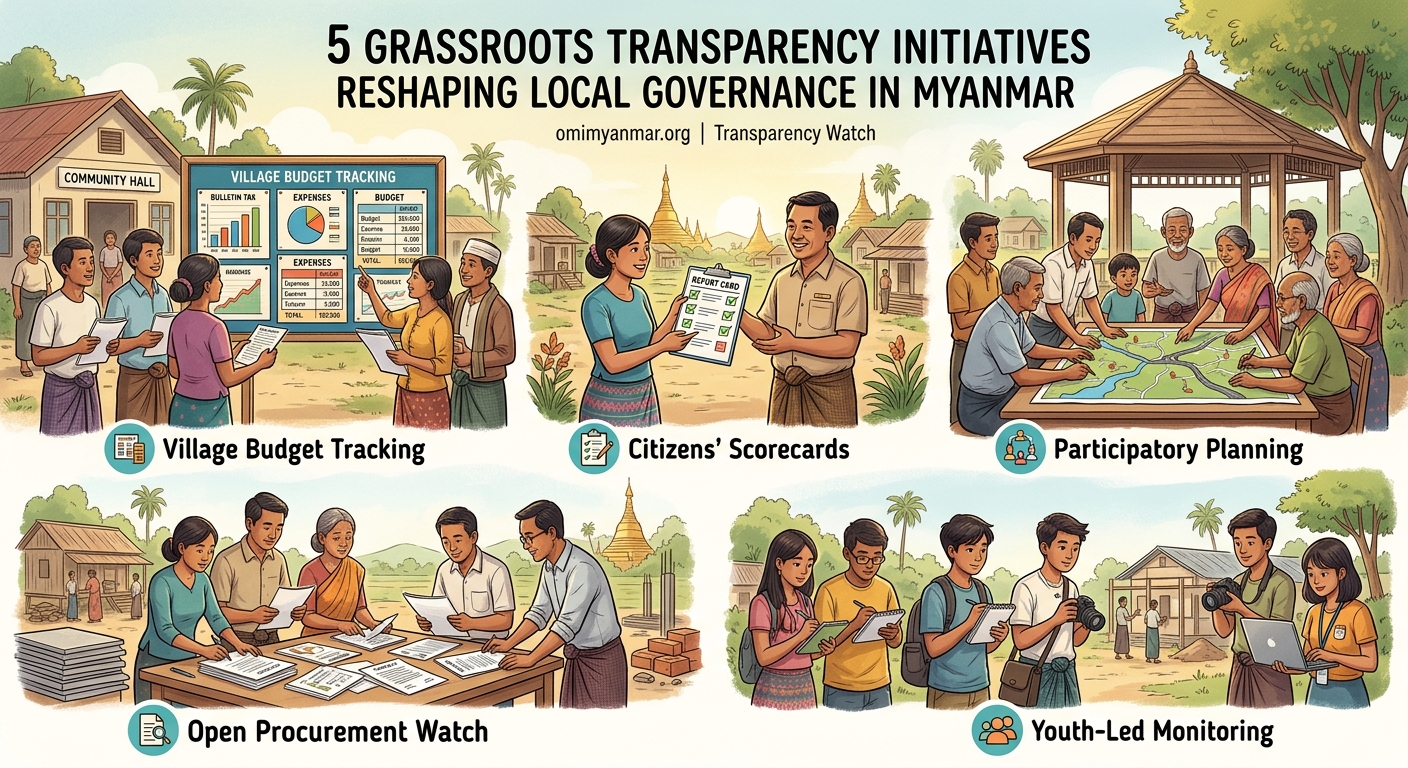
Formal organizational charts tell only part of the story. Power in Myanmar’s local governance system flows through multiple channels simultaneously.
Military influence remains significant. Even during periods of civilian government, how international watchdogs are monitoring Myanmar’s governance reforms in 2024 revealed persistent security apparatus involvement at every administrative level. Township administrators often consult military commanders on decisions affecting public order.
Ethnic armed organizations control substantial territory in border regions. In these areas, parallel governance structures exist. Some communities pay taxes to both state authorities and ethnic organizations. Others interact exclusively with non-state governance systems.
Traditional authority structures persist alongside formal administration. Village elders hold influence that exceeds their official status. Religious leaders shape community decisions. Wealthy families leverage economic power into political influence.
Understanding local governance in Myanmar requires mapping these overlapping systems. A researcher studying rural development might encounter:
- Formal township development committees
- Military-appointed security coordinators
- Ethnic community leaders
- Buddhist monastery networks
- Informal business associations
Each group claims legitimate authority. Each expects consultation. Effective governance happens when these groups align. Dysfunction occurs when they conflict.
The Village Tract System in Practice
Village tracts represent Myanmar’s most granular administrative unit. Approximately 13,000 village tracts exist nationwide. Each contains between 1,000 and 10,000 residents on average.
The village tract administrator occupies a unique position. Technically a civil servant, this person usually comes from the local community. They know residents personally. They understand local disputes and relationships.
Daily responsibilities include:
- Maintaining household registration lists
- Issuing recommendation letters for identity documents
- Recording land transactions and inheritance transfers
- Organizing community labor for local projects
- Reporting security concerns to township authorities
- Facilitating government program implementation
The position requires balancing community expectations against government directives. Administrators who favor government priorities risk losing community trust. Those who prioritize community needs may face pressure from superiors.
Compensation remains modest. Many village tract administrators supplement their income through farming or business. This economic vulnerability creates potential corruption risks, though it also maintains community connections.
Township Governance and Service Delivery
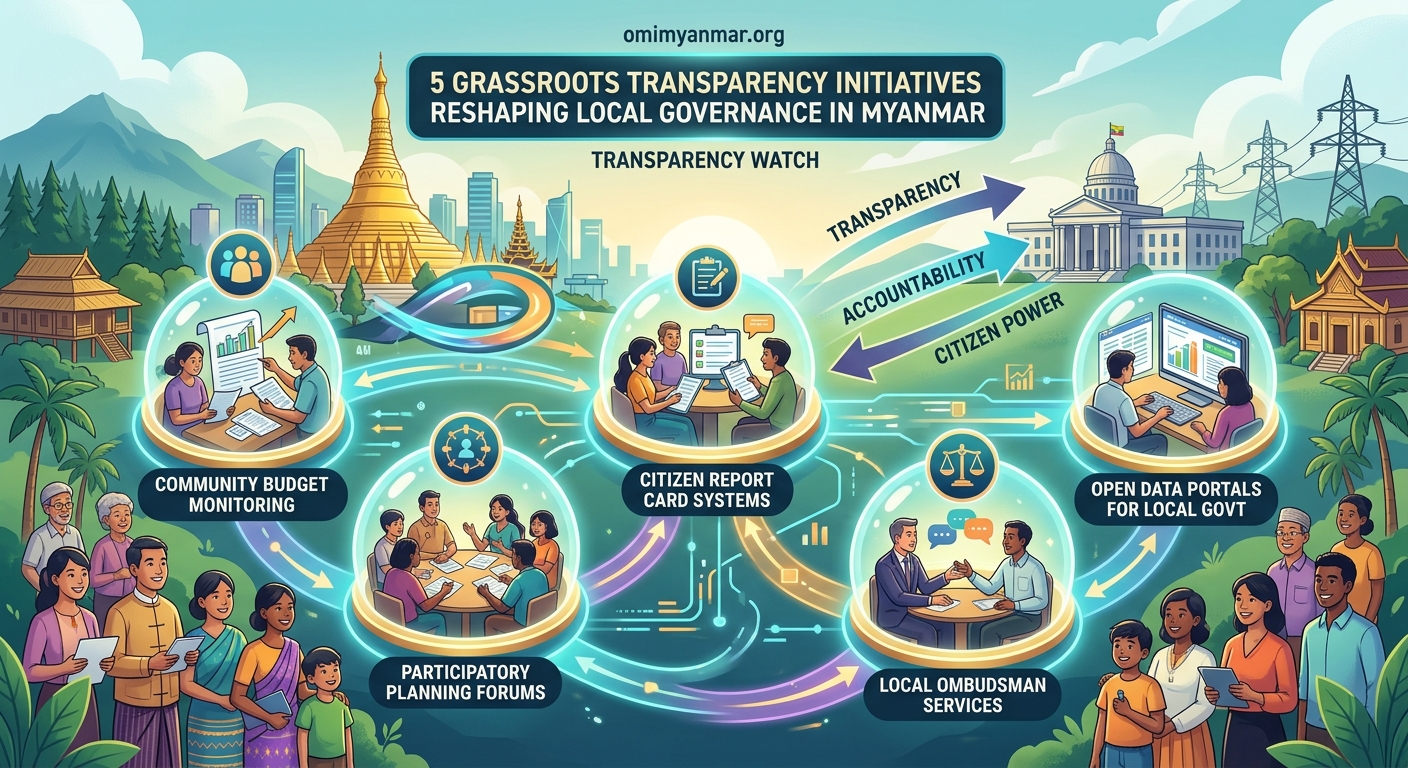
Townships form the critical middle layer where policy meets implementation. Myanmar contains approximately 330 townships. Population varies from under 20,000 to over 200,000 residents.
Township administrators lead complex organizations. Line ministry representatives for health, education, agriculture, and other sectors report through dual chains of command. They answer to both the township administrator and their respective ministries.
This matrix structure creates coordination challenges. A township education officer receives directives from the Ministry of Education. They also must work within the township administrator’s priorities and budget constraints. Conflicting instructions are common.
Township development committees theoretically enable citizen participation. These committees include representatives from various sectors and communities. In practice, their effectiveness varies dramatically. Some function as genuine consultation forums. Others serve as rubber stamps for predetermined decisions.
“The township is where national policy crashes into local reality. Good township administrators become skilled translators, converting ministry directives into actions that make sense for their specific context. Poor administrators simply pass orders downward and hope for compliance.” – Former township development officer
Municipal Governance in Urban Areas
Cities and larger towns operate under municipal structures distinct from rural administration. Yangon, Mandalay, and other major urban centers have development committees with elected members alongside appointed officials.
Municipal governance handles urban-specific functions:
- Waste collection and sanitation
- Local road maintenance
- Building permits and zoning
- Market regulation
- Street lighting and public spaces
Revenue generation distinguishes urban governance. Municipalities collect property taxes, business licenses, and service fees. This financial autonomy theoretically enables responsive local government.
Budget reality constrains municipal effectiveness. Central government retains control over major revenue sources. Municipalities depend on transfers that arrive unpredictably. Long-term planning becomes difficult when funding remains uncertain.
The relationship between understanding Myanmar’s freedom of information laws: what changed and what remains and municipal transparency illustrates ongoing challenges. Some municipalities publish budgets and meeting minutes. Others treat basic financial information as confidential.
Comparing Governance Approaches Across Regions
Local governance in Myanmar varies significantly by geography and demographics. Border regions with ethnic minorities operate differently than Bamar-majority central areas. Urban centers function distinctly from rural townships.
| Region Type | Key Features | Primary Challenges | Governance Style |
|---|---|---|---|
| Central Bamar areas | Strong state presence, established infrastructure | Bureaucratic rigidity, limited innovation | Hierarchical, procedure-focused |
| Ethnic border regions | Parallel authority structures, armed group influence | Competing legitimacy claims, service gaps | Negotiated, power-sharing |
| Major cities | Municipal institutions, diverse populations | Resource constraints, rapid growth | Committee-based, semi-autonomous |
| Remote rural areas | Minimal state capacity, traditional leadership | Geographic isolation, limited services | Informal, elder-dominated |
These differences matter for development programming. An approach working in Yangon may fail completely in Shan State. Effective local governance support requires understanding specific contexts.
Citizen Participation Mechanisms
Formal channels for citizen input exist throughout Myanmar’s governance system. Their effectiveness remains inconsistent.
Ward and village tract administrators hold regular meetings in some areas. Residents can raise concerns about local issues. The administrator may address simple matters directly or forward complex issues to township authorities.
Township development committees include seats for civil society representatives. Selection processes vary. Some townships hold genuine consultations. Others appoint representatives with minimal community input.
Public hearings for major projects occur sporadically. Legal requirements exist for environmental and social impact assessments. Implementation depends heavily on local administrator commitment and civil society capacity.
Informal participation often proves more effective than formal channels. Personal relationships matter enormously. A farmer who knows the village tract administrator personally will likely get faster responses than one who submits written complaints through official procedures.
The challenge of why Myanmar’s public procurement system remains vulnerable to corruption despite recent reforms extends to local governance. Citizen oversight remains limited when information flows poorly and accountability mechanisms lack teeth.
Budget and Resource Allocation
Understanding local governance in Myanmar requires following the money. Budget processes reveal where real authority lies.
The union government controls most revenue collection. Income taxes, customs duties, and major commercial taxes flow to central coffers. States and regions receive budget allocations through annual appropriations.
Townships and village tracts have minimal independent revenue. Small fees and fines provide limited discretionary funding. Major expenditures require approval from district or state levels.
This financial centralization constrains local responsiveness. A township administrator might identify urgent infrastructure needs. Funding those needs requires navigating multiple approval layers. By the time money arrives, priorities may have shifted.
Some townships experiment with participatory budgeting. Citizens vote on priorities for discretionary funds. These initiatives remain small-scale. They demonstrate potential for more responsive resource allocation.
Challenges Facing Local Administrators
People working in Myanmar’s local governance system face persistent obstacles. Understanding these challenges helps explain why reforms often stall.
Capacity constraints affect every level. Many administrators lack formal training in public administration, financial management, or project planning. They learn through experience, often making costly mistakes.
Resource scarcity forces difficult choices. A township health officer might have budget for either renovating a clinic or purchasing medical supplies, but not both. These zero-sum decisions create dissatisfaction regardless of choice.
Political interference complicates technical decisions. Higher authorities may override local judgments for political reasons. An administrator who carefully plans a community project might see it canceled because it conflicts with a regional official’s priorities.
Security concerns affect border regions particularly. Administrators working in conflict zones face physical risks. They must navigate between government expectations and armed group demands. Wrong choices can prove fatal.
Ethnic Governance and Self-Administration
Myanmar’s constitution recognizes self-administered zones and divisions for certain ethnic groups. These areas theoretically enjoy greater autonomy within the broader administrative structure.
Five self-administered zones exist:
- Naga
- Danu
- Pa-O
- Palaung
- Kokang
Plus one self-administered division:
- Wa
These areas elect leading bodies with authority over local matters. Education, culture, and development planning fall under their jurisdiction. Security and major infrastructure remain union government responsibilities.
Implementation of self-administration varies. Some areas exercise meaningful autonomy. Others find their authority limited by resource constraints or union government interference.
Ethnic governance extends beyond formal self-administered areas. Ceasefire agreements with ethnic armed organizations often include provisions for local administration in territories they control. These parallel governance structures provide services, collect taxes, and administer justice.
The Role of Civil Society and Community Organizations
Non-governmental organizations and community groups increasingly influence local governance. Their role has expanded as space for civil society grew during periods of political opening.
Community-based organizations often fill service gaps. They run schools where government education proves inadequate. They provide health services in underserved areas. They facilitate development projects when official programs stall.
Civil society organizations also monitor government performance. They document service delivery failures. They advocate for policy changes. They train citizens in participatory governance.
The relationship between government and civil society remains complex. Some administrators welcome NGO partnership. Others view civil society as threatening their authority. Productive collaboration requires trust-building and clear role definition.
Looking at Local Governance Reform Efforts
Multiple reform initiatives have attempted to strengthen local governance in Myanmar. Results remain mixed.
Decentralization legislation passed in recent years aimed to transfer more authority and resources to states and regions. Implementation has proceeded slowly. Central ministries resist losing control. Capacity constraints limit what local governments can absorb.
Civil service reform efforts target improved professionalism. Training programs for administrators have expanded. Merit-based promotion systems have been proposed. Entrenched practices change slowly.
Transparency initiatives seek to make local government more accountable. Some townships now publish budgets online. Others hold public forums on major decisions. Coverage remains patchy.
Technology offers potential for improved governance. Mobile applications enable citizens to report problems directly to authorities. Digital payment systems reduce corruption opportunities in fee collection. Infrastructure limitations constrain widespread adoption.
Practical Implications for Development Work
International organizations and NGOs working in Myanmar must understand local governance realities. Effective programming requires navigating complex political and administrative landscapes.
Partnering with local government proves essential for sustainable impact. Projects implemented without administrator buy-in often fail after external funding ends. Building relationships takes time but pays dividends.
Understanding informal power structures matters as much as knowing formal hierarchies. A project might have township administrator approval but fail because it ignored village elders or ethnic community leaders.
Flexibility enables adaptation to local contexts. Standard approaches rarely work across Myanmar’s diverse regions. Programs must adjust to specific governance arrangements in each area.
Long-term commitment yields better results than short-term interventions. Trust builds slowly. Governance systems change incrementally. Organizations that maintain presence through political turbulence achieve more than those that enter and exit repeatedly.
Why Local Governance Determines Myanmar’s Future
National-level politics captures international attention. Headlines focus on union government actions and major political transitions. Yet local governance shapes daily life for most Myanmar citizens far more than events in Naypyitaw.
Village tract administrators determine whether farmers get land documents. Township health officers decide if clinics receive adequate supplies. Municipal officials control whether streets get repaired. These decisions accumulate into lived experience of government effectiveness or failure.
Strengthening local governance offers a path toward improved public services even amid national political uncertainty. Communities with capable, responsive administrators experience better outcomes regardless of broader political conditions.
The future of local governance in Myanmar remains uncertain. Current political turmoil has disrupted many reform initiatives. Yet the fundamental structures persist. Village tracts still need administrators. Townships still deliver services. Citizens still need government responsiveness.
Building effective local governance requires sustained effort across multiple fronts. Administrator capacity must improve through training and support. Resource allocation needs reform to give local governments adequate funding. Citizen participation mechanisms require strengthening. Transparency and accountability systems need expansion.
These changes happen slowly, often invisibly. They lack the drama of national political transitions. But they determine whether Myanmar’s governance system can meet citizen needs. And ultimately, that matters more than any organizational chart or constitutional provision.
For researchers, practitioners, and policy analysts working on Myanmar, understanding local governance provides essential context. It reveals how policy translates into practice. It shows where reform efforts gain traction or stall. It demonstrates the gap between formal structures and lived reality. That understanding proves invaluable for anyone serious about supporting positive change in Myanmar.