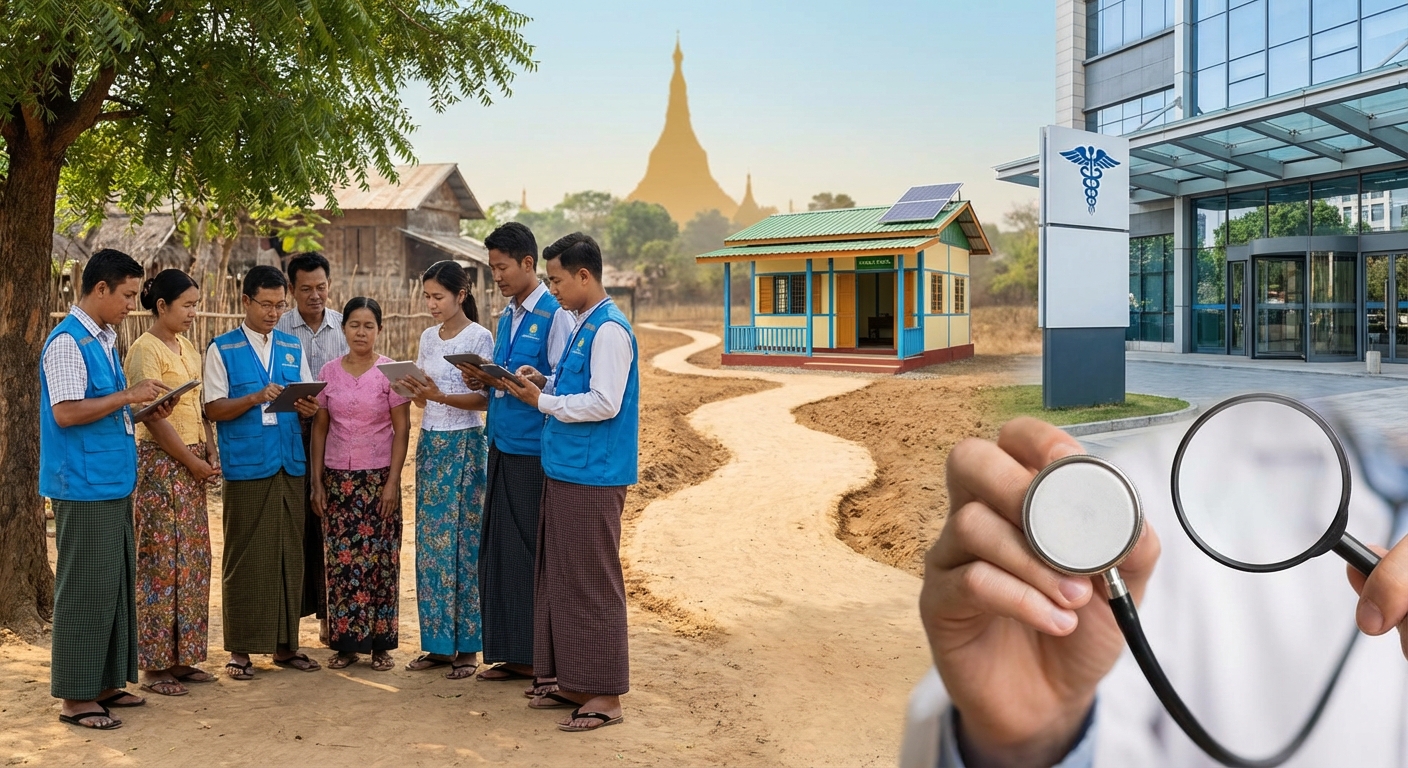
The Myanmar healthcare system stands at a critical juncture. Political upheaval, chronic underfunding, and geographic barriers have created one of Southeast Asia’s most complex medical landscapes. For researchers, NGO workers, and policy analysts, understanding this system requires looking beyond statistics to see how communities adapt, survive, and build alternatives when formal structures fail.
Myanmar’s healthcare system operates through a fragmented network of public hospitals, private clinics, and traditional medicine providers. Recent political instability has suspended many routine services, forcing communities to develop informal care networks. Access varies dramatically between urban centers and rural areas, with infrastructure, workforce shortages, and affordability creating persistent barriers that disproportionately affect vulnerable populations seeking continuous care.
The structural foundation of Myanmar’s medical infrastructure
Myanmar’s healthcare system follows a three-tiered model inherited from decades of centralized planning. At the top sit tertiary hospitals in Yangon, Mandalay, and Naypyidaw, equipped to handle specialized procedures and complex cases. These facilities concentrate most of the country’s advanced medical equipment and specialist physicians.
The second tier comprises district and township hospitals serving regional populations. These facilities handle general medicine, basic surgery, and maternal care. Their capacity varies widely based on location and funding.
Rural health centers form the foundation. Staffed by midwives, basic health workers, and occasional visiting physicians, these clinics provide primary care, immunizations, and health education. Many operate with minimal supplies and irregular electricity.
Traditional medicine runs parallel to this formal structure. Licensed practitioners of Myanmar traditional medicine maintain clinics throughout the country, offering herbal treatments and therapies rooted in Buddhist and indigenous healing practices.
How the public healthcare sector functions today
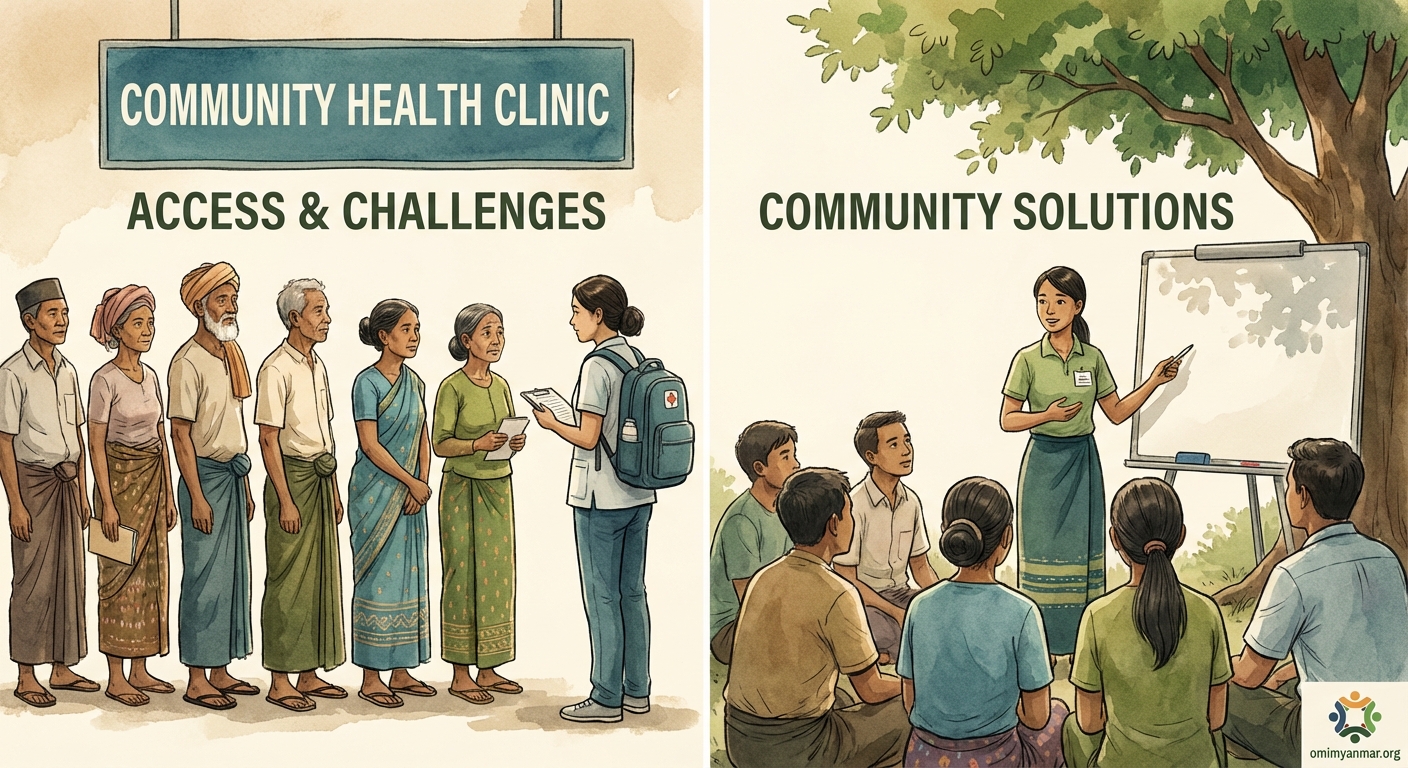
Public healthcare theoretically provides free services at government facilities. In practice, patients frequently pay for medications, supplies, and informal fees that supplement inadequate official budgets.
The Ministry of Health operates the public system through a hierarchical structure. Central directives flow down to state and regional health departments, then to district offices and individual facilities. This top-down approach creates bottlenecks and reduces local flexibility.
Staffing presents ongoing challenges. Physicians concentrate in urban areas, leaving rural posts unfilled or rotating through on short assignments. Nurses and midwives carry heavy workloads with limited support. Many healthcare workers supplement government salaries with private practice.
| Facility Type | Typical Services | Common Gaps |
|---|---|---|
| Tertiary hospital | Surgery, specialist care, imaging | Equipment maintenance, specialist retention |
| Township hospital | General medicine, basic surgery, maternity | Medication stock, diagnostic capacity |
| Rural health center | Primary care, immunizations, health education | Physician availability, emergency capacity |
| Traditional medicine clinic | Herbal treatment, massage, cupping | Integration with modern care, quality standards |
Equipment shortages affect all levels. Diagnostic machines sit broken for months awaiting parts or expertise. Operating theaters lack basic supplies. Cold chain failures compromise vaccine programs.
Private sector growth and its implications
Private healthcare has expanded rapidly in urban centers. International hospital chains have opened facilities in Yangon catering to middle-class and expatriate patients. These hospitals offer modern equipment, English-speaking staff, and shorter wait times at premium prices.
Smaller private clinics fill gaps throughout cities and larger towns. Many are run by government physicians during off-hours, creating conflicts of interest that affect public facility performance.
The private sector remains largely unregulated. Quality varies from excellent to dangerous. Patients have limited recourse when care falls short. Costs can be catastrophic for families without insurance.
Medical tourism has emerged as a niche market, with Thai and Singaporean facilities attracting wealthy Myanmar patients for procedures unavailable domestically. This outflow represents both a market failure and a drain on domestic healthcare spending.
Geographic barriers that shape access patterns
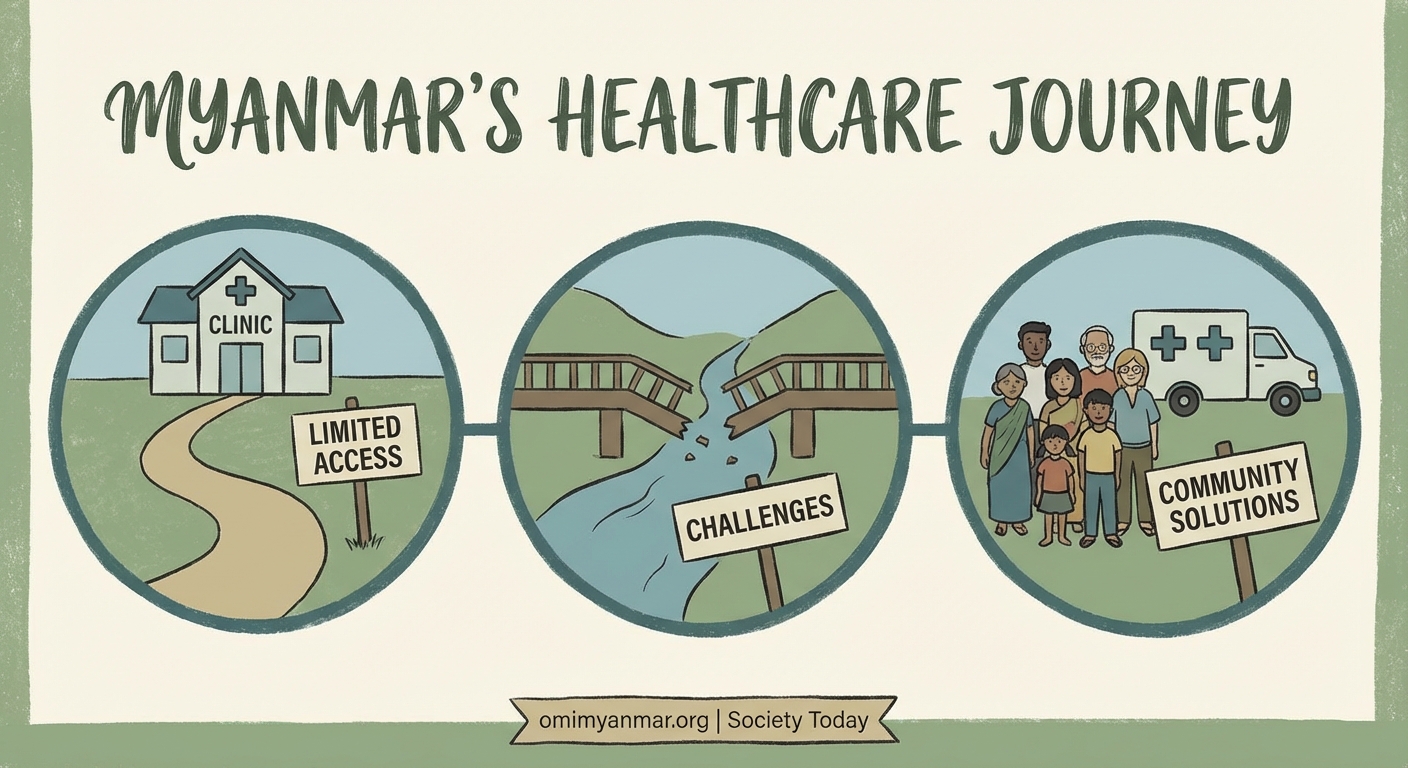
Distance creates the most fundamental access barrier. Rural residents often travel hours to reach basic healthcare. Emergency cases face impossible choices between dangerous home treatment and potentially fatal transport delays.
Mountainous terrain in border regions isolates entire communities. Seasonal flooding cuts off delta populations. Conflict zones become medical deserts where facilities close and staff evacuate.
“We see patients who walked three days to reach our clinic. By the time they arrive, treatable conditions have become life-threatening. The geography itself becomes a health determinant.” – Rural health coordinator, Chin State
Transportation infrastructure limits medical access even where facilities exist. Unpaved roads become impassable during monsoon. Public transport runs irregularly. Ambulance services are scarce outside major cities.
Urban areas face different geography problems. Yangon’s sprawl creates access deserts in peripheral townships. Traffic congestion delays emergency response. Informal settlements lack nearby health facilities.
The workforce crisis affecting every level of care
Myanmar produces too few healthcare workers for its population. Medical schools graduate several hundred physicians annually, far below replacement needs. Nursing programs face similar shortfalls.
Emigration drains trained professionals. Physicians and nurses seek better pay and conditions in Thailand, Singapore, and beyond. Political instability has accelerated this exodus, with thousands leaving since 2021.
Rural retention remains nearly impossible. Young professionals refuse remote postings. Mandatory service requirements are poorly enforced. Financial incentives have proven insufficient to overcome urban preferences.
Midwives represent a critical but overstretched workforce. They provide most maternal and child health services in rural areas, often working alone with minimal supervision or support. Burnout rates are high.
Community health workers bridge some gaps. These volunteers or minimally paid workers provide basic health education and connect communities to formal services. Their effectiveness depends heavily on training quality and ongoing support.
Financial barriers that determine who receives care
Out-of-pocket spending dominates healthcare financing. Households pay directly for most medical services, medications, and supplies. This creates immediate barriers for poor families and long-term financial vulnerability for everyone.
Health insurance coverage remains minimal. A small formal sector workforce has employer-based insurance. Social health insurance schemes have limited enrollment and coverage. Most people face full costs at point of service.
Informal payments add to official charges. Patients pay for preferential treatment, faster service, or simply to receive care they are theoretically entitled to free. These under-the-table transactions are widespread and understood by all parties.
Catastrophic health expenditure pushes families into poverty. A serious illness or injury can consume years of savings, force asset sales, or create crushing debt. This financial risk makes people delay seeking care until conditions become severe.
Medication costs particularly burden patients. Generic drugs should be affordable, but supply chain failures and quality concerns drive patients toward expensive branded alternatives. Chronic disease management becomes financially unsustainable for many.
How recent political upheaval transformed healthcare delivery
The 2021 military takeover devastated Myanmar’s healthcare system. Physicians and nurses joined civil disobedience movements, refusing to work under military authority. Many were arrested, forcing others underground or into exile.
Public hospitals in areas of conflict have been targeted. Facilities have been occupied, damaged, or destroyed. Medical neutrality has been repeatedly violated, with healthcare workers and patients facing arrest or worse.
The civil disobedience movement among healthcare workers created parallel health systems. Underground clinics operate in homes and informal spaces, providing care to protesters, displaced populations, and anyone avoiding military-controlled facilities.
International sanctions and reduced aid have compounded problems. Funding for health programs has dried up. Supply chains for essential medicines have been disrupted. Technical support from international partners has been suspended or severely limited.
COVID-19 response collapsed amid political chaos. Vaccination campaigns stalled. Testing capacity disappeared. Treatment facilities closed. The pandemic’s true toll remains unknown due to surveillance system breakdown.
Community-driven solutions emerging from crisis
Mutual aid networks have mobilized to fill healthcare gaps. Communities pool resources to purchase medications, hire healthcare workers, and establish informal clinics. These grassroots efforts operate outside official systems, relying on trust and solidarity.
Telemedicine has expanded rapidly despite connectivity challenges. Physicians in exile provide remote consultations. Messaging apps facilitate medical advice. Online pharmacies deliver medications. These digital solutions work around physical access barriers and political restrictions.
Traditional medicine has gained prominence as formal systems fail. Herbalists and traditional practitioners treat conditions previously handled in hospitals. Quality and safety concerns arise, but options are limited.
Cross-border medical access has increased for populations near Thailand, India, and China. Patients travel to neighboring countries for care unavailable or unsafe domestically. This creates dependencies but provides essential lifelines.
Social enterprises focused on health have emerged to address specific gaps. Organizations provide mobile clinics, medication delivery, or specialized services using business models designed for sustainability rather than pure charity.
Maternal and child health as a system indicator
Maternal mortality rates reveal system weaknesses. Myanmar’s rates remain among Southeast Asia’s highest. Most maternal deaths are preventable with timely access to skilled birth attendance and emergency obstetric care.
Facility-based delivery has increased but remains incomplete. Cultural preferences, distance, and cost keep many women delivering at home with traditional birth attendants. Quality of facility care varies dramatically.
Child immunization coverage has declined. Routine vaccination programs were disrupted first by COVID-19, then by political upheaval. Coverage gaps create vulnerability to preventable diseases.
Malnutrition affects child development and survival. Food insecurity, inadequate maternal nutrition, and limited access to supplementary feeding programs contribute to stunting and wasting rates that undermine human capital development.
- Identify the nearest functional health facility through community networks rather than relying on official directories.
- Establish relationships with healthcare providers before emergencies arise, creating trusted contacts for advice and referrals.
- Maintain basic medical supplies at home, including oral rehydration salts, basic antibiotics, and first aid materials.
- Join or create community health funds that pool resources for emergency medical expenses.
- Document health information in portable formats, as medical records may be inaccessible during displacement or facility closures.
Infectious disease control in a fragmented system
Tuberculosis remains a major killer. Myanmar has one of the world’s highest TB burdens, complicated by drug resistance and incomplete treatment adherence. Conflict has disrupted TB programs, creating gaps in case finding and treatment continuity.
Malaria control had made progress before recent setbacks. Artemisinin-resistant strains along the Thai border pose regional threats. Vector control programs have been interrupted. Treatment access has become irregular.
HIV/AIDS services face funding and access challenges. Stigma persists. Harm reduction programs for people who inject drugs operate in limited areas. Antiretroviral therapy coverage has plateaued.
Vaccine-preventable diseases are resurging. Measles outbreaks occur where immunization coverage has dropped. Diphtheria cases have appeared. The surveillance system’s collapse means true disease burden is unknown.
Water and sanitation infrastructure affects disease patterns. Diarrheal diseases burden children. Hepatitis transmission continues. Improvements in water access and sanitation have stalled or reversed in conflict-affected areas.
Medical education and its impact on system capacity
Medical training occurs at universities in Yangon, Mandalay, and Magway. Curricula emphasize theoretical knowledge over practical skills. Clinical training quality varies by facility. Student-to-faculty ratios are high.
Nursing education faces resource constraints. Programs lack adequate clinical sites and experienced instructors. Graduates enter practice with limited hands-on experience.
Continuing education for practicing healthcare workers is minimal. Physicians and nurses have few opportunities for skills updating or specialization. This limits ability to adopt new practices or technologies.
Brain drain affects medical education quality. Experienced faculty leave for better opportunities abroad. This depletes the teaching workforce and reduces mentorship for new professionals.
Alternative pathways into healthcare work exist outside formal education. Traditional medicine practitioners train through apprenticeships. Community health workers receive short courses. These parallel tracks create a diverse but unevenly skilled workforce.
Chronic disease management in an acute-care-focused system
Non-communicable diseases are rising. Diabetes, hypertension, and cardiovascular disease increasingly burden the population. The healthcare system remains oriented toward acute infectious diseases and maternal-child health.
Medication access for chronic conditions is inconsistent. Essential medicines face supply interruptions. Costs make long-term adherence difficult. Monitoring and dose adjustment require regular healthcare contact that many cannot maintain.
Lifestyle modification support is minimal. Dietary counseling, exercise programs, and smoking cessation assistance are rare. Prevention efforts focus on communicable diseases rather than emerging chronic disease risks.
Cancer care capacity is extremely limited. Diagnosis occurs late. Treatment options are few. Palliative care is underdeveloped. Most cancer patients receive no effective treatment.
Mental health services are severely inadequate. Stigma prevents help-seeking. Trained providers are scarce. Psychotropic medications are often unavailable. The mental health toll of conflict and displacement goes largely unaddressed.
How international organizations navigate operational constraints
International NGOs provide significant health services. Organizations like Médecins Sans Frontières operate in conflict zones and underserved areas. Their access depends on negotiations with multiple armed groups and authorities.
United Nations agencies coordinate some health responses. WHO provides technical guidance and supplies. UNICEF supports immunization and nutrition programs. UNFPA addresses maternal health. Their operations face political restrictions and funding uncertainties.
Bilateral aid programs have largely suspended direct government cooperation. Some redirect support through NGOs or community organizations. Others have withdrawn entirely, creating funding gaps for essential programs.
Regulatory challenges for international organizations have intensified. Registration requirements change unpredictably. Travel permissions are difficult to obtain. Imported medical supplies face bureaucratic obstacles.
Local partnerships are essential but complicated. International organizations increasingly work through Myanmar civil society groups. This builds local capacity but creates security risks for partners and complicates accountability.
Data gaps that hamper evidence-based planning
Health information systems have collapsed. Routine reporting from facilities has stopped in many areas. Disease surveillance is fragmentary. Vital statistics registration is incomplete.
Population-based surveys cannot be conducted safely. Household surveys require security and access that don’t exist in conflict zones. This leaves huge information gaps about health status and service coverage.
Research capacity is limited. Universities struggle to maintain programs. Ethical review is inconsistent. Publication of sensitive findings carries risks. Much important research goes unpublished or is conducted by external researchers with limited local understanding.
Administrative data from the health system is unreliable. Reported figures may reflect political pressures rather than reality. Double-counting and gaps coexist. Denominators are uncertain as population movements continue.
Alternative data sources partially fill gaps. Social media monitoring tracks disease outbreaks. Community-based surveillance provides local information. Mobile phone data reveals population movements. These innovative approaches cannot fully replace functional health information systems.
Pharmaceutical supply chains and quality concerns
Medicine procurement is fragmented. The public system has a central medical stores department, but stock-outs are common. Private pharmacies import and distribute most medications. Quality control is weak.
Counterfeit and substandard medicines circulate widely. Patients cannot easily distinguish genuine products. Regulatory enforcement is minimal. This creates health risks and undermines treatment effectiveness.
Essential medicines lists exist but are poorly implemented. Facilities lack many listed items. Prescribing patterns don’t align with essential medicine principles. Rational drug use is not systematically promoted.
Cold chain failures compromise vaccine and biologic quality. Refrigeration is unreliable in many facilities. Temperature monitoring is inconsistent. Potency cannot be assured.
Traditional medicine products are unregulated. Herbal preparations vary in composition and potency. Contamination and adulteration occur. Integration with modern pharmaceutical care is minimal.
- Urban-rural disparities in facility density, staffing, and equipment
- Wealth-based access gaps creating two-tiered care systems
- Ethnic minority populations facing language barriers and discrimination
- Women’s limited decision-making power affecting care-seeking
- Elderly populations with growing needs and shrinking family support
- Persons with disabilities encountering physical and attitudinal barriers
- LGBTQ individuals avoiding healthcare due to stigma and mistreatment
What healthcare access means for different populations
Displaced populations have virtually no regular healthcare access. Camps may have basic clinics, but chronic disease management and specialized care are unavailable. Movement restrictions prevent accessing outside facilities.
Urban poor populations face financial rather than geographic barriers. Facilities exist nearby, but costs are prohibitive. Informal settlements lack basic infrastructure that affects health. Occupational hazards go unaddressed.
Ethnic minority communities experience compounded disadvantages. Geographic isolation combines with language barriers and historical marginalization. Some areas have been conflict zones for decades, with minimal health infrastructure development.
Migrant workers, particularly those in Thailand, rely on that country’s healthcare system. Access depends on legal status and employer policies. Family members remaining in Myanmar may lack remittance support for healthcare expenses.
Older adults increasingly live without traditional family support. Urbanization and migration have weakened extended family structures. Chronic disease management, mobility limitations, and cognitive decline create care needs that formal systems cannot meet.
Building toward a more accessible healthcare future
Myanmar’s healthcare system will require years to rebuild even under favorable political conditions. International support will be essential but must be structured to strengthen rather than replace local capacity.
Community-based approaches offer the most realistic near-term path. Supporting grassroots health initiatives, traditional medicine integration, and mutual aid networks can improve access while formal systems remain dysfunctional.
Technology provides tools for innovation. Telemedicine, mobile health applications, and digital health records can overcome some geographic and infrastructure barriers. Implementation must account for connectivity limitations and digital literacy gaps.
Workforce development needs urgent attention. Retaining existing healthcare workers, training new ones, and creating supportive work environments will determine system capacity for decades.
Health financing reform is fundamental. Moving beyond out-of-pocket payment toward risk pooling and prepayment mechanisms can reduce financial barriers and catastrophic expenditure. Political will and administrative capacity are prerequisites.
The Myanmar healthcare system reflects the country’s broader challenges of governance, development, and conflict. For researchers and practitioners working in this context, understanding these dynamics is as important as knowing clinical protocols. Communities continue to find ways to care for their members despite overwhelming obstacles. Supporting these efforts while working toward systemic change offers the most promising path forward for improving health outcomes across this diverse and resilient nation.
Leave a Reply