
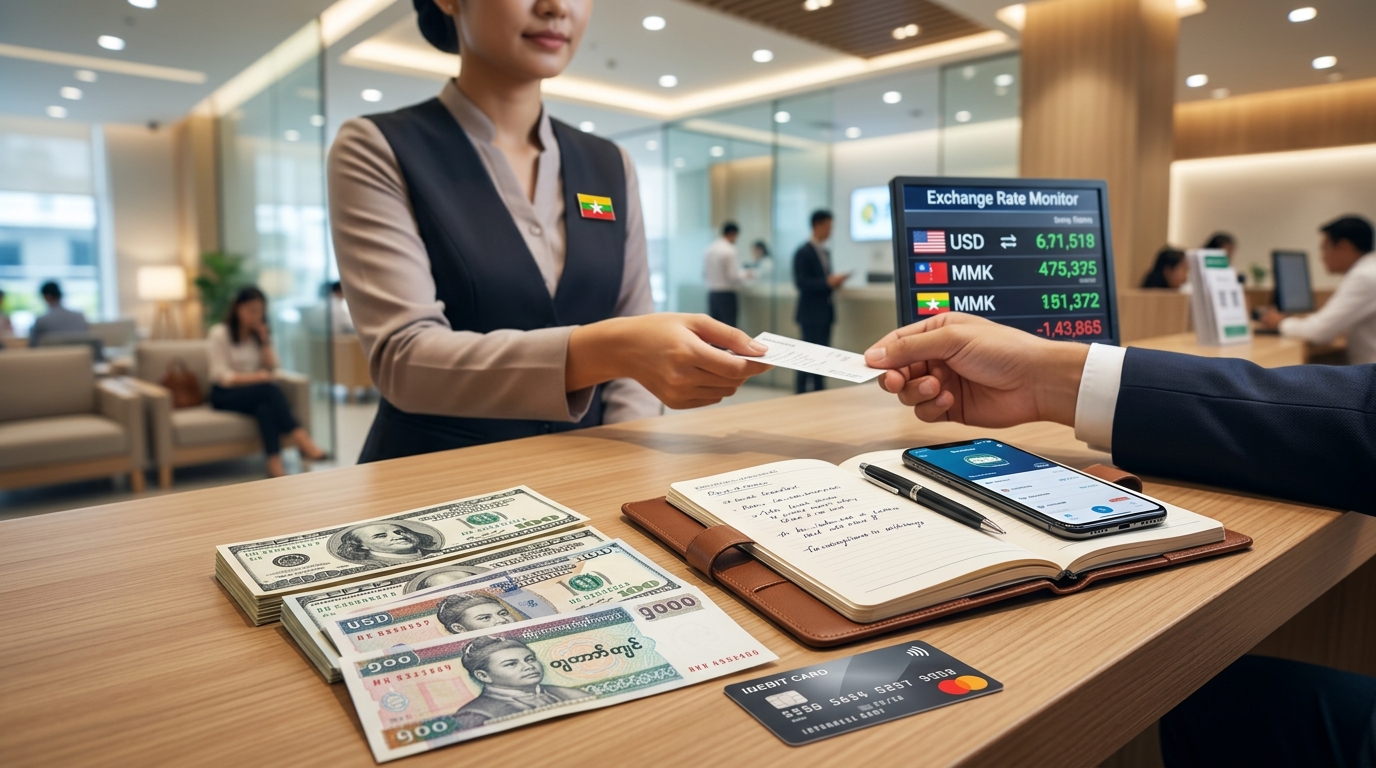
Landing in a foreign country for a business meeting and realizing your credit card doesn’t work at the taxi stand is not the kind of adventure you need. Neither is watching your company’s profit margins shrink because you exchanged money at the airport kiosk. Business travel demands a smarter approach to currency management, one that protects your budget while keeping you focused on the work that matters.
This currency exchange guide for business travelers covers practical strategies for managing foreign money, from choosing the right banking services and avoiding hidden fees to timing exchanges and maintaining financial records. You’ll learn how to optimize exchange rates, protect your funds abroad, and streamline expense reporting while traveling for work. These methods help reduce costs and eliminate common currency headaches that business professionals face internationally.
Understanding Exchange Rates Before Your Trip
Exchange rates fluctuate constantly, and that volatility directly affects your travel budget. The mid-market rate is the true value between currencies, the number you see on financial news sites. Banks and exchange services add a markup to this rate, which becomes their profit.
A typical bank might add 3 to 5 percent to the mid-market rate. Exchange kiosks at airports often charge 10 to 15 percent. Those percentages add up fast when you’re exchanging hundreds or thousands of dollars for a business trip.
Check the mid-market rate before you leave. Use it as your baseline for comparing services. If the USD to EUR mid-market rate is 0.92, and your bank offers 0.87, you’re paying roughly 5.4 percent above the real rate.
Where to Exchange Currency for the Best Value
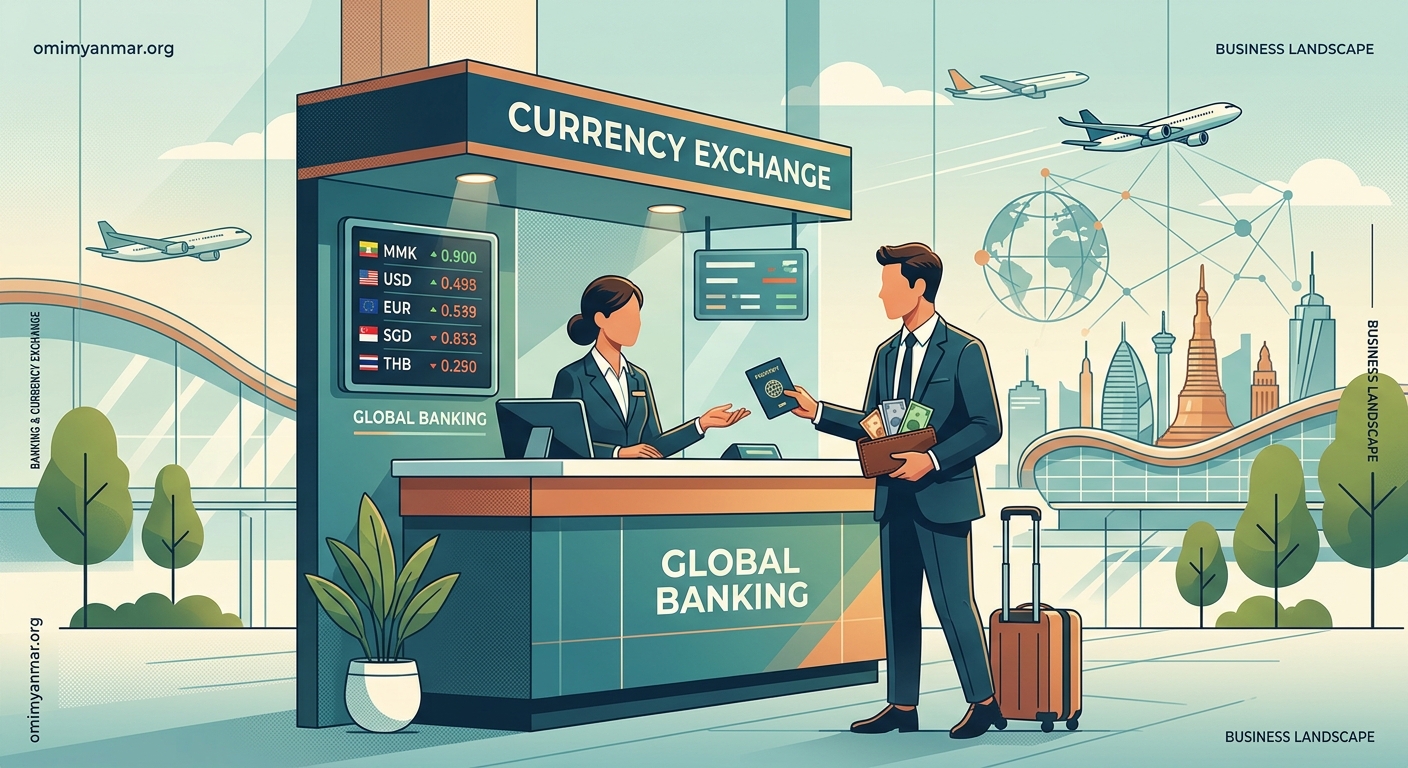
Your choice of exchange location matters more than most travelers realize. Here’s a breakdown of common options and their typical costs.
| Exchange Location | Typical Fee Structure | Best For |
|---|---|---|
| Home country bank | 3-5% markup | Small amounts before departure |
| Airport kiosk | 10-15% markup | Emergency cash only |
| ATM at destination | 1-3% plus withdrawal fee | Most business travelers |
| Credit card | 0-3% foreign transaction fee | Daily purchases and meals |
| Specialized services | 0.5-2% markup | Large currency transfers |
ATMs at your destination usually offer the best combination of convenience and value. You get close to the mid-market rate, and you only withdraw what you need. Just watch for two fees: your home bank’s international withdrawal charge and the foreign ATM operator’s fee.
Credit cards with no foreign transaction fees beat almost every other option for purchases. You get strong fraud protection, automatic expense records, and competitive rates.
Setting Up Banking Before International Travel
Call your bank at least one week before departure. Tell them which countries you’ll visit and your travel dates. This prevents your cards from being frozen when you make your first foreign transaction.
Ask these specific questions:
- What’s the foreign transaction fee on my credit card?
- How much does an international ATM withdrawal cost?
- Is there a daily withdrawal limit abroad?
- Which ATM networks charge the lowest fees in my destination country?
- Do you offer travel notification through your mobile app?
Consider opening a no-fee travel credit card if you travel internationally more than twice per year. Cards like these pay for themselves after a single trip.
“The biggest mistake business travelers make is not having a backup payment method. I always carry two credit cards from different networks and keep them in separate bags. When one fails, and it will, you need an immediate alternative.” — Financial advisor specializing in corporate travel
Step-by-Step Currency Exchange Process
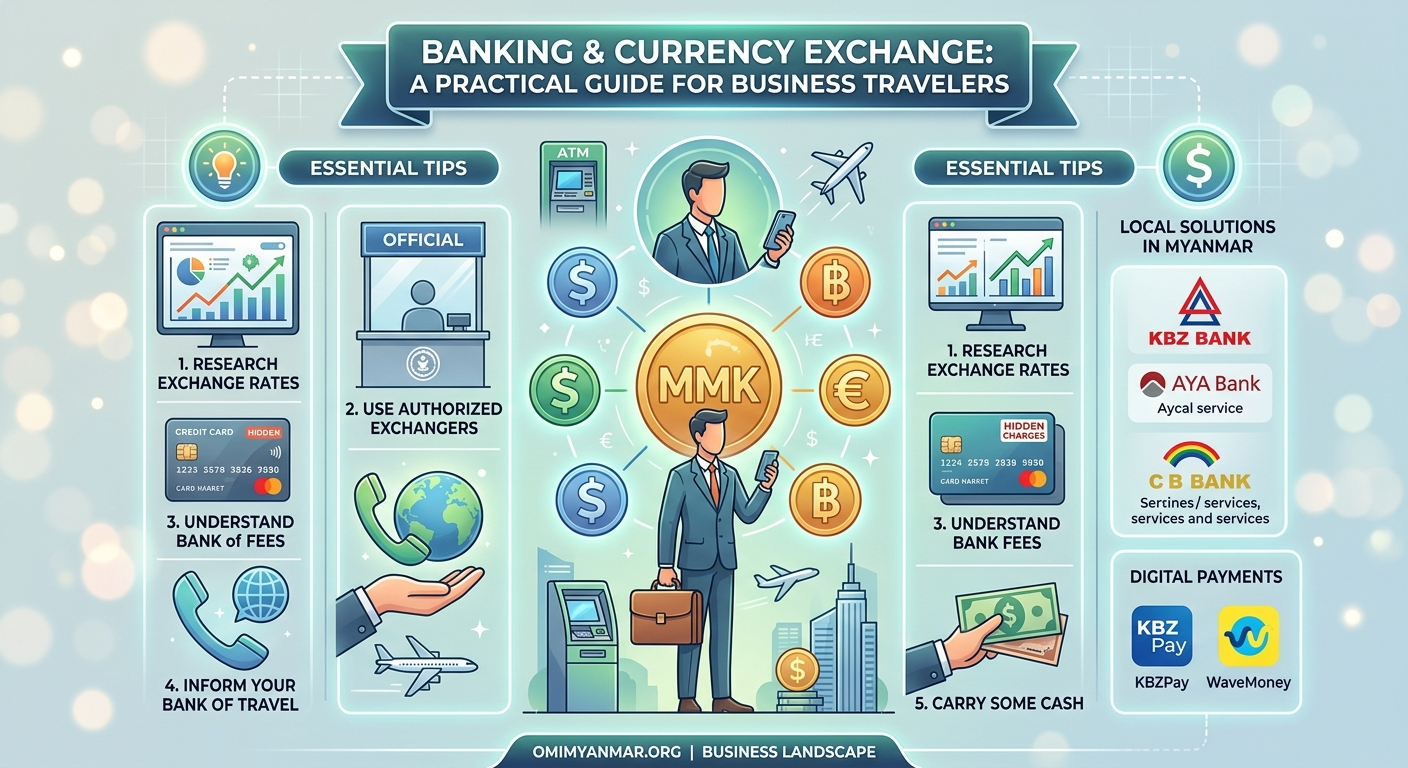
Follow this sequence to minimize costs and maximize convenience during your business trip.
- Exchange a small amount of local currency before leaving home, enough for transportation and one meal after landing.
- Locate ATMs in secure locations at your destination, preferably inside bank branches or your hotel.
- Withdraw larger amounts less frequently to reduce per-transaction fees.
- Use your no-fee credit card for all purchases where cards are accepted.
- Keep exchange receipts and ATM records for expense reporting.
- Monitor your bank account daily through your mobile app to catch fraudulent charges immediately.
- Exchange leftover cash back to your home currency before returning, or save it for your next trip to that region.
This approach balances cost efficiency with practical access to funds throughout your trip.
Managing Multiple Currencies During Extended Travel
Business travelers visiting several countries face additional complexity. You don’t want to carry five different currencies or make multiple exchanges.
Use a multi-currency account if your company travels internationally regularly. These accounts let you hold and spend multiple currencies without constant conversion. You load USD, convert what you need to EUR or SGD, and spend directly from those balances.
Many business travelers also benefit from having practical guidance on money matters specific to their destination country.
For Myanmar specifically, cash remains more important than in many other Asian markets. Credit card acceptance is growing but still limited outside major cities. Plan to have more USD cash on hand than you would for trips to Singapore or Bangkok.
Common Currency Exchange Mistakes That Cost Money
Business travelers repeat these errors constantly, each one draining budgets unnecessarily.
- Exchanging money at hotel front desks, which typically offer the worst rates
- Using credit cards that charge 3 percent foreign transaction fees
- Withdrawing tiny amounts from ATMs multiple times instead of larger sums less often
- Accepting dynamic currency conversion at point of sale
- Failing to notify banks before travel, resulting in frozen cards
- Carrying only one payment method with no backup
- Exchanging currency back to USD at airport kiosks when returning home
Dynamic currency conversion deserves special attention. When you pay with a card abroad, the terminal sometimes asks if you want to pay in your home currency. Always decline. Choose to pay in the local currency. The conversion rate offered at the terminal is almost always worse than what your card issuer provides.
Record Keeping for Business Expense Reports
Your finance department needs documentation for every foreign transaction. Make this process easier by building good habits during your trip.
Take photos of receipts immediately after each purchase. Many receipts fade within days, especially thermal paper ones. Your phone camera preserves them permanently.
Use your bank’s mobile app to tag business transactions as they occur. Add notes about the business purpose while the context is fresh in your mind.
Keep a simple spreadsheet with these columns: date, merchant name, amount in local currency, amount in USD, exchange rate, and business purpose. Update it each evening. This takes five minutes per day and saves hours when you return.
Banking Services That Support International Business Travel
Traditional banks are no longer your only option for managing money abroad. Several specialized services have emerged that specifically address business traveler needs.
Consider these features when choosing banking services:
- Real-time exchange rate notifications
- Multi-currency wallets with instant conversion
- Virtual card numbers for online purchases abroad
- Integration with expense management software
- 24/7 customer support in multiple languages
- Emergency card replacement at international locations
Some companies provide corporate travel cards that automatically categorize expenses, apply per diem limits, and sync directly with accounting systems. These reduce administrative burden significantly.
Protecting Your Money From Theft and Fraud Abroad
Financial security requires more attention when traveling internationally. Criminals specifically target business travelers at hotels and airports.
Split your money and cards across multiple locations. Keep one credit card and some cash in your hotel safe. Carry a different card and minimal cash in your wallet. Store a third card in your checked luggage as a last resort backup.
Use ATMs during business hours when you can get help immediately if something goes wrong. Avoid standalone ATMs in isolated locations.
Enable transaction alerts on your phone. You’ll receive a text or push notification within seconds of each charge. This lets you spot fraudulent transactions immediately and report them while you’re still in the country where they occurred.
Tax Implications of Foreign Currency Transactions
Business travelers sometimes forget that currency exchange can create taxable events. If you exchange USD for EUR, hold the EUR for several months, and the exchange rate moves significantly before you convert back, you may have a capital gain or loss.
For most short business trips, this is irrelevant. You exchange money, spend it within days or weeks, and the rate movements are minimal. But if your company maintains foreign currency balances or you travel repeatedly to the same country, consult with your tax advisor about reporting requirements.
Keep records of exchange rates on the dates you convert currency. Your bank statements usually include this information, but having your own records makes tax preparation simpler.
Technology Tools for Currency Management
Several apps and services make currency management easier for business travelers. These tools provide real-time information and automate tasks that used to require manual tracking.
Currency converter apps show live mid-market rates for instant comparisons. Point your camera at a price tag, and the app converts it to your home currency automatically.
Expense tracking apps integrate with your bank accounts and credit cards. They automatically import transactions, apply exchange rates, categorize expenses, and generate reports. Popular options include Expensify, Concur, and Rydoo.
Banking apps from providers like Wise, Revolut, and others offer multi-currency accounts with competitive exchange rates and low fees. These work particularly well for frequent travelers who visit the same countries repeatedly.
Handling Cash Versus Cards in Different Markets
Payment preferences vary dramatically across countries. Understanding local norms prevents frustration and saves money.
In Myanmar, cash dominates daily transactions. Many restaurants, shops, and transportation services don’t accept cards. Hotels and high-end establishments do, but having USD and kyat on hand is essential. Understanding foreign investment regulations also helps business travelers navigate the broader financial landscape.
Contrast this with Scandinavia, where some businesses refuse cash entirely. Your credit card handles everything from coffee to taxi rides.
Research payment norms before each trip. Online travel forums and recent blog posts from business travelers provide current information about what works where.
Emergency Currency Solutions When Things Go Wrong
Despite careful planning, problems happen. Your wallet gets stolen, your card stops working, or you run out of cash in a place with no ATMs.
Set up these safety nets before you travel:
- Register for your bank’s emergency card replacement service
- Save your bank’s international collect call number in your phone
- Keep $200 USD in small bills in a separate location from your wallet
- Share account information with a trusted colleague or family member who can wire money if needed
- Download your bank’s app and enable mobile check deposit in case someone needs to send you a check
Western Union and MoneyGram operate in most countries. Someone at home can send money that you pick up within hours. The fees are high, but when you’re stuck without funds, they’re worth it.
Building a Sustainable Currency Strategy for Regular Travelers
If you travel internationally for business more than four times per year, you need a systematic approach rather than ad-hoc solutions for each trip.
Open dedicated accounts for international transactions. Keep a multi-currency account funded with the currencies you use most often. This eliminates the need to exchange money before most trips.
Establish relationships with banks that specialize in international services. They offer better rates and more flexible terms than retail banks focused on domestic customers.
Track your annual foreign transaction fees. If they exceed $500, you’re likely paying too much. Switching to no-fee cards and better exchange services will save more than the effort required to change providers.
Consider working with a corporate travel management company that handles currency as part of their service. They often negotiate bulk rates and provide consolidated reporting that simplifies accounting.
Making Currency Exchange Work for Your Business Travel
Managing foreign currency doesn’t need to be complicated or expensive. The key is preparation. Know your options before you leave, choose services that match your needs, and build simple habits that protect your money and simplify record keeping.
Start with the basics. Get a no-fee credit card. Notify your bank before each trip. Use ATMs for cash and cards for purchases. Keep receipts and track expenses daily.
Then optimize based on your travel patterns. If you visit the same countries repeatedly, hold those currencies between trips. If you travel constantly, invest in specialized accounts and services that reduce friction and cost.
Your time is valuable. Every minute spent dealing with currency problems is time not spent on the business that justifies your travel. A solid currency strategy lets you focus on meetings, relationships, and deals rather than hunting for ATMs or explaining suspicious charges to your bank.